

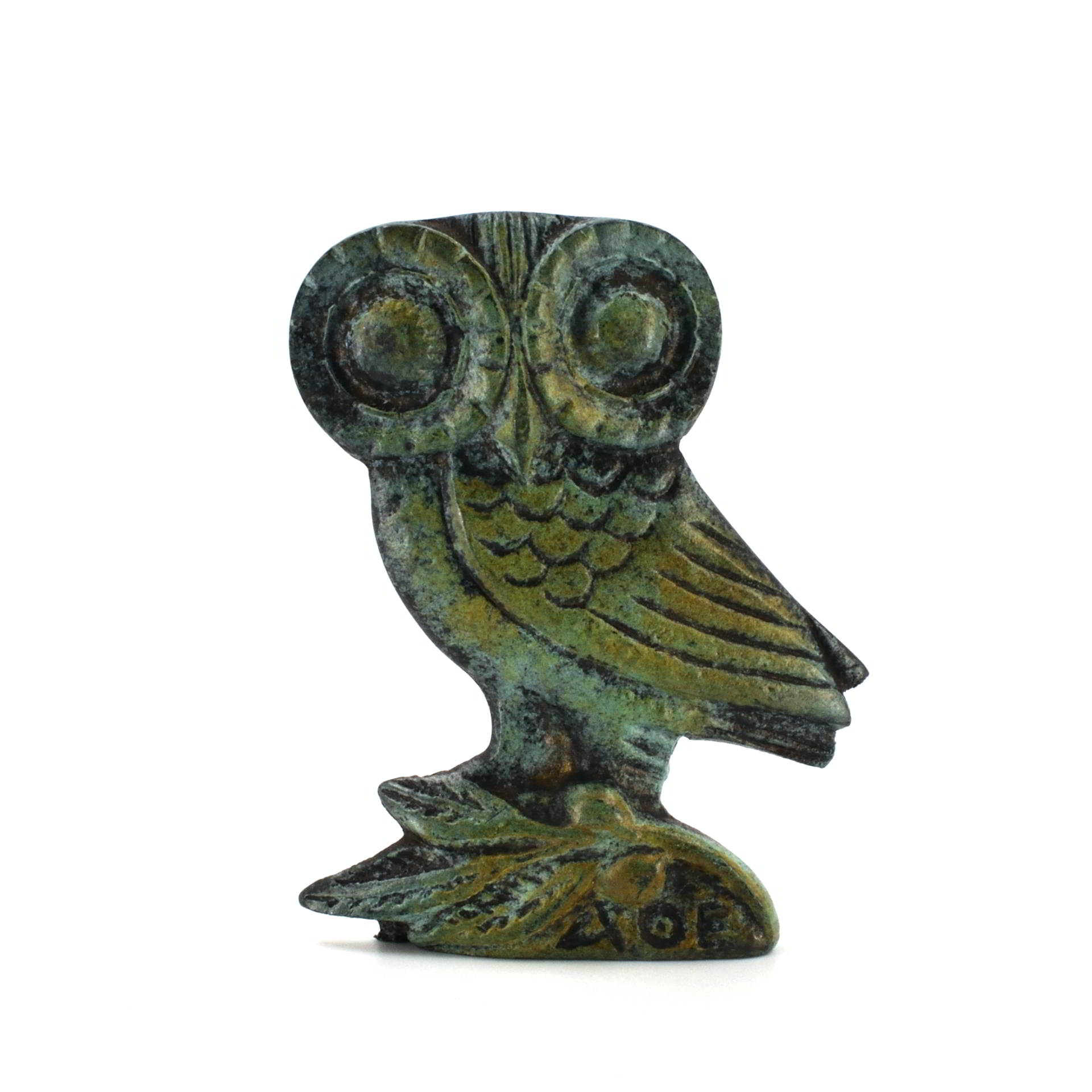
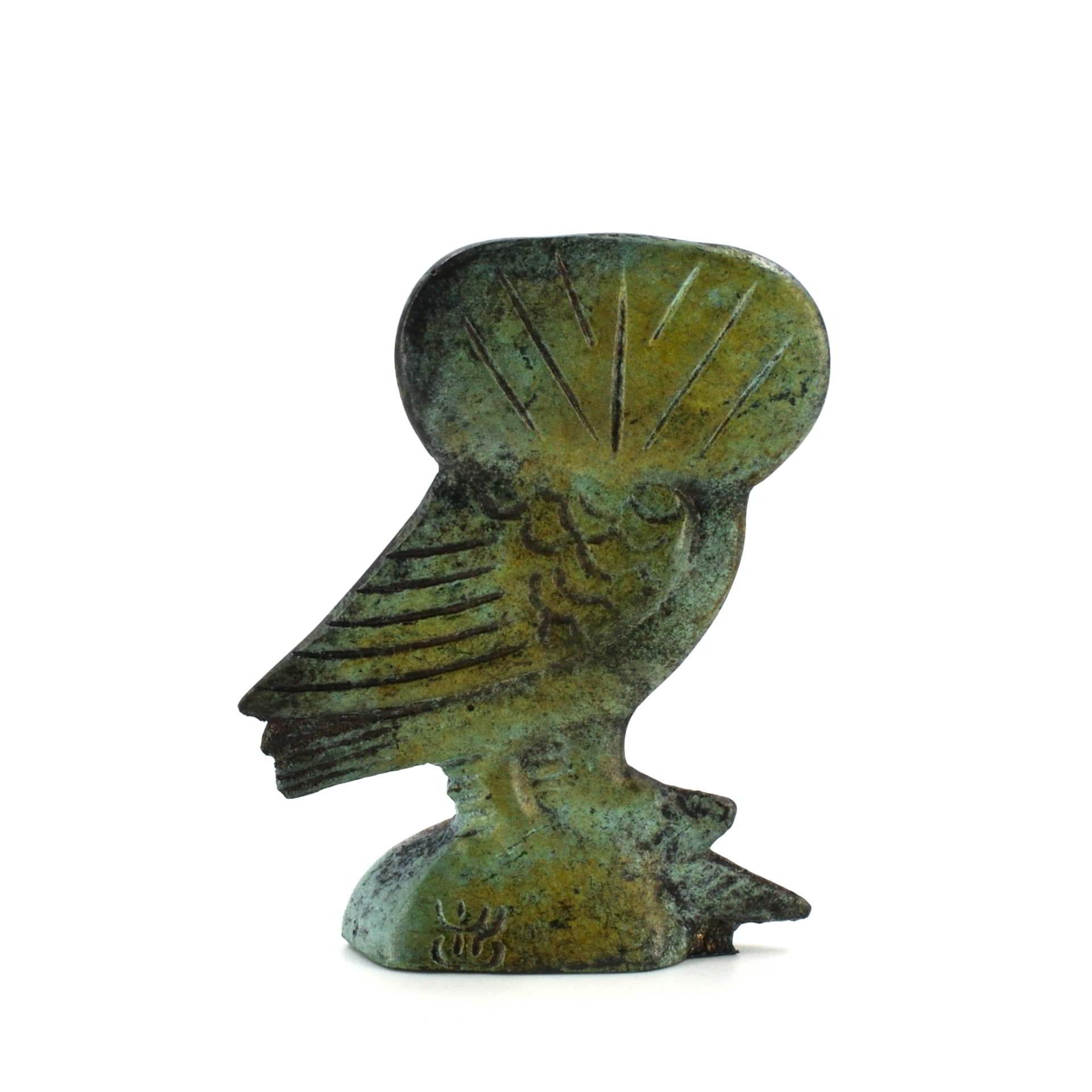
A Classical Athenian owl symbol of Athena, inspired by 5th century BCE iconography and associated with wisdom, vigilance, and civic power.


35,00 €
Rapid, trackable and secure delivery options to your doorstep worldwide.
Secure redirect payment via Worldline® and Eurobank S.A®
Payment options:
• Easy and simple, within 14 days of delivery.
• See conditions and procedure in Rescission & Returns.
This owl embodies the sacred bird of Athena, patron goddess of wisdom, warfare strategy, and civic order. In 5th century BCE Athens, the owl—known as glaux—became the defining emblem of the city, appearing on the celebrated Athenian tetradrachm coins that circulated throughout the Mediterranean world.
Its ornamentation reflects the stylized aesthetic of the Classical period: commanding circular eyes symbolizing divine sight and vigilance; a carefully scalloped breast suggesting layered plumage; and elongated, incised wing feathers rendered in disciplined, symmetrical lines. The upright, watchful stance conveys alert intelligence and protective strength. The owl’s association with the sacred olive tree—gift of Athena to Athens—reinforced themes of prosperity, peace, and enlightened rule.
Such figures were used across Attica and the wider Greek world as votive dedications in sanctuaries, household talismans invoking protection, and decorative tributes to learning and strategic power. In myth, the owl accompanied Athena in battle and counsel, able to see through darkness—an enduring metaphor for wisdom prevailing over ignorance.
SIZE: 9 cm
MATERIAL: bronze
PATINA: gold
METHOD: sand cast