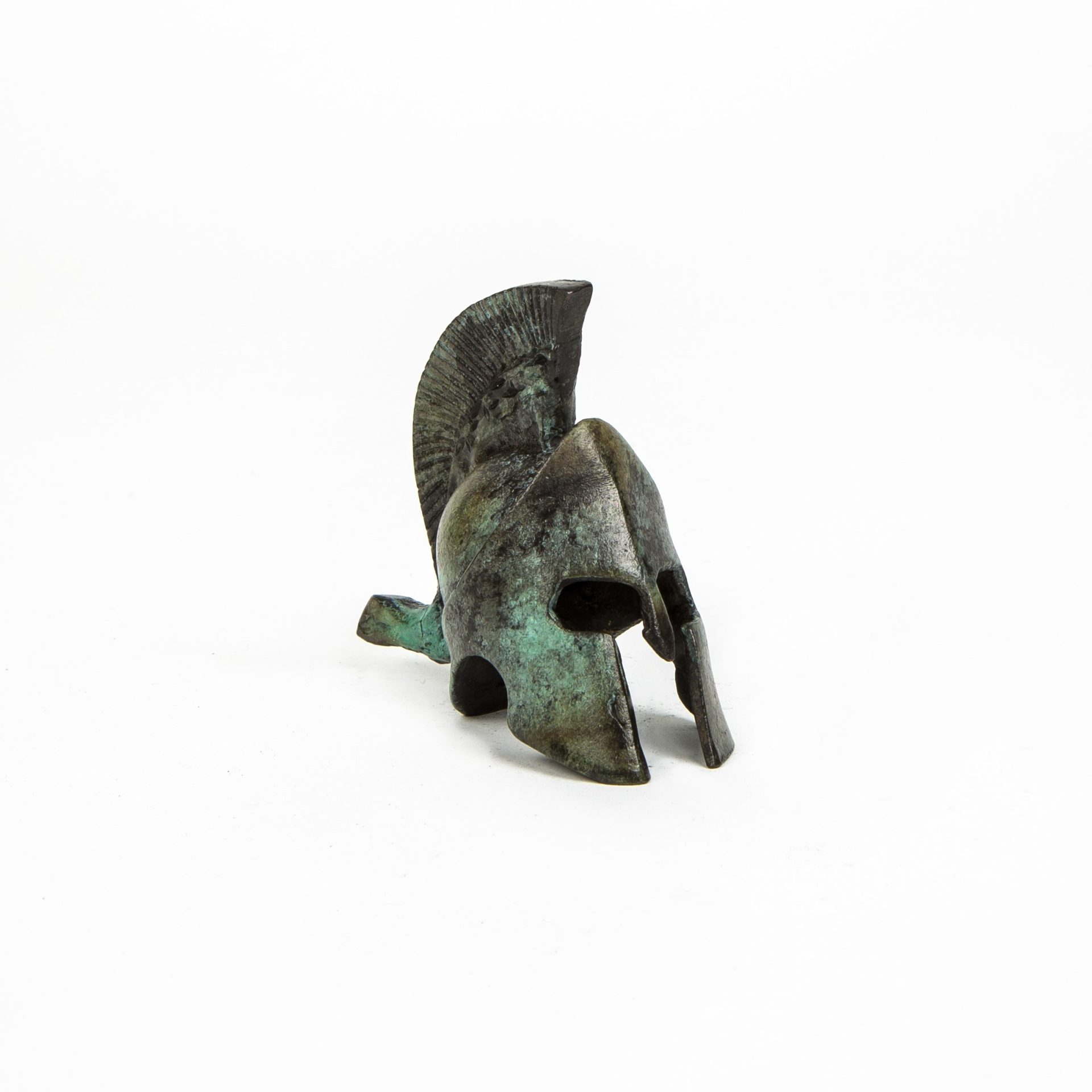


Greek Geometric horse idol adorned with spiral and rosette ornament, created as a votive offering in mainland Greece, circa 900–700 BCE.


35,00 €
Rapid, trackable and secure delivery options to your doorstep worldwide.
Secure redirect payment via Worldline® and Eurobank S.A®
Payment options:
• Easy and simple, within 14 days of delivery.
• See conditions and procedure in Rescission & Returns.
This Greek Geometric horse idol dates to approximately 900–700 BCE, a defining phase of early Archaic Greek art. The figure is rendered in a distinctly abstract manner, characterized by elongated legs, a narrow openwork body, and a sharply profiled head. The disciplined linear form reflects the Geometric period’s emphasis on structure, balance, and stylized representation rather than naturalism.
The surface is richly ornamented with incised spiral and rosette motifs across the neck, torso, and hindquarters. These circular patterns symbolize continuity, vitality, and cosmic order—core themes in early Greek decorative language. Fine parallel markings along the mane create rhythmic texture, reinforcing the harmony between ornament and silhouette. The open space within the body further enhances the lightness and mathematical clarity typical of the era.
Such horse figures were commonly dedicated as votive offerings in sanctuaries throughout mainland Greece, particularly at Panhellenic centers like Olympia. In Geometric society, the horse embodied aristocratic prestige, martial strength, and devotion to the gods. This idol captures the spiritual symbolism and refined abstraction that define early Greek ceremonial art.
SIZE: 13,5 cm
MATERIAL: bronze
PATINA: rust green oxidatiom
METHOD: sand cast