



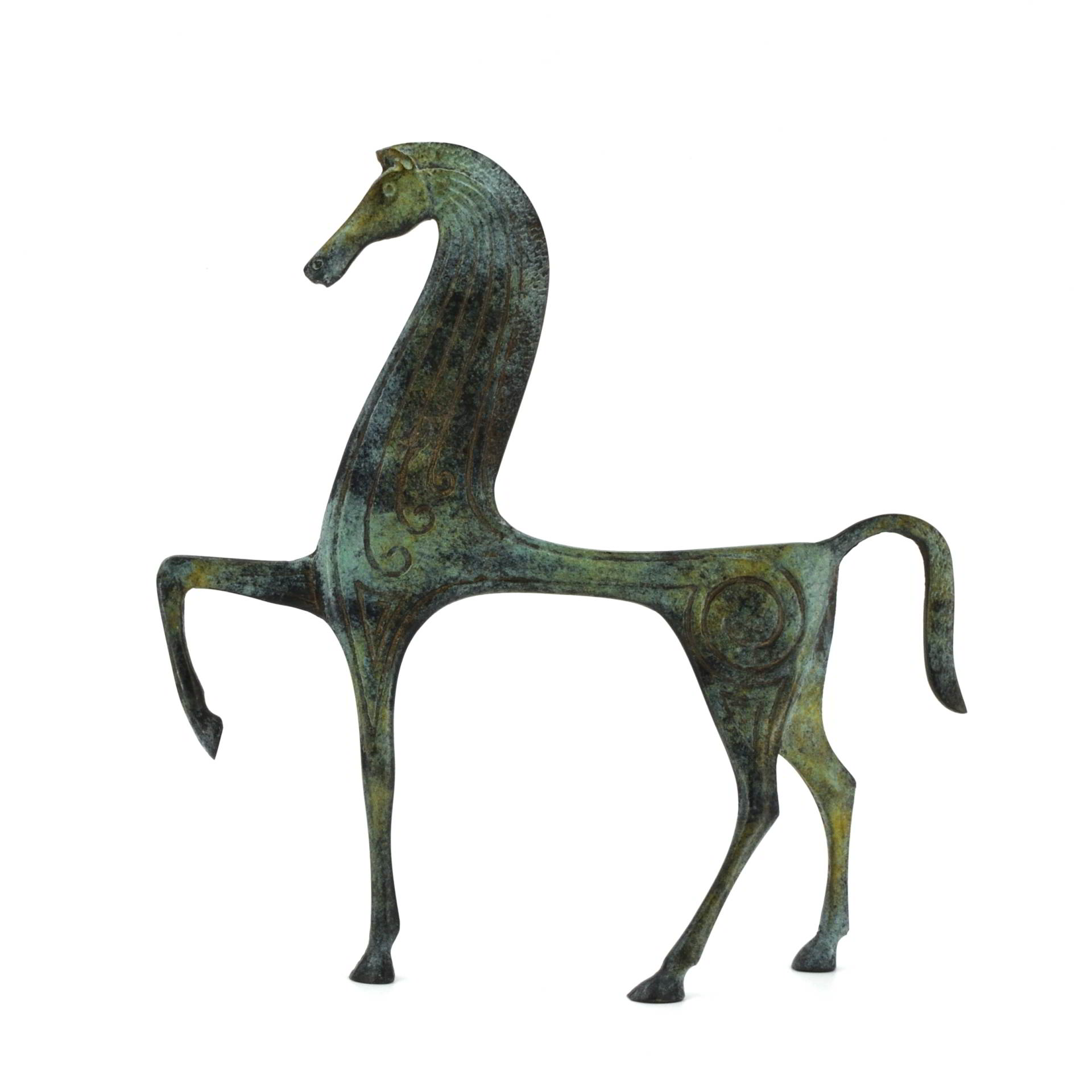
An early Iron Age geometric horse figure with incised linear and circular ornaments, inspired by 9th–8th century BCE Greek votive traditions.


60,00 €
Rapid, trackable and secure delivery options to your doorstep worldwide.
Secure redirect payment via Worldline® and Eurobank S.A®
Payment options:
• Easy and simple, within 14 days of delivery.
• See conditions and procedure in Rescission & Returns.
This solid geometric horse figurine reflects the distinctive artistic language of the early Iron Age, particularly associated with the 9th–8th century BCE Geometric period of ancient Greece. Characterized by its elongated neck, angular legs, and simplified anatomical structure, the figure embodies the abstract and symbolic style that defined the era. Incised linear patterns accentuate the mane and body, while circular motifs at the flank suggest harness ornaments or symbolic solar emblems, common decorative elements of the time.
Such horse figures were widely used in sanctuaries and burial contexts across regions like Attica and the Peloponnese. They were often dedicated as votive offerings to deities, symbolizing wealth, status, and martial strength, as horses were closely linked to aristocratic identity and heroic ideals.
The restrained geometry and rhythmic contours reflect a society transitioning from the Dark Ages toward renewed artistic expression. This piece captures the balance between abstraction and representation, offering a timeless interpretation of power, prestige, and devotion in early Mediterranean culture.
SIZE: 22 cm
MATERIAL: bronze
PATINA: rust green oxidatiom
METHOD: sand cast


