



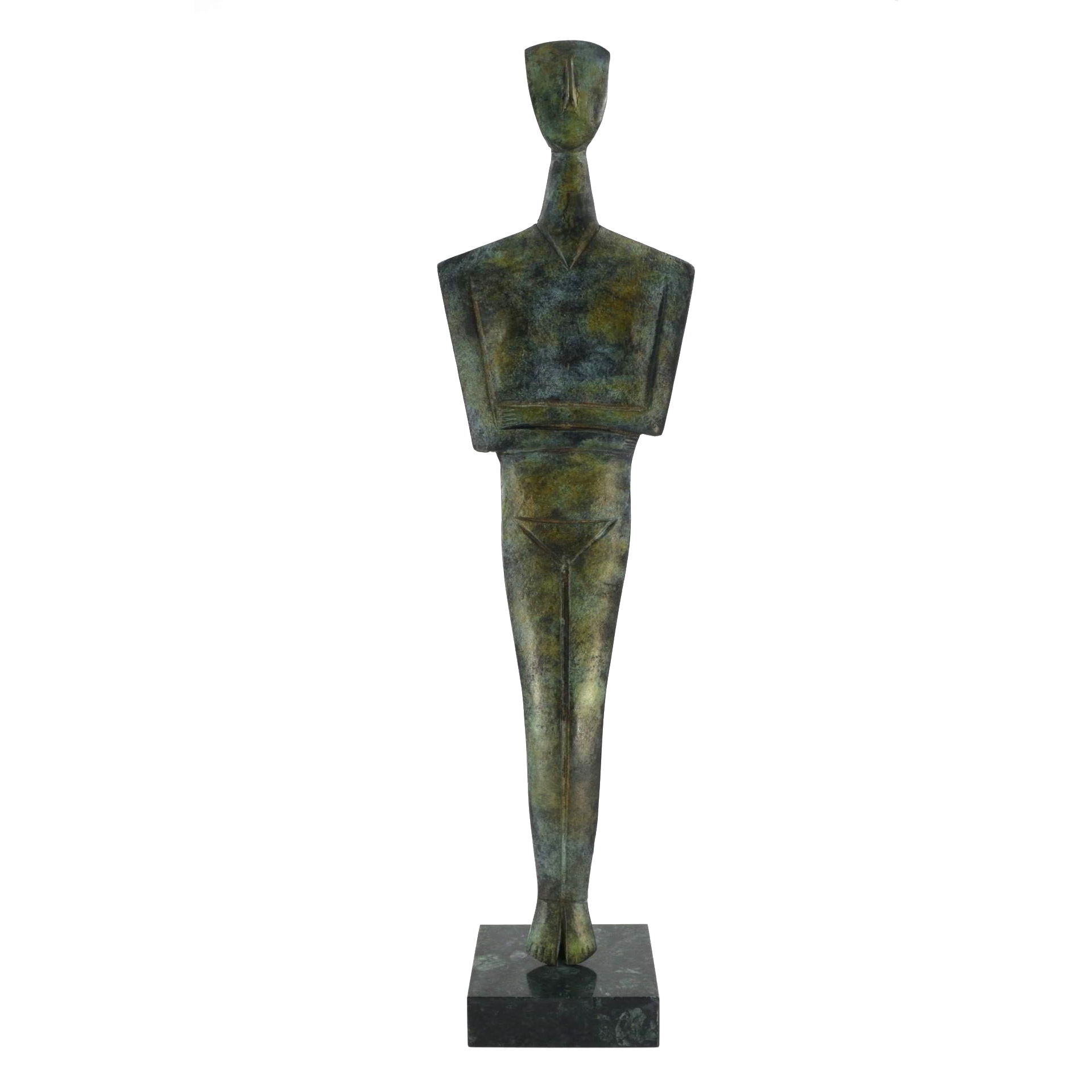
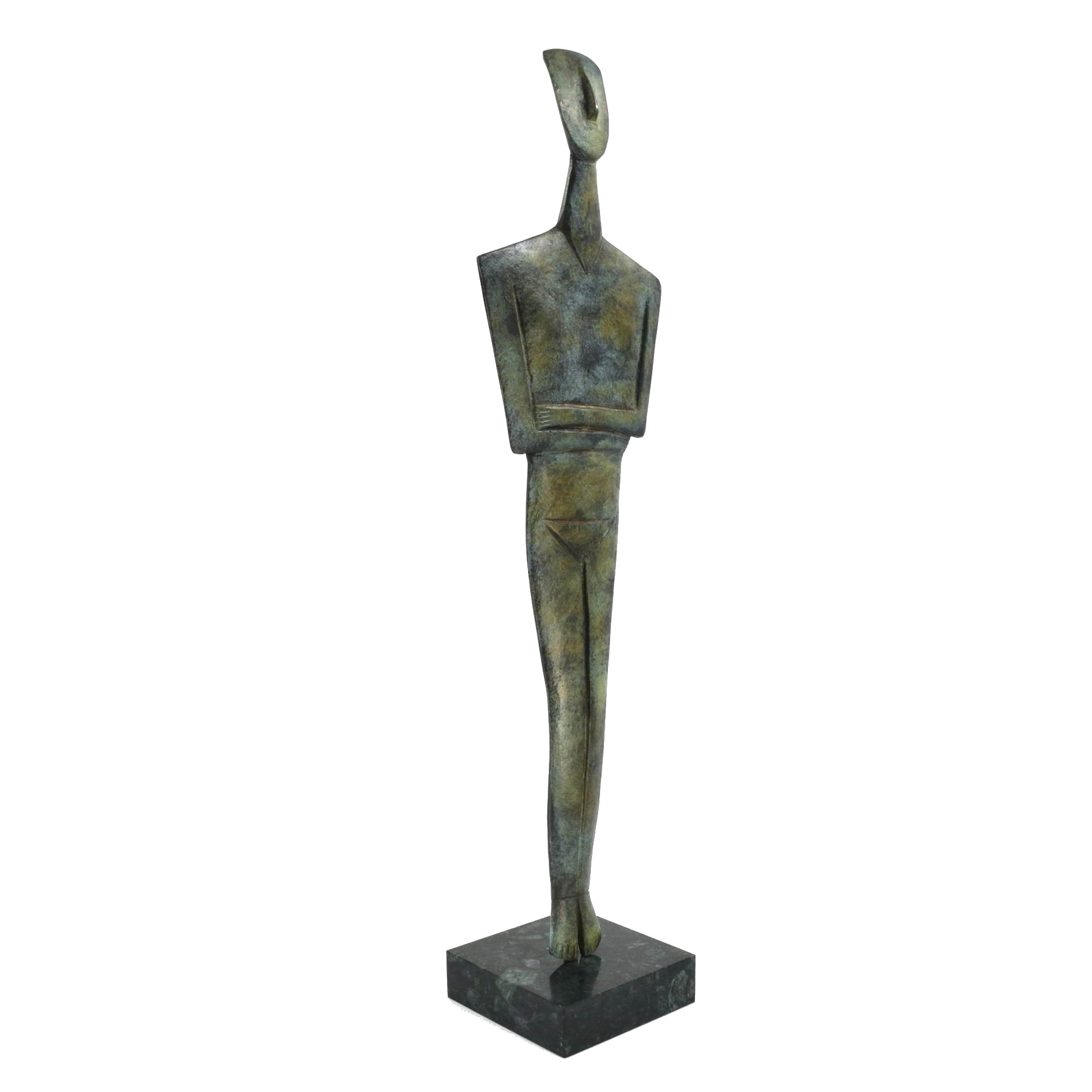
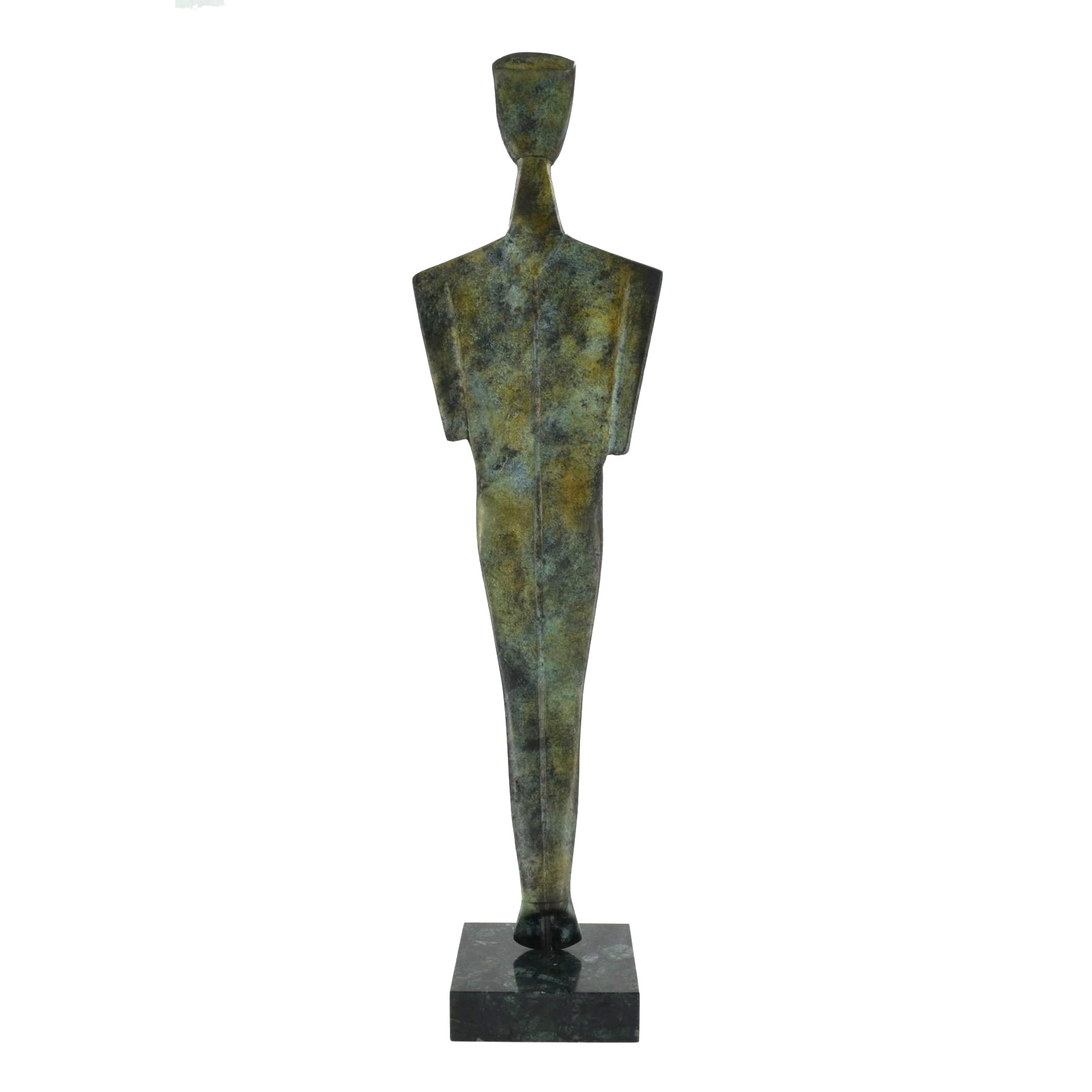
A Cycladic-inspired idol reflecting the timeless abstraction and spiritual symbolism of Early Bronze Age Aegean sculpture.





380,00 €
Rapid, trackable and secure delivery options to your doorstep worldwide.
Secure redirect payment via Worldline® and Eurobank S.A®
Payment options:
• Easy and simple, within 14 days of delivery.
• See conditions and procedure in Rescission & Returns.
This statue is inspired by the iconic Cycladic idols created in the Cyclades islands of the Aegean Sea during the Early Bronze Age, circa 2800–2300 BCE. These abstract human figures were crafted by Cycladic artisans, among the earliest sculptors in European history, who developed a remarkably modern visual language thousands of years ago. Their simplified forms, folded arms, and serene presence are believed to represent spiritual figures, possibly associated with fertility, protection, or the transition to the afterlife.
Original examples of Cycladic idols are now preserved in major museums and collections around the world, including the National Archaeological Museum in Athens and the Museum of Cycladic Art, where they stand as symbols of early artistic innovation. Their influence extends far beyond antiquity, inspiring modern artists such as Constantin Brâncuși and Amedeo Modigliani.
This replica honors the legacy of those early Aegean craftsmen, capturing the timeless balance, harmony, and symbolic power that defined Cycladic sculpture over four millennia ago.
SIZE: 60 cm
MATERIAL: bronze
PATINA: rust green oxidatiom
METHOD: sand cast


