



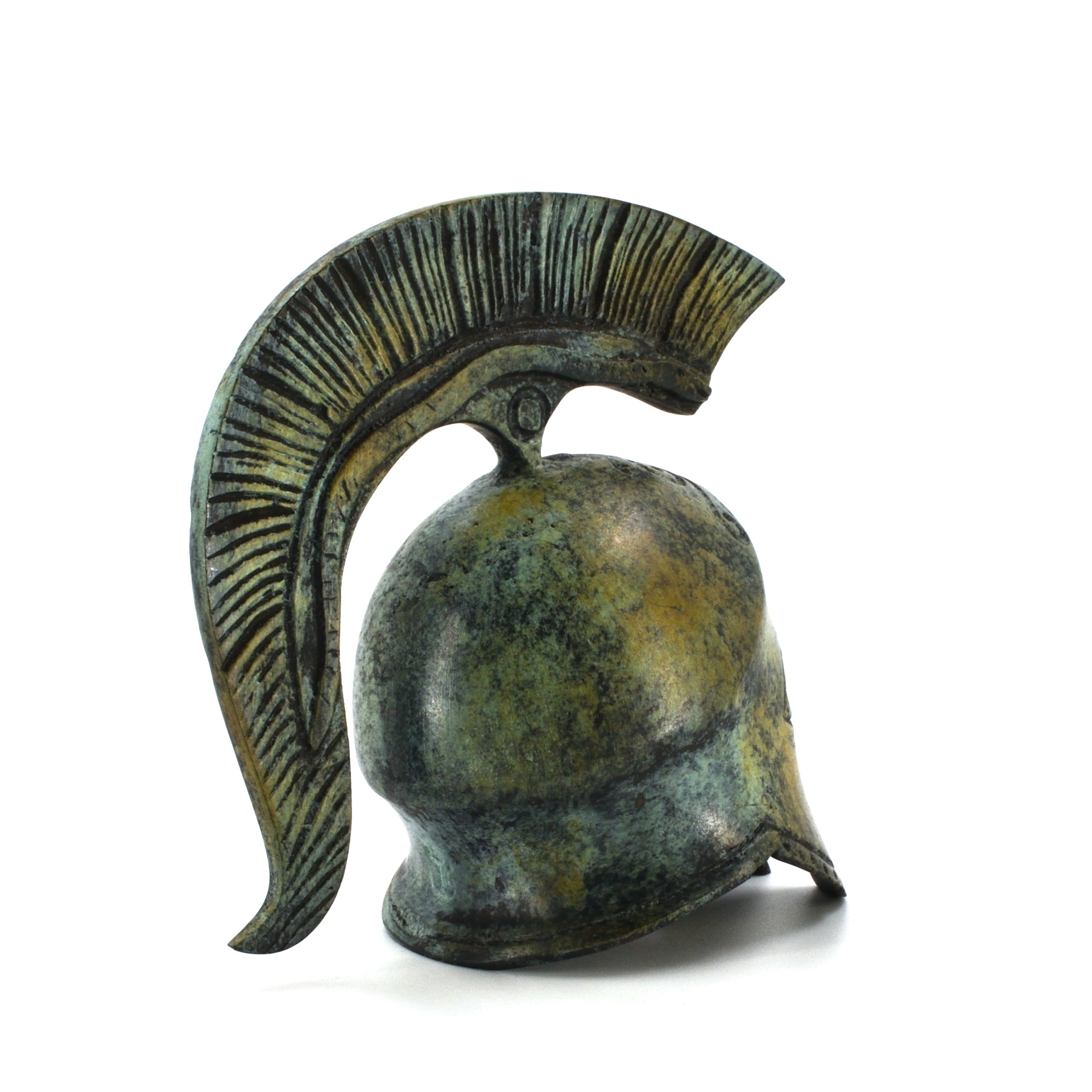
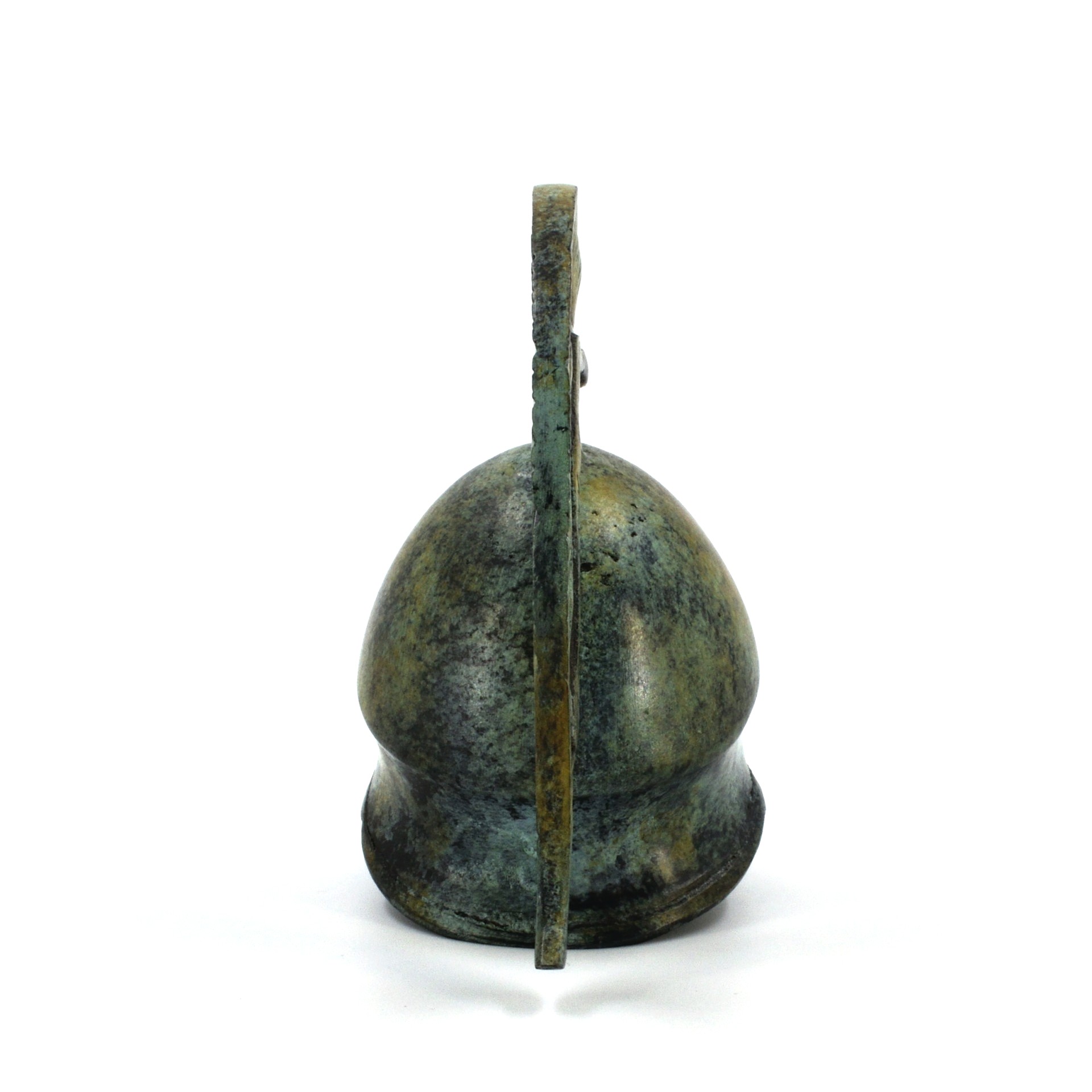
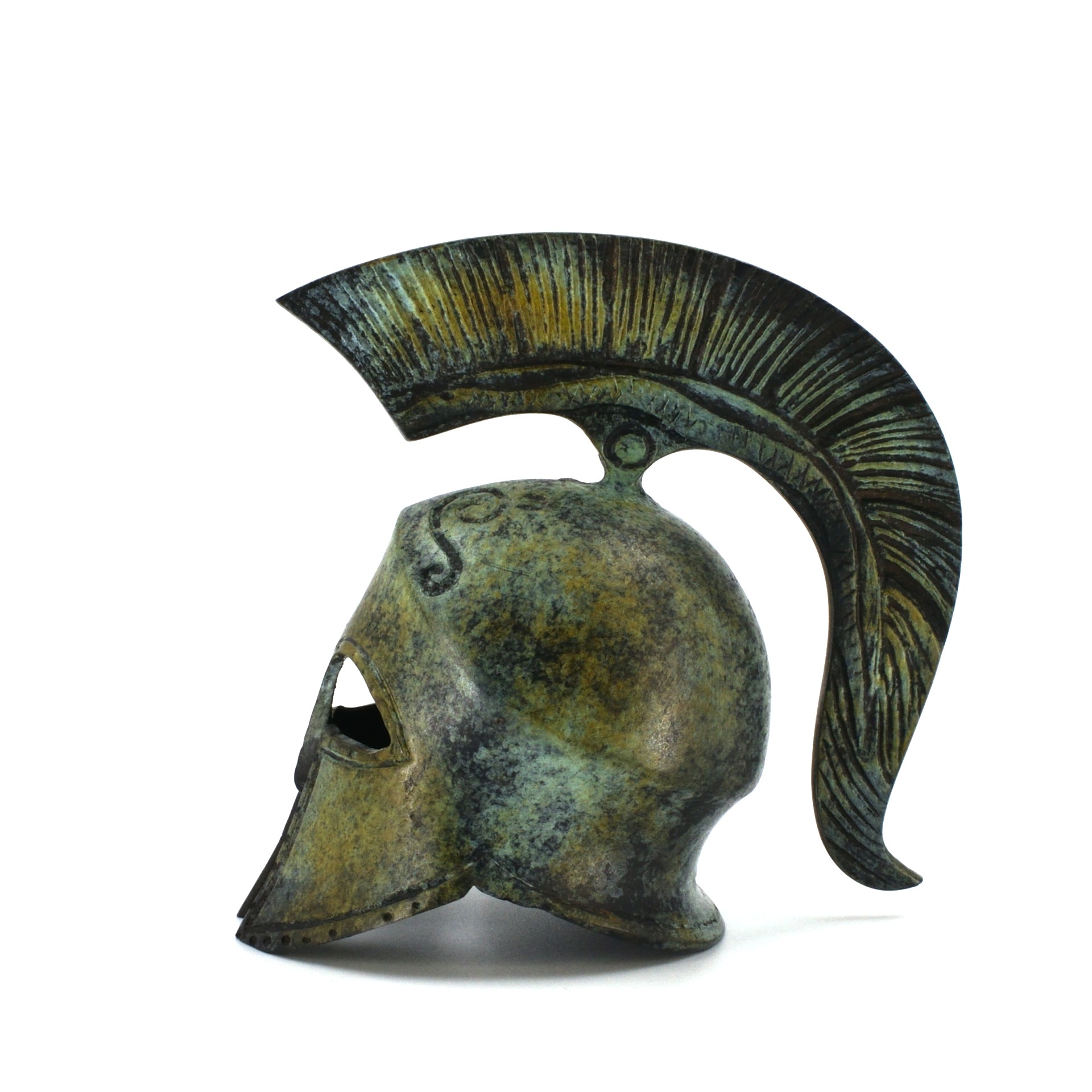
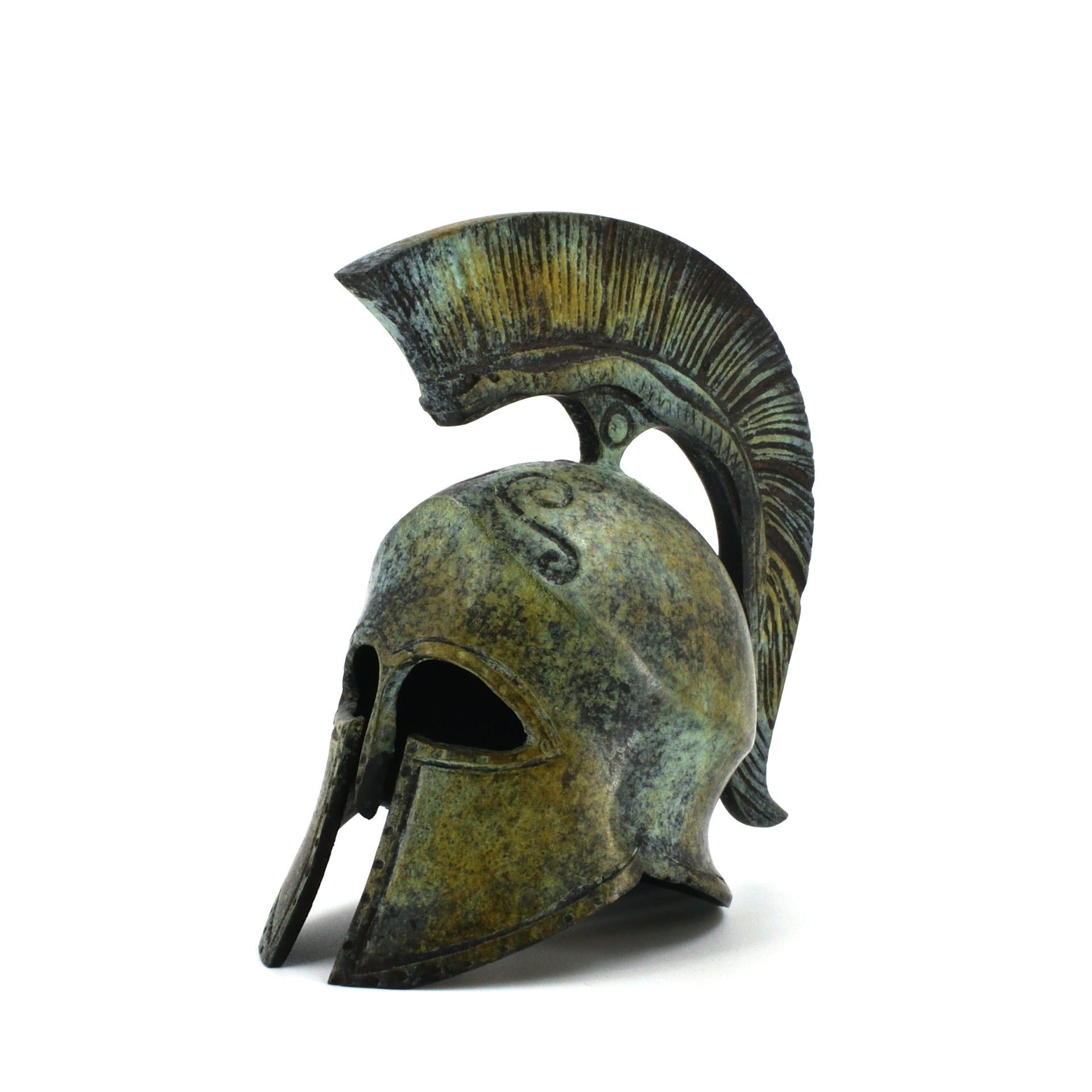
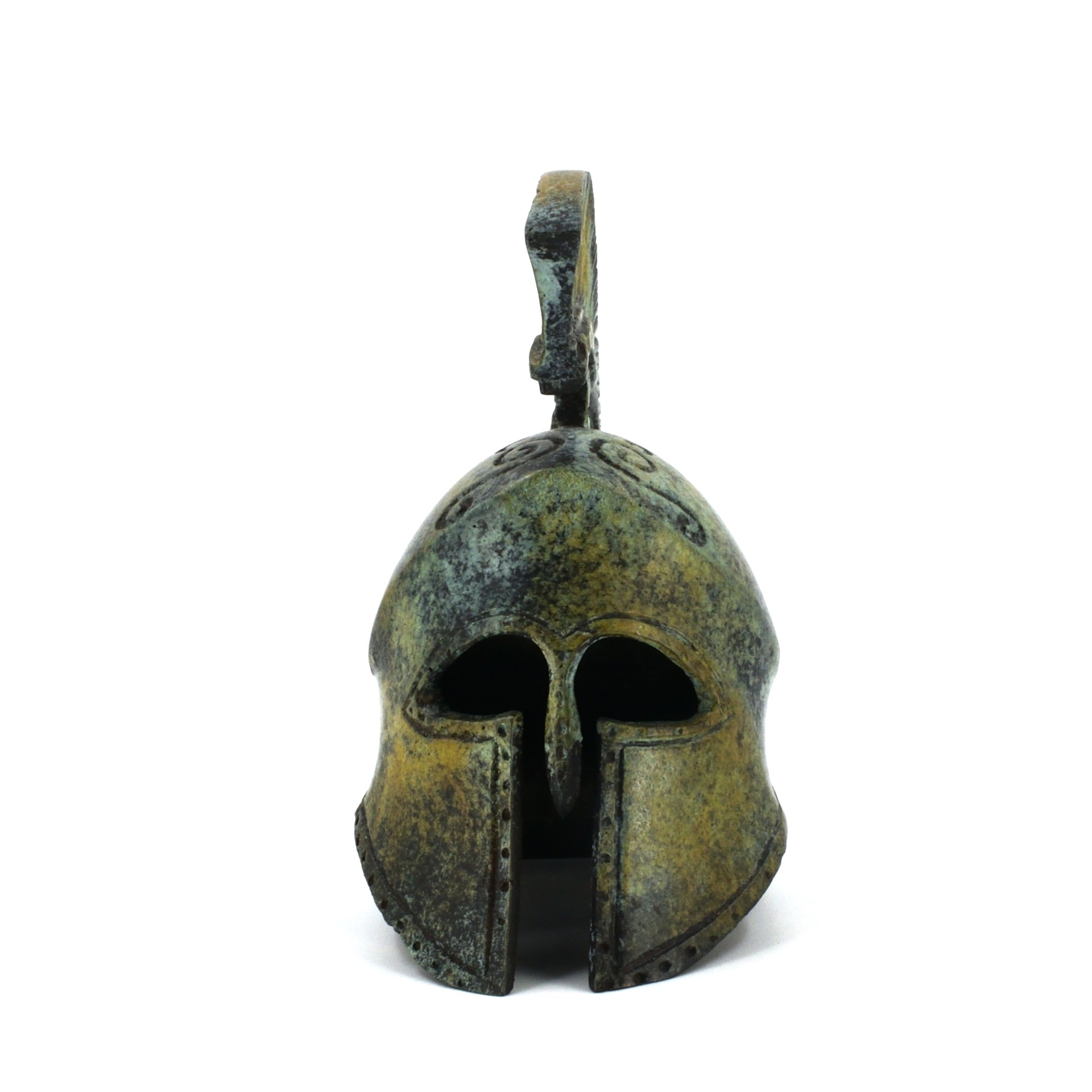
A Corinthian-style warrior helmet adorned with a sculpted serpent along its crest, inspired by Greek hoplite armor of the 7th–5th century BCE.



49,00 €
Rapid, trackable and secure delivery options to your doorstep worldwide.
Secure redirect payment via Worldline® and Eurobank S.A®
Payment options:
• Easy and simple, within 14 days of delivery.
• See conditions and procedure in Rescission & Returns.
Inspired by the celebrated Corinthian helmets of the Archaic and early Classical periods (7th–5th century BCE), this commanding headpiece embodies the martial spirit of ancient Greece. Its defining features include the narrow almond-shaped eye openings, pronounced nasal guard, and an imposing arched crest crowned with a sculpted serpent.
The serpent motif, intricately integrated along the sweeping plume, carries deep symbolic meaning in Greek culture—representing protection, rebirth, and divine guardianship. Associated with deities such as Athena, the serpent was believed to bestow wisdom and strategic prowess upon warriors. The finely incised linear ornamentation along the crest enhances its dramatic curvature, while the helmet’s sculpted contours create a powerful, disciplined profile.
Helmets of this style were worn by hoplite soldiers throughout regions such as the Peloponnese, Attica, and Magna Graecia. Beyond their battlefield function, they became enduring symbols of valor and civic identity, reflecting the artistry and mythic imagination of the ancient Mediterranean world.
SIZE: 11 cm
MATERIAL: bronze
PATINA: gold
METHOD: sand cast


