



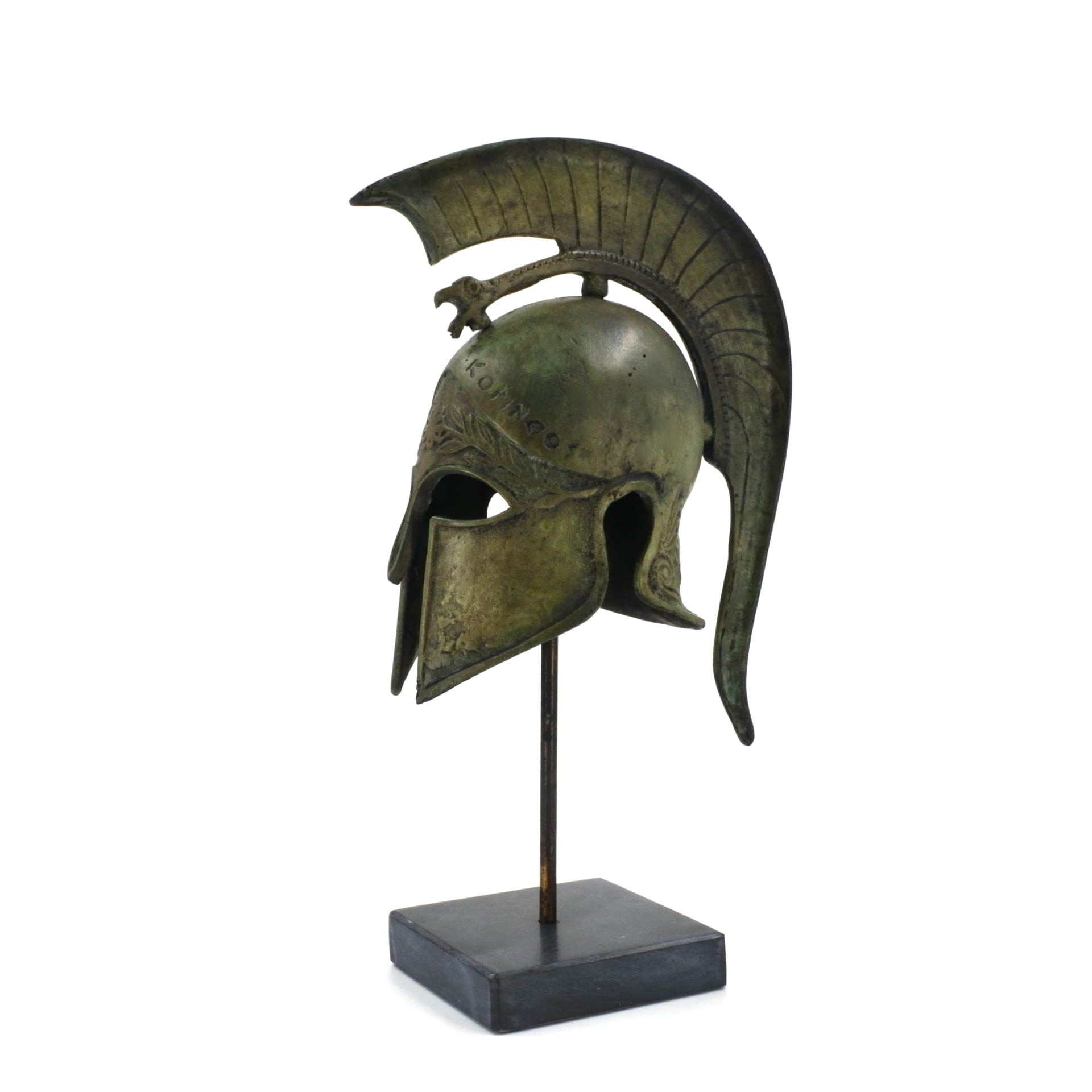
A Corinthian-style Greek helmet featuring a laurel diadem and serpent crest, symbols of victory, protection, and heroic status in the Classical Mediterranean world.



220,00 €
Rapid, trackable and secure delivery options to your doorstep worldwide.
Secure redirect payment via Worldline® and Eurobank S.A®
Payment options:
• Easy and simple, within 14 days of delivery.
• See conditions and procedure in Rescission & Returns.
Inspired by the iconic helmets worn by Greek hoplites, this Corinthian-style helm reflects the artistic and symbolic traditions of the Classical Greek world, particularly between the 6th and 4th centuries BCE. Helmets of this form were widely used across regions such as the Peloponnese, southern Italy, and the broader Mediterranean, where Greek colonies and city-states flourished.
The helmet is richly adorned with symbolic ornamentation that elevates it beyond simple battlefield equipment. Encircling the crown is a finely detailed laurel leaf diadem, a motif deeply associated with victory, honor, and divine favor in ancient Greek culture. Laurel wreaths were traditionally awarded to heroes, athletes, and victorious commanders, making this decoration a powerful emblem of prestige.
Rising from the crest is a sculpted serpent, a figure linked in Greek mythology to guardianship, wisdom, and rebirth. Serpents frequently appeared in sacred and martial imagery, believed to offer protection and connection to the divine. Together, the laurel and serpent create a helmet that embodies both martial prowess and mythological symbolism, reflecting the prestige and spiritual beliefs of ancient Greek warriors.
SIZE: 21 cm
MATERIAL: bronze
PATINA: rust green oxidatiom
METHOD: sand cast


