150,00 €
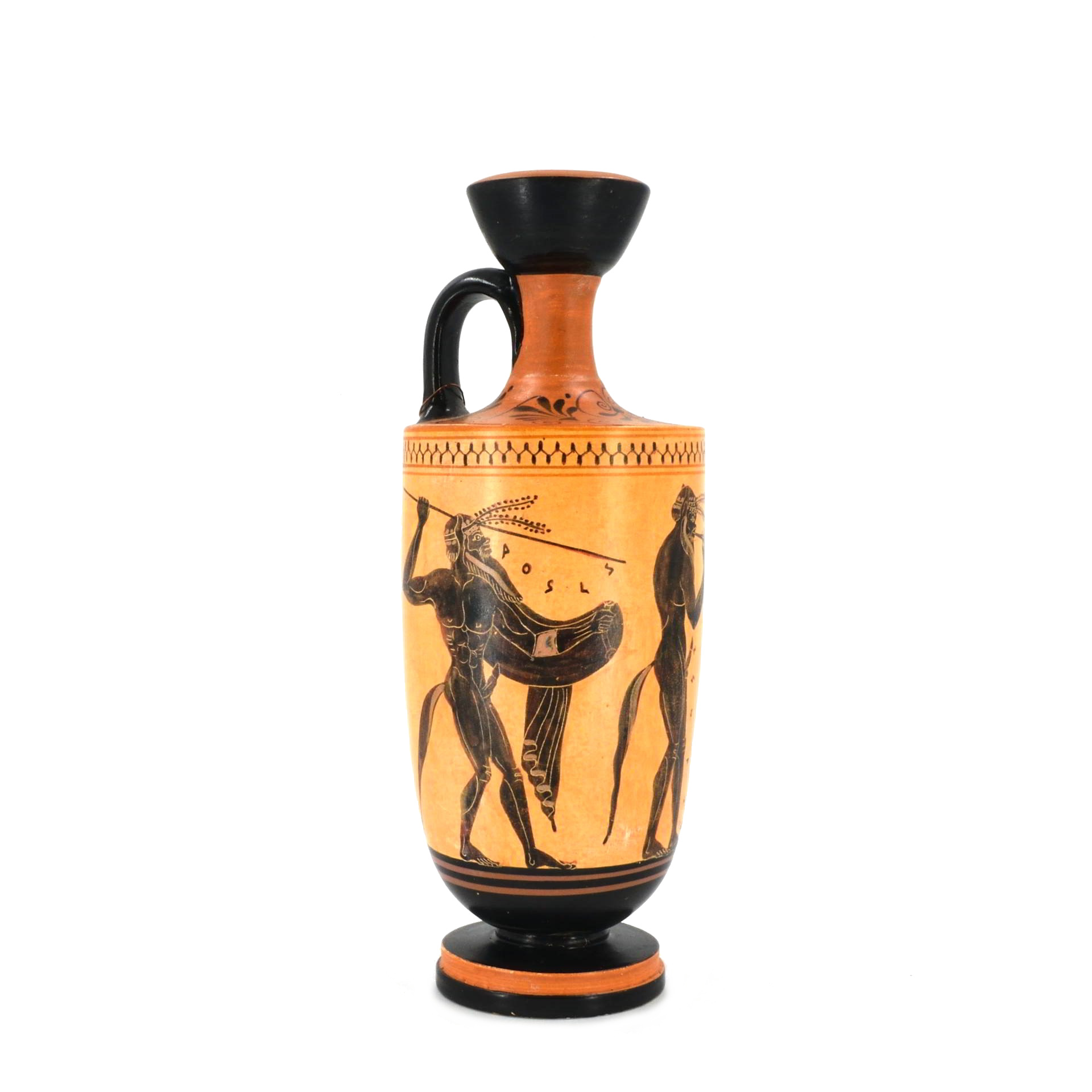
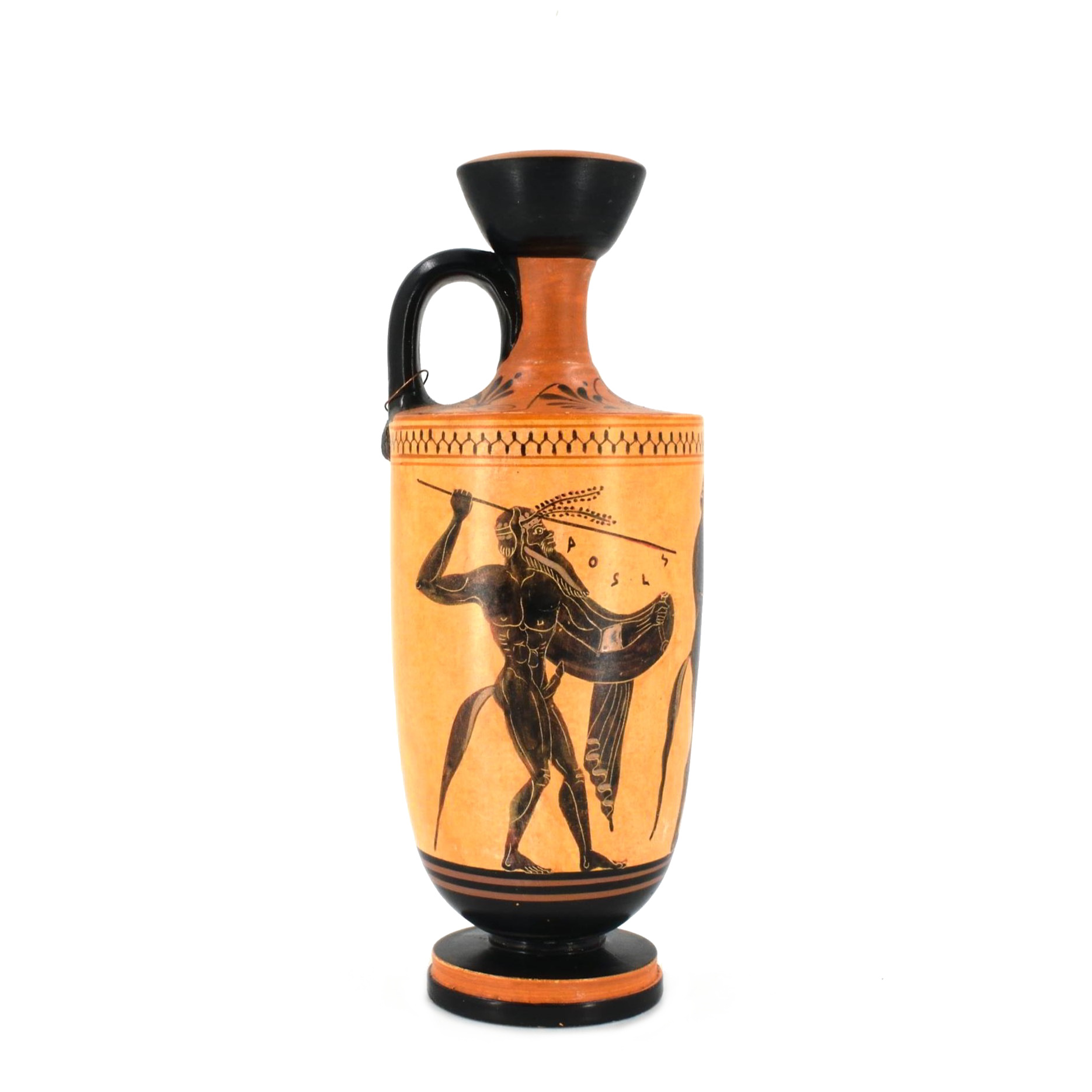
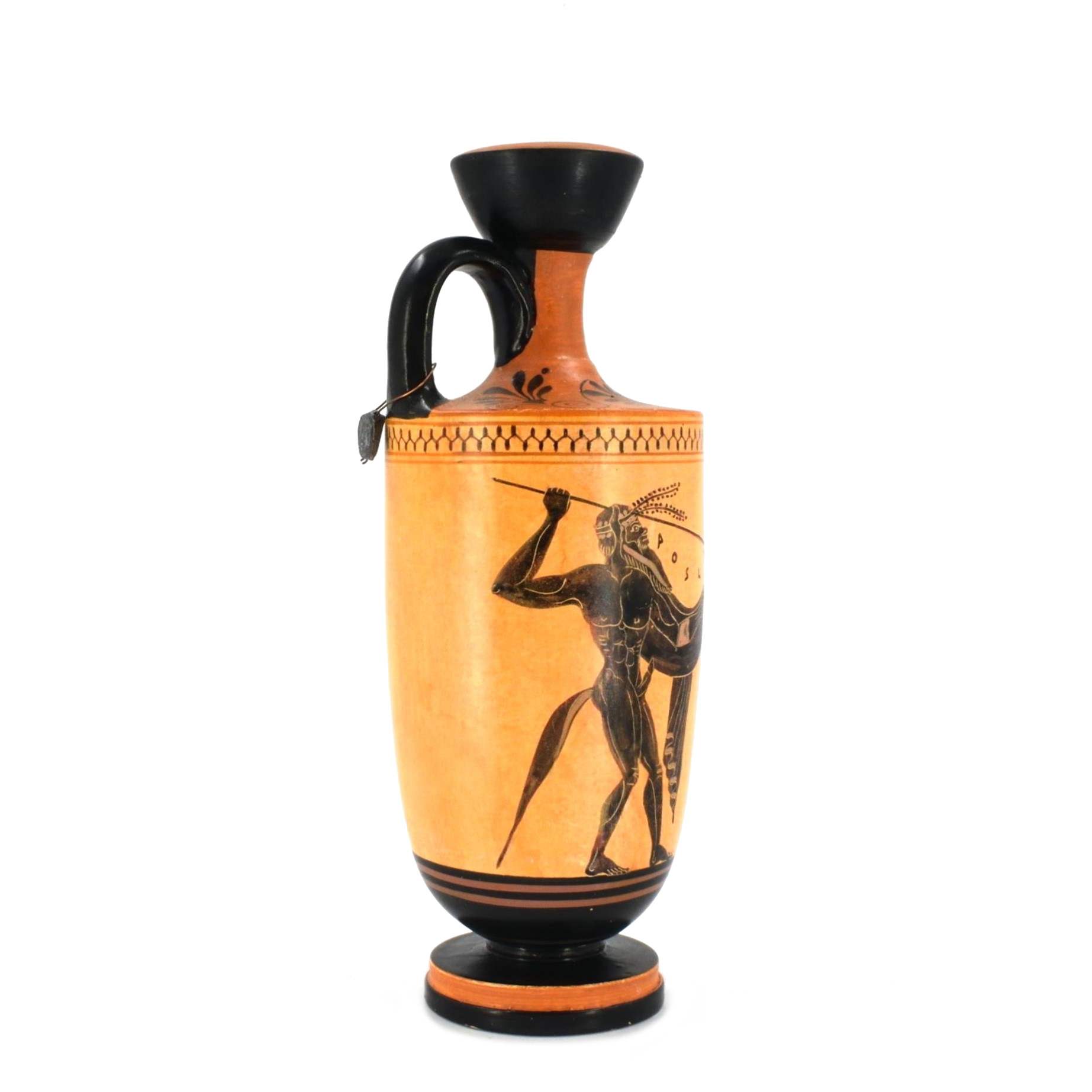
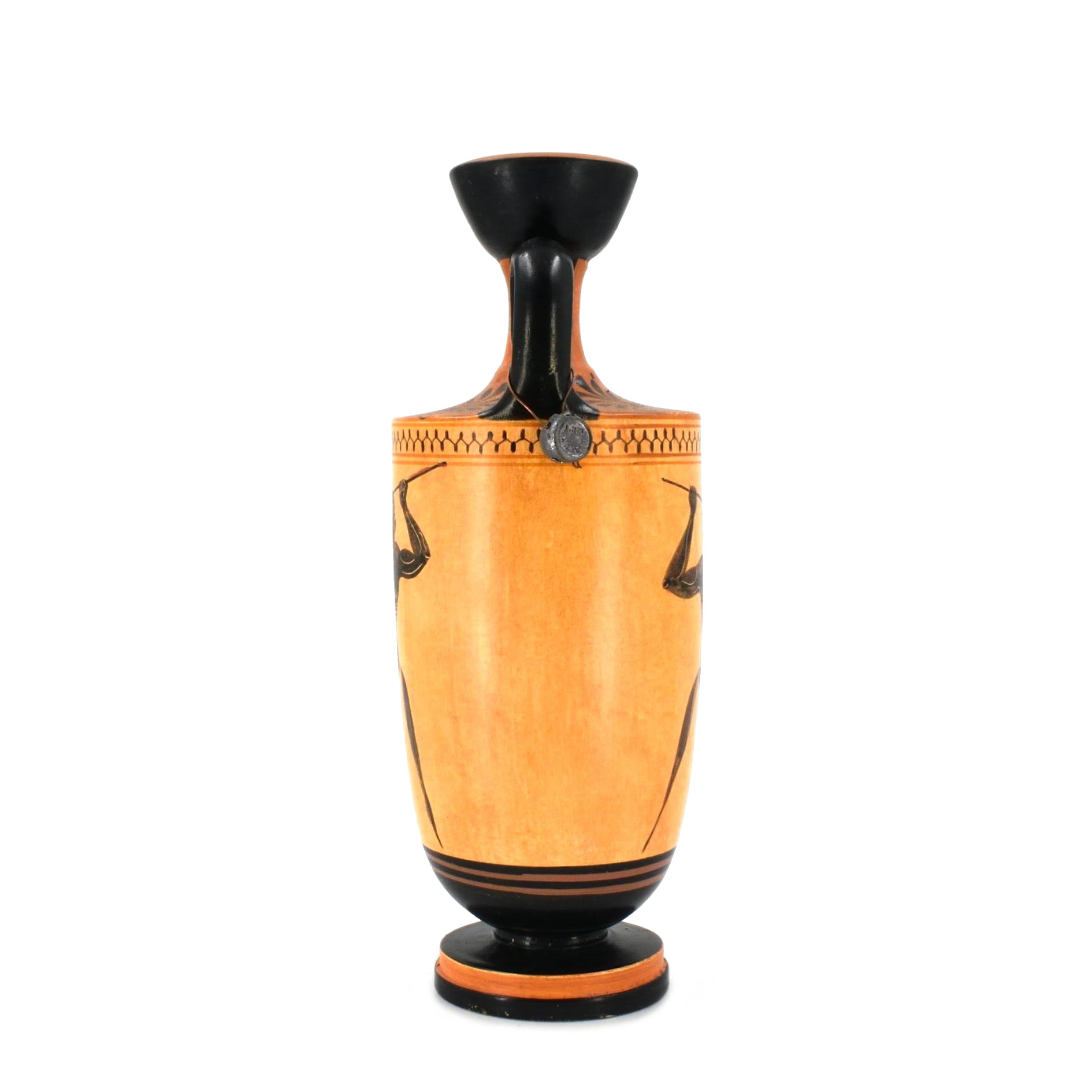
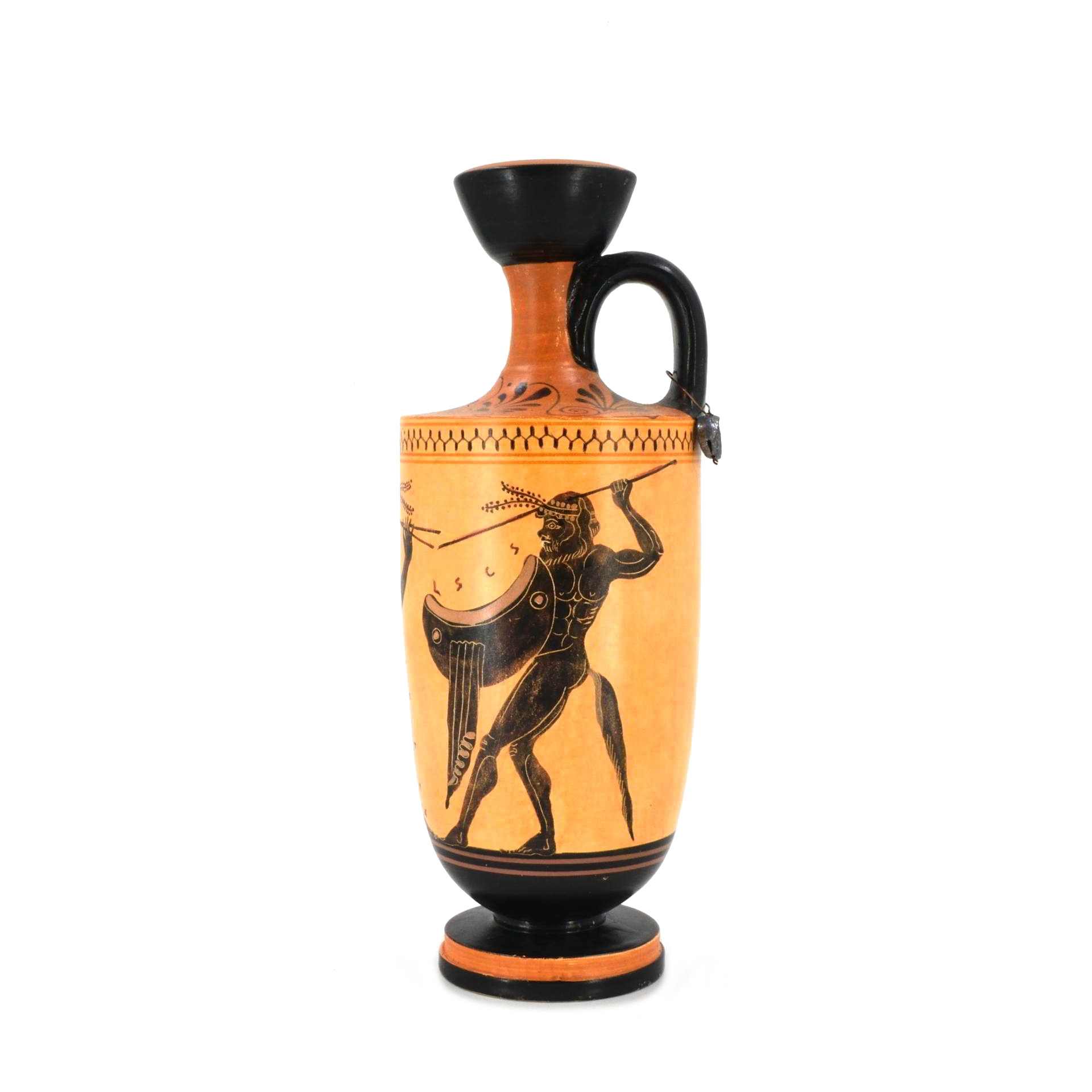
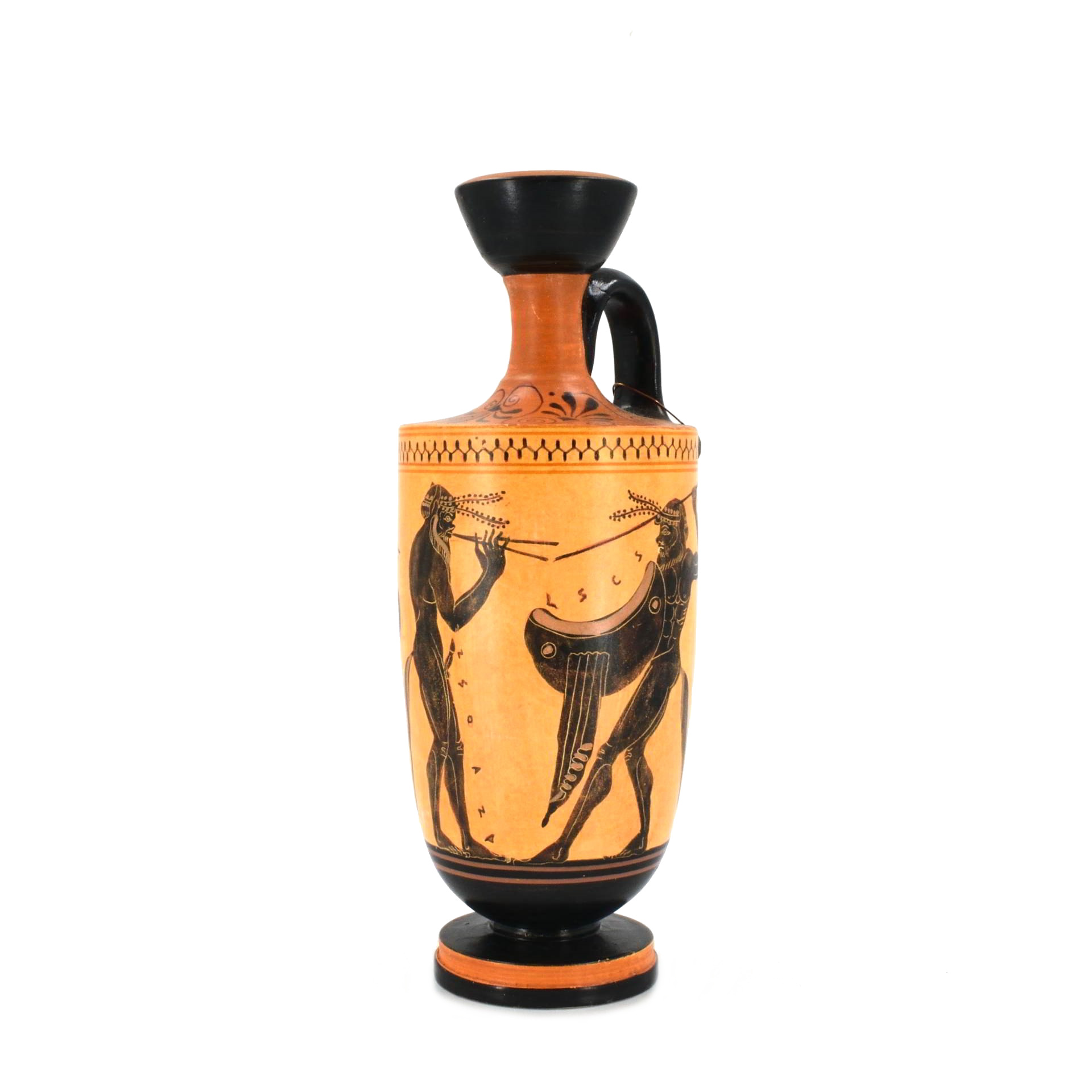
Replica of an Archaic Greek black-figure lekythos (early 5th century BCE) depicting satyrs dancing and playing the aulos in a Dionysian procession, inspired by an original vase in the National Archaeological Museum, Athens.
Read moreRapid, trackable and secure delivery options to your doorstep worldwide.
Secure redirect payment via Worldline® and Eurobank S.A®
Payment options:
• Easy and simple, within 14 days of delivery.
• See conditions and procedure in Rescission & Returns.
This museum-style reproduction is based on an Archaic Greek black-figure lekythos preserved in the National Archaeological Museum. The original vessel dates to the early 5th century BCE and belongs to the long tradition of Attic pottery decorated with scenes from the world of Dionysus, the god of wine, theater, and ecstatic ritual.
The illustration shows satyrs participating in a Dionysian thiasos, the mythological procession of the god and his companions. At the center stands a satyr playing the aulos, a double-pipe instrument whose music accompanied ancient festivals and ritual dance. Other satyrs move around him, raising their arms and responding to the rhythm of the music.
In Greek art, satyrs symbolized the wild and uninhibited forces of nature and were closely linked to the cult of Dionysus. Scenes such as this evoke the celebratory atmosphere of Dionysian rites, where music, dance, and wine created a powerful sense of communal ecstasy.
Decorated in the black-figure technique, the figures are rendered in glossy black slip and finely incised details on a terracotta body, characteristic of Athenian vase painting of the late Archaic period.
SIZE: 27 cm
MATERIAL: ceramic
PATINA: attic – red figure
METHOD: sand cast