



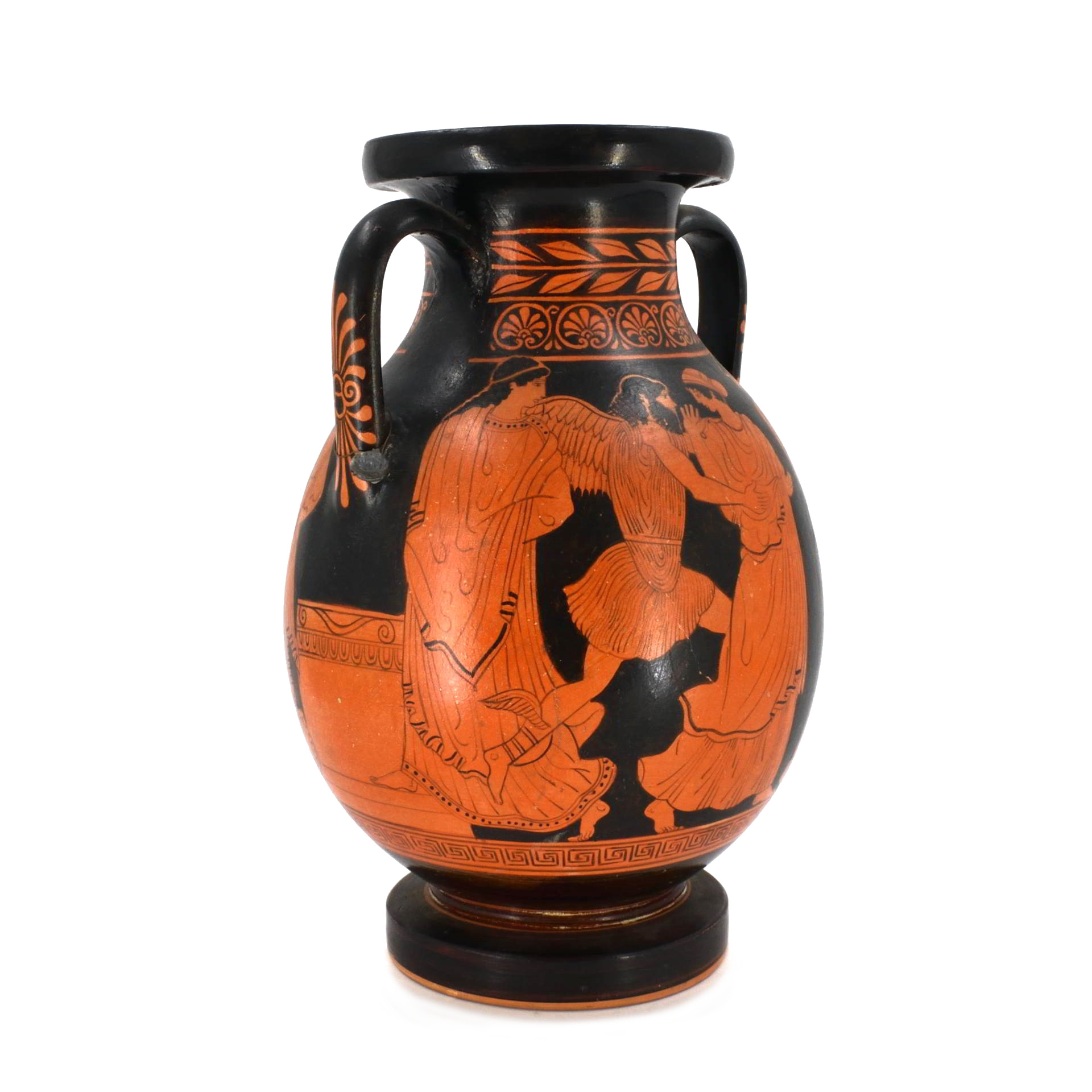
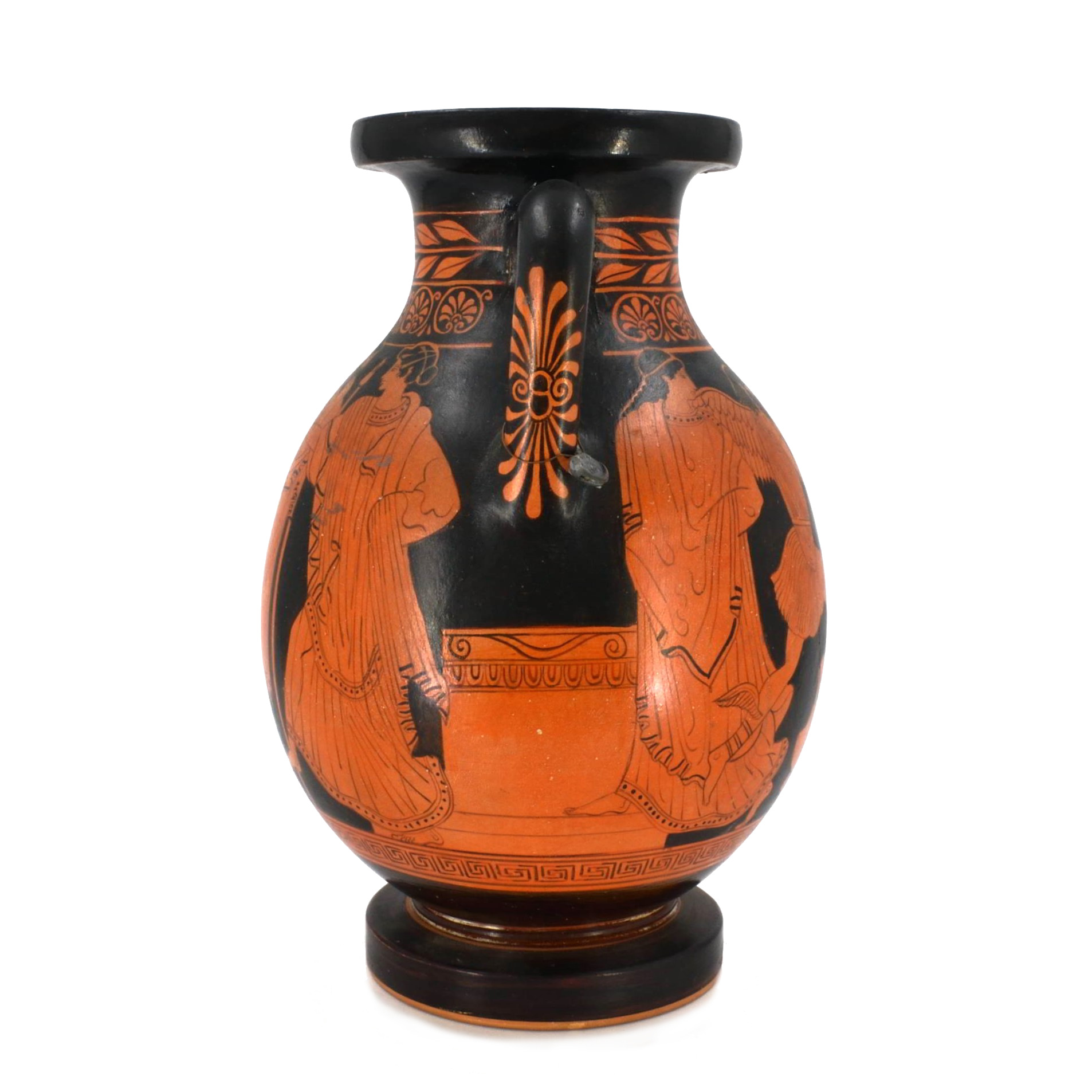
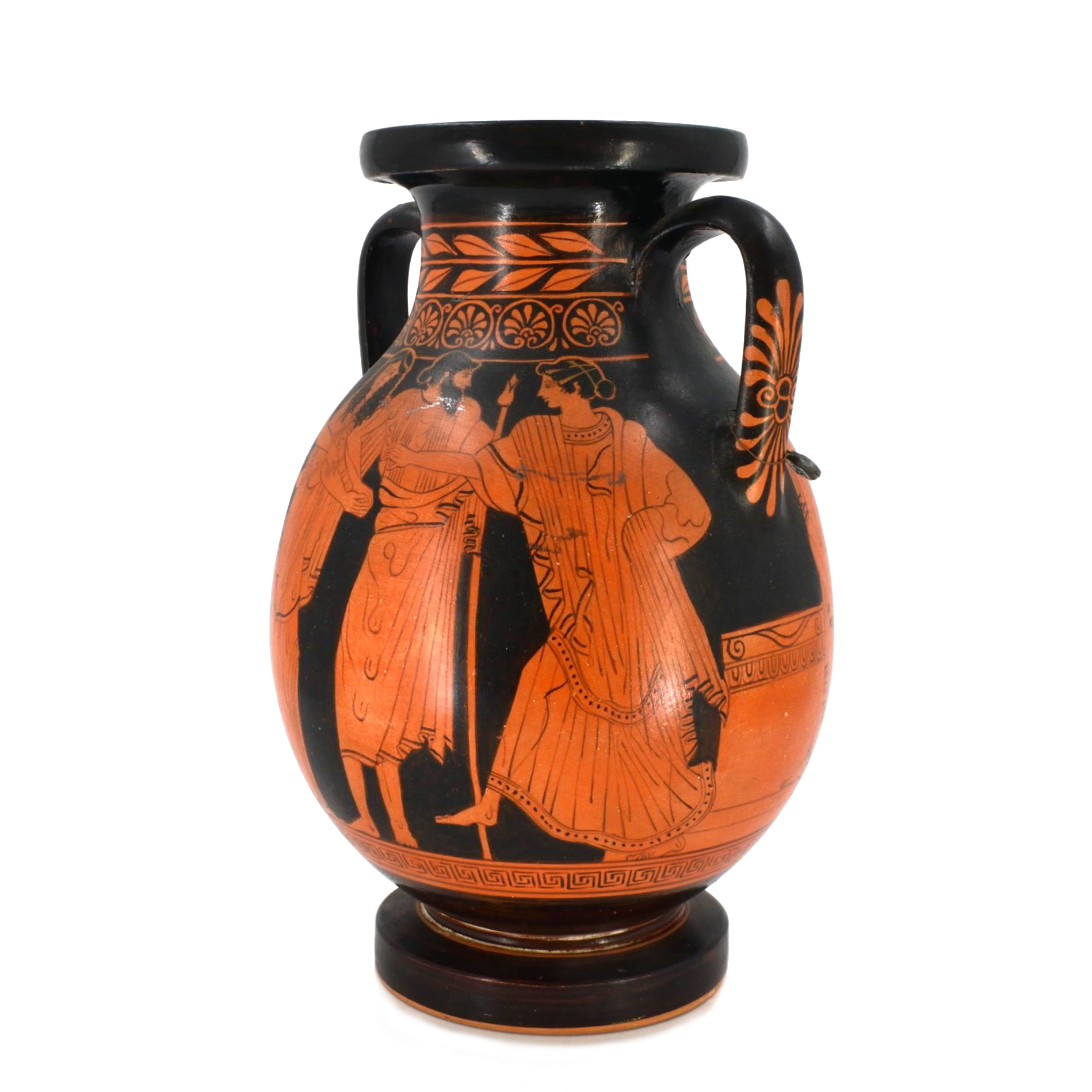
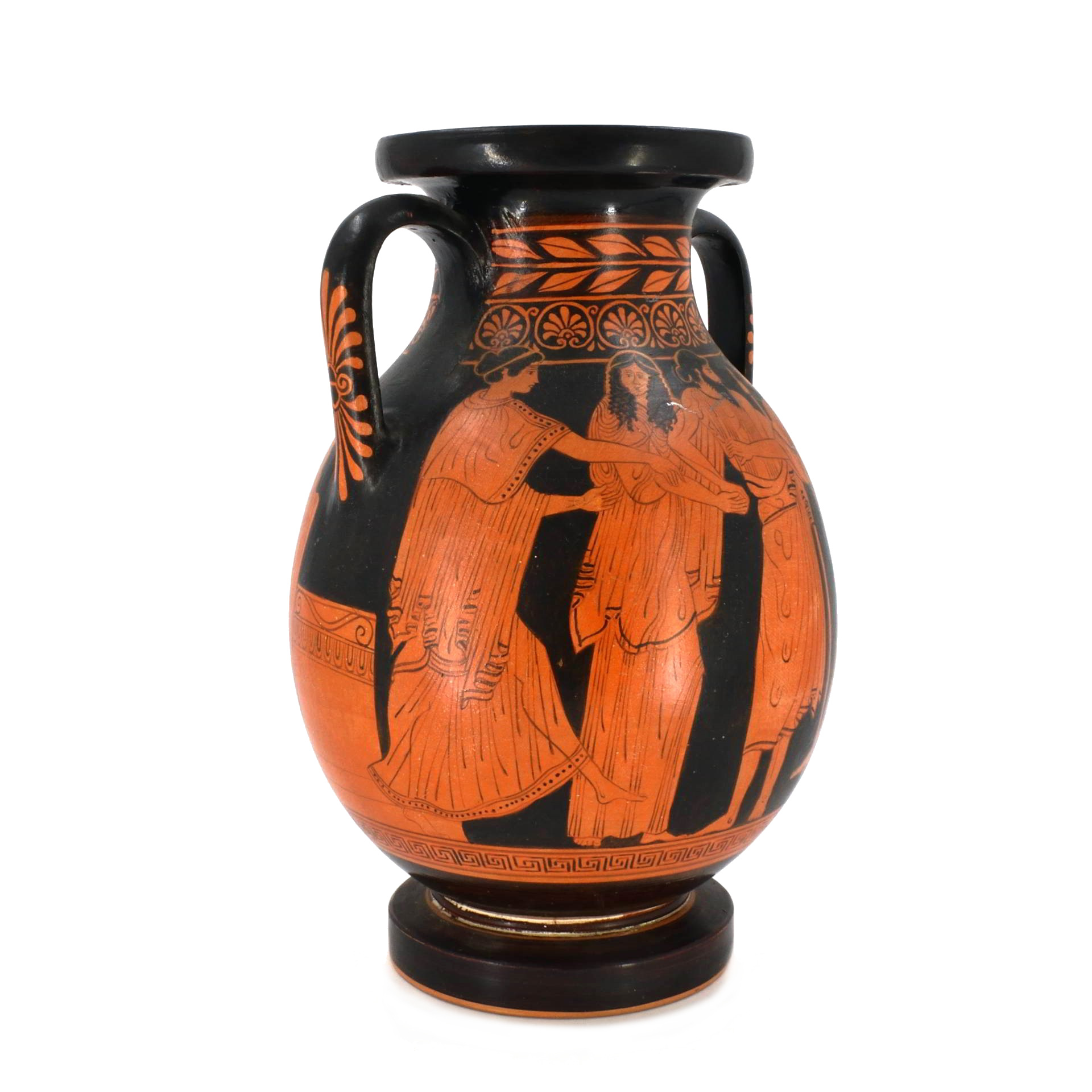
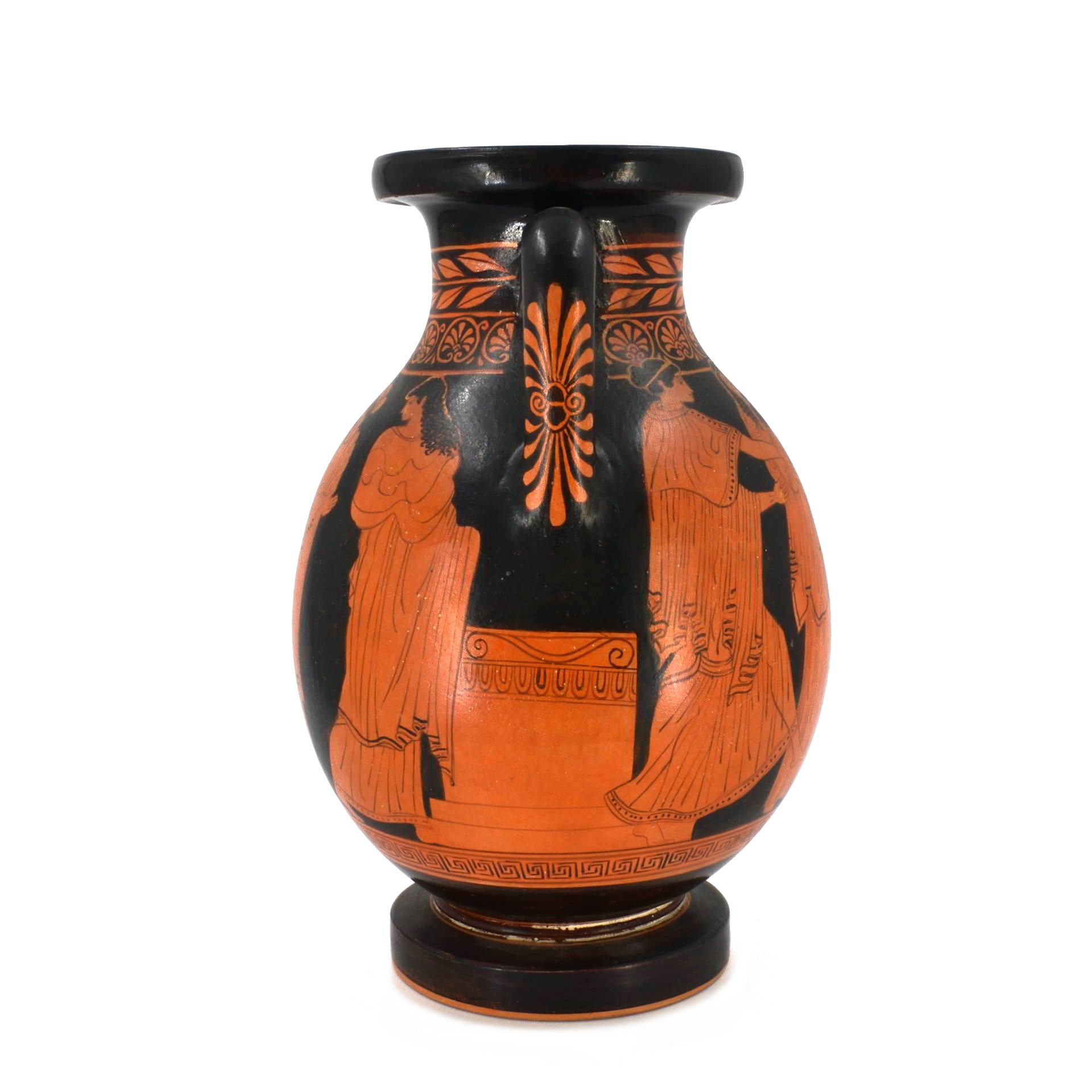
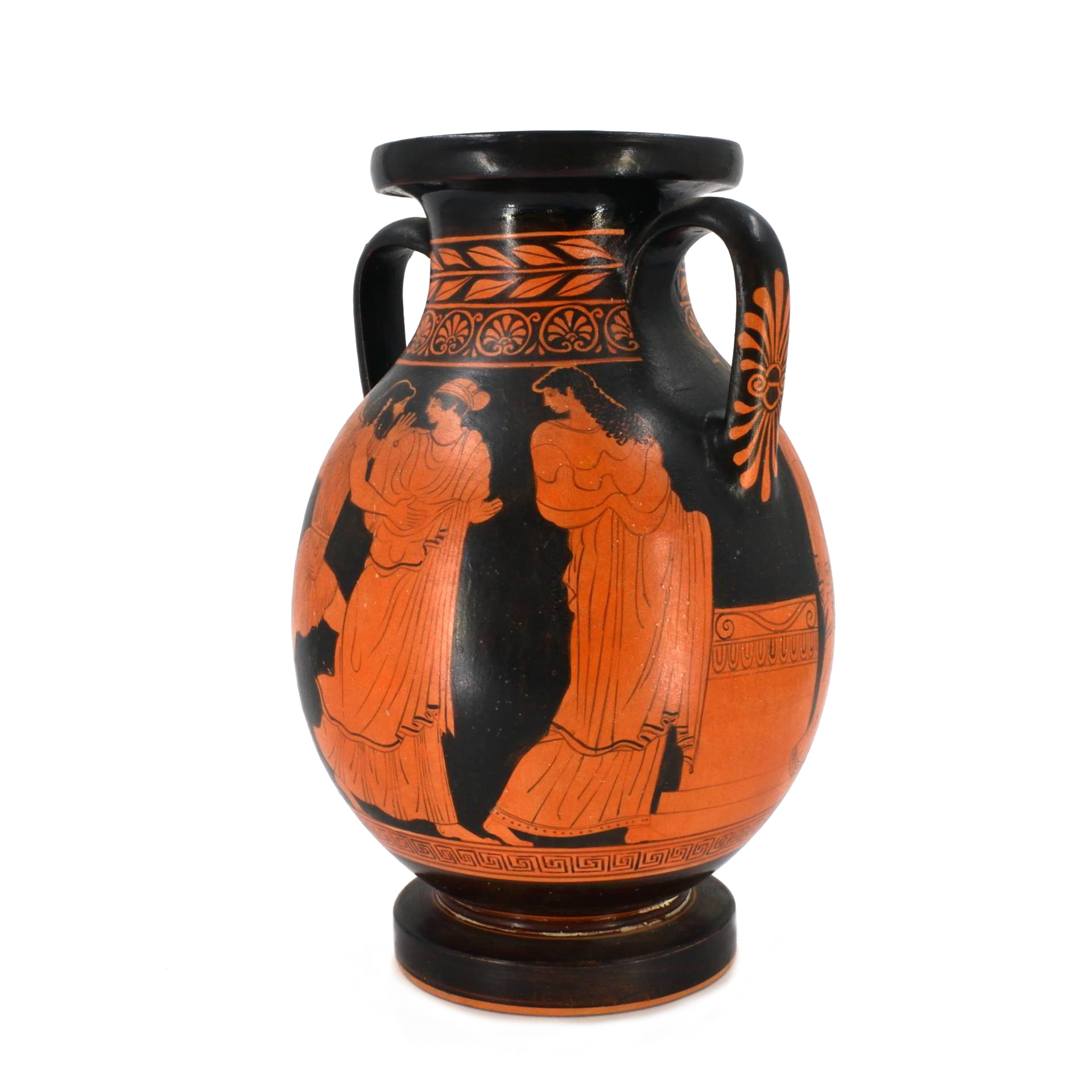
Replica of a Classical Attic red-figure pelike attributed to the Hephaistos Painter, originally produced in Attica, Greece around 440 BC and now preserved in the British Museum, depicting Eros pursuing a female figure in a mythological scene.


600,00 €
Rapid, trackable and secure delivery options to your doorstep worldwide.
Secure redirect payment via Worldline® and Eurobank S.A®
Payment options:
• Easy and simple, within 14 days of delivery.
• See conditions and procedure in Rescission & Returns.
This replica is inspired by an ancient Attic red-figure pelike created around 440 BC in Attica, Greece, and attributed by scholars to the Hephaistos Painter, a known vase painter of the Classical period. The original vessel is part of the collection of the British Museum in London.
Pelikes were storage vessels commonly used in the ancient Greek world for liquids such as wine, oil, or water. Their rounded body, narrow neck, and twin handles made them both functional and visually balanced. This particular design illustrates Eros, the winged god of love, pursuing a female figure who looks back in alarm—an expressive mythological moment typical of Classical Athenian vase painting. The scene reflects the artistic refinement of the Attic red-figure technique, a style that allowed painters to create detailed anatomy, flowing drapery, and lively narrative compositions.
Such vessels were not only practical household items but also important cultural objects, often placed in domestic settings or funerary contexts. Today, works like this provide insight into Greek mythology, social customs, and the artistic achievements of Classical Athens.
SIZE: 31 cm
MATERIAL: ceramic
PATINA: attic – red figure
METHOD: sand cast


