



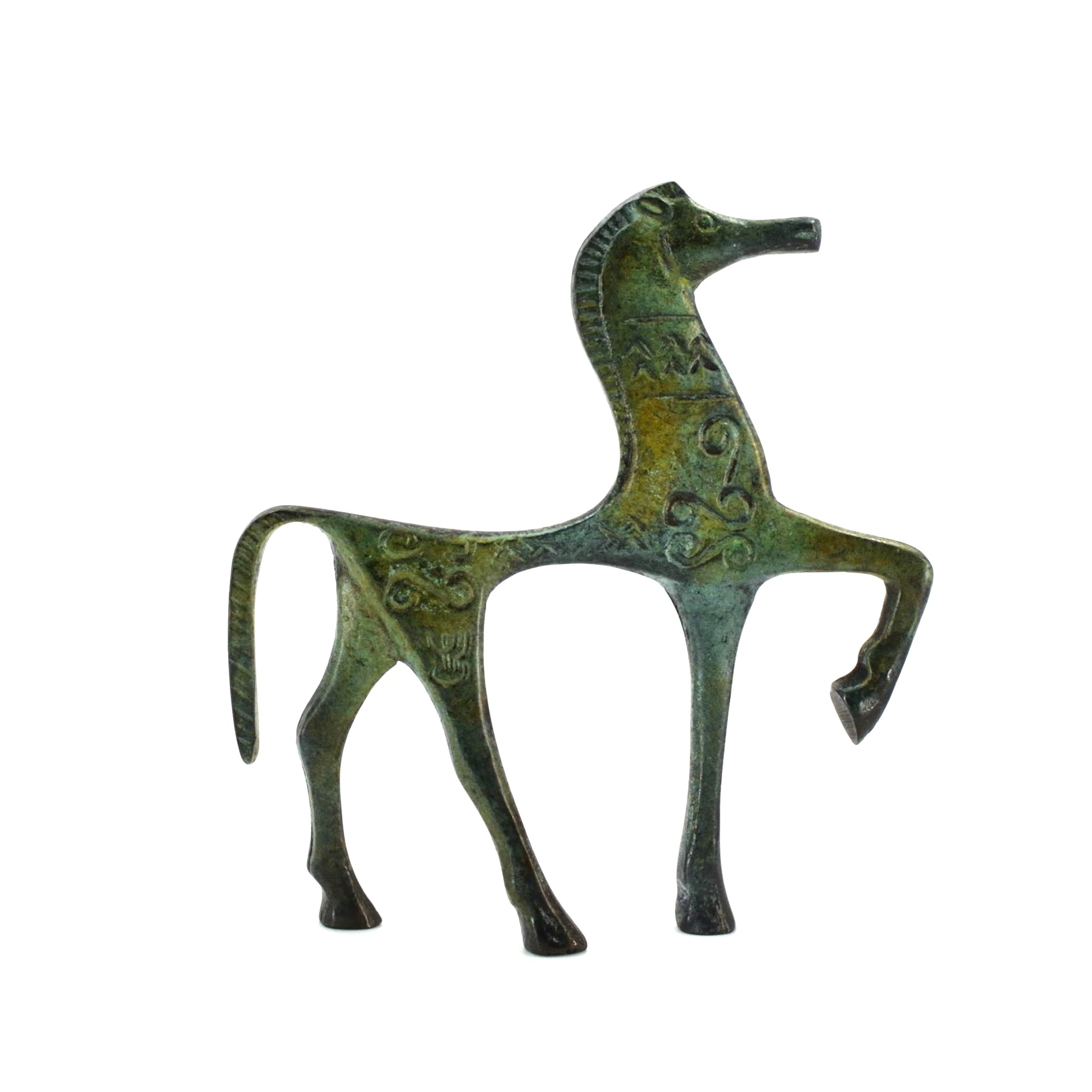
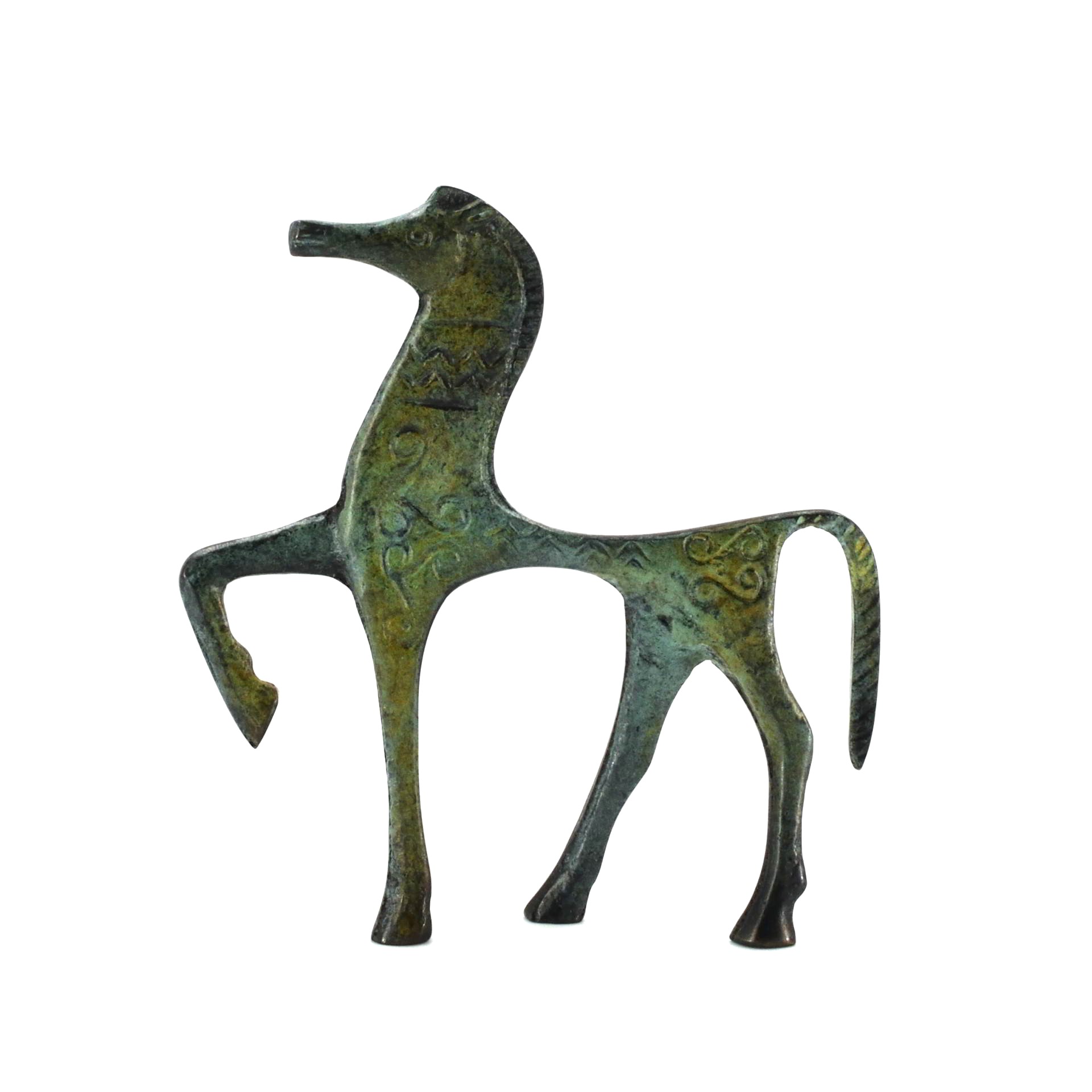
Greek Geometric horse idol (900–700 BCE) with spiral engravings, symbolizing status, harmony, and ritual devotion.


25,00 €
Rapid, trackable and secure delivery options to your doorstep worldwide.
Secure redirect payment via Worldline® and Eurobank S.A®
Payment options:
• Easy and simple, within 14 days of delivery.
• See conditions and procedure in Rescission & Returns.
This striking horse idol belongs to the Greek Geometric period (circa 900–700 BCE), a formative era in ancient Greek art marked by stylization, symmetry, and rhythmic ornamentation. Such figures were commonly produced in regions including Attica and the Peloponnese, where horse imagery symbolized status, nobility, and martial prestige.
The horse’s elongated neck, arched stance, and simplified anatomy reflect the disciplined geometric aesthetic of the era. Its surface is enriched with finely incised spiral and curvilinear motifs—decorative elements that echo the broader visual language of Geometric art. These swirling ornaments were not merely decorative; they conveyed harmony, continuity, and order, central ideals in early Greek visual culture.
Horse idols of this type were often dedicated in sanctuaries, placed in graves as elite offerings, or used as votive objects to honor deities associated with warfare and protection. Compact yet powerful in presence, the figure embodies both artistic restraint and symbolic strength.
SIZE: 11 cm
MATERIAL: bronze
PATINA: rust green oxidatiom
METHOD: sand cast


