60,00 €
Rapid, trackable and secure delivery options to your doorstep worldwide.
Secure redirect payment via Worldline® and Eurobank S.A®
Payment options:
• Easy and simple, within 14 days of delivery.
• See conditions and procedure in Rescission & Returns.
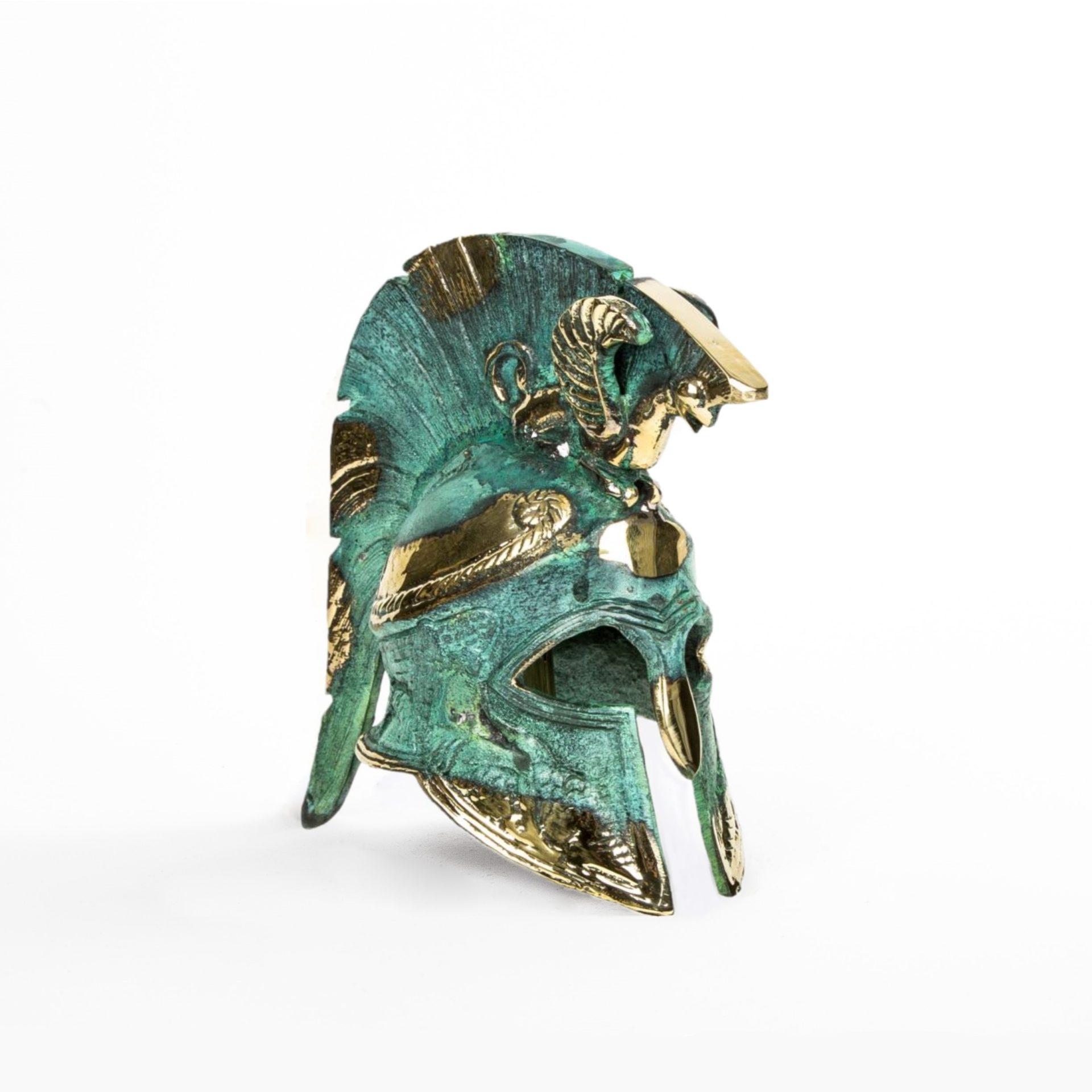
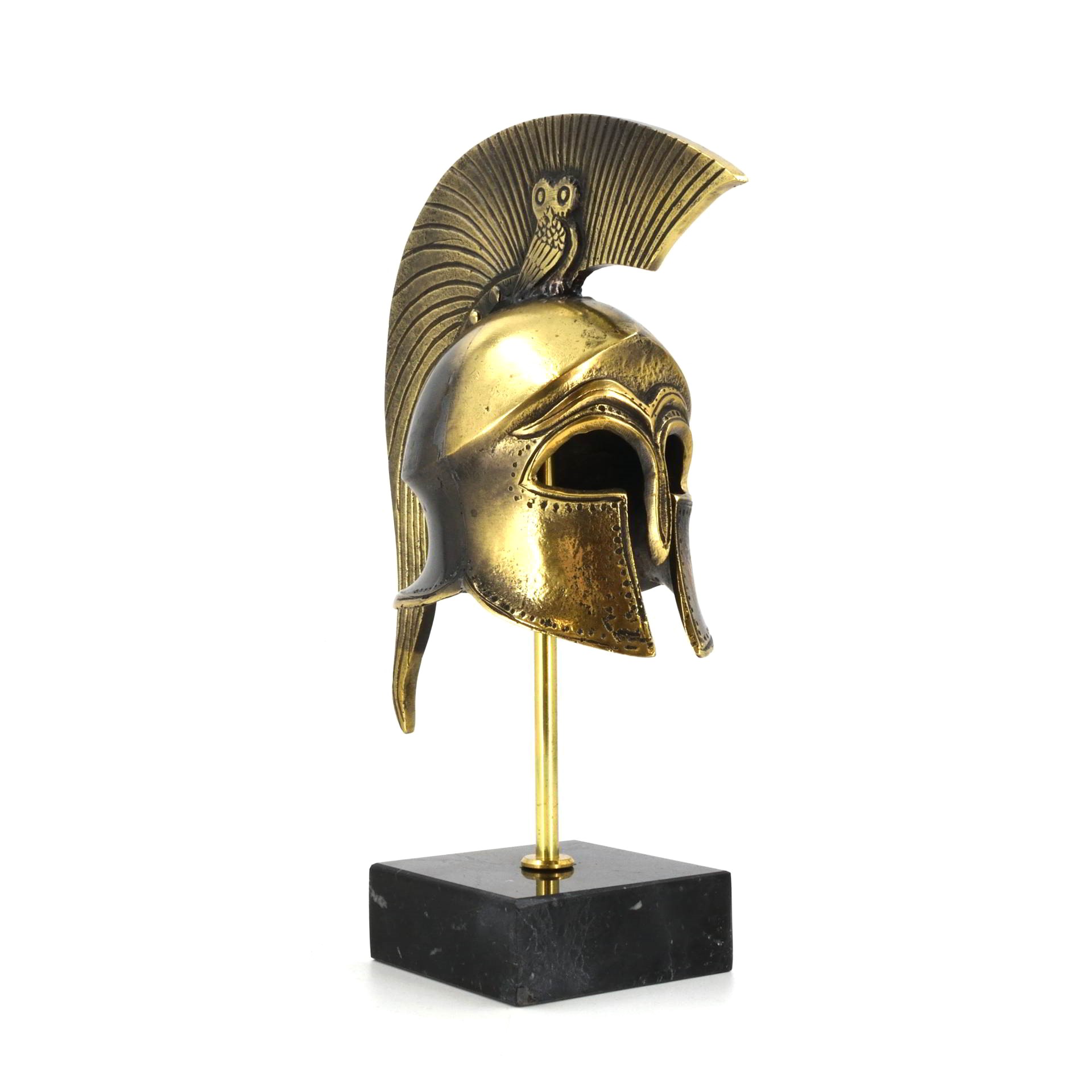
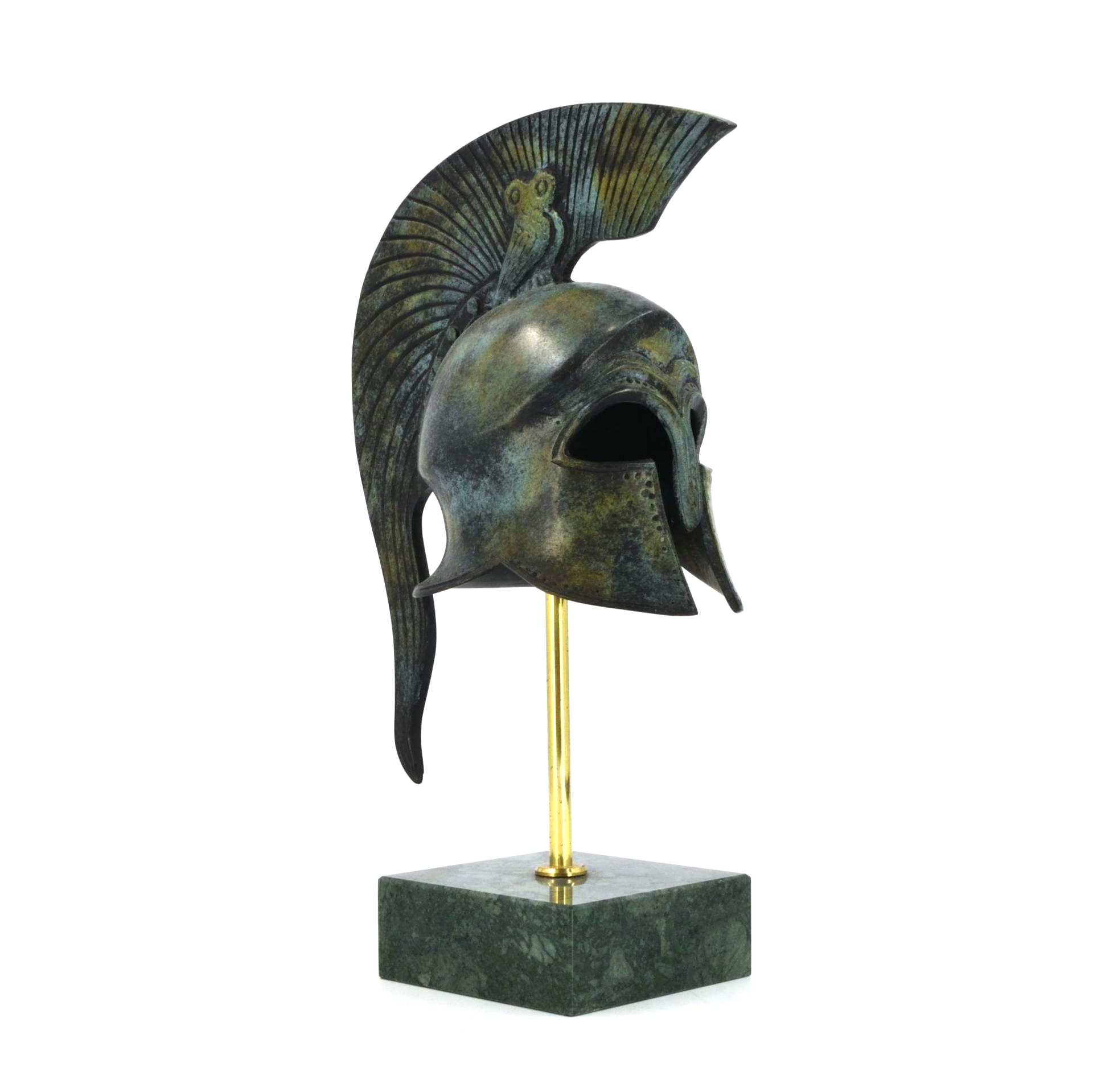
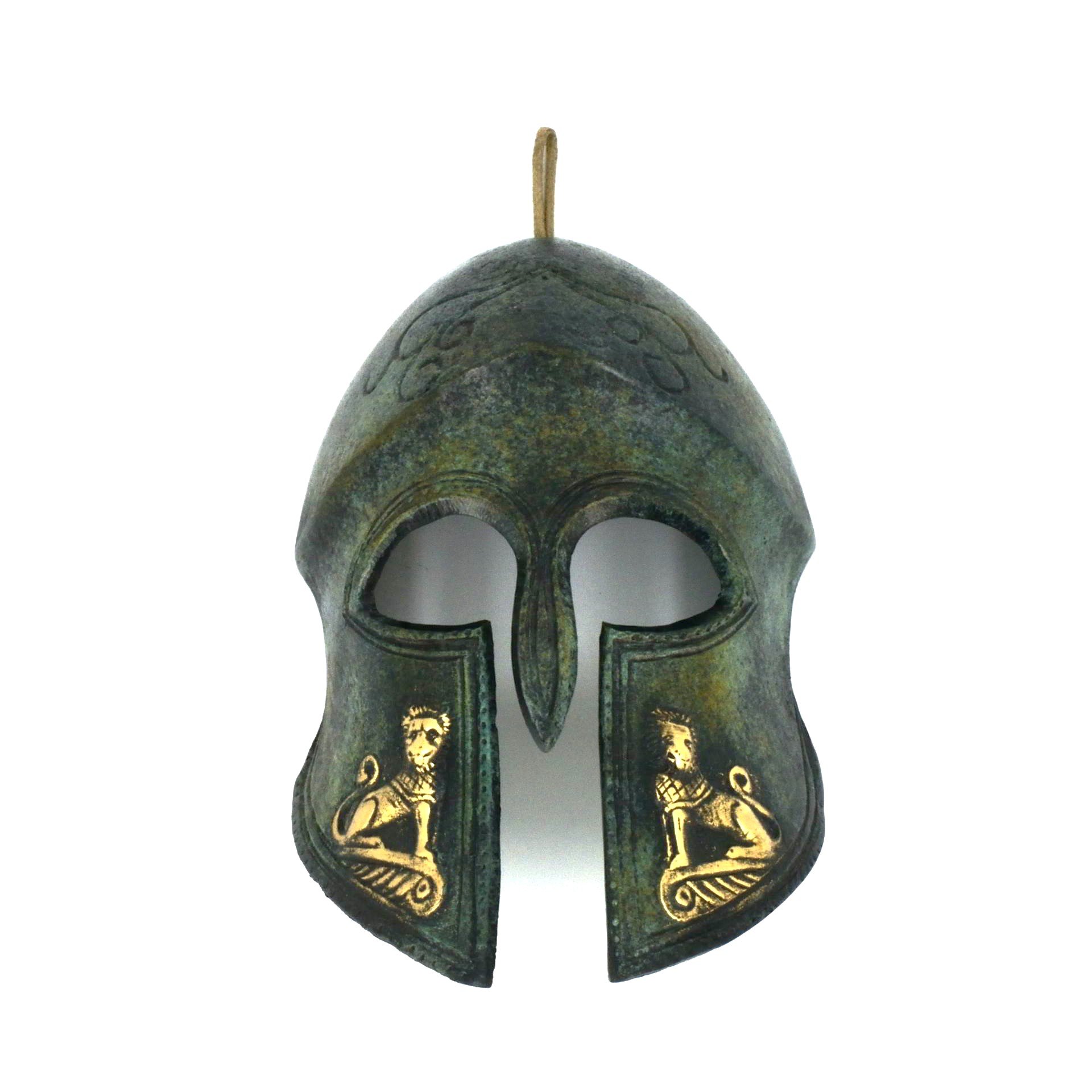
This helmet draws its inspiration from the Corinthian helmets of ancient Greece, a form that emerged in the late 7th century BCE and remained iconic through the Classical period. Widely used by Greek hoplites, this type of helmet was designed to fully enclose the head, leaving narrow openings for the eyes and mouth, emphasizing both protection and an imposing presence on the battlefield.
The lion ornaments reference a powerful symbol in Greek culture, associated with strength, courage, and heroic lineage. Lions frequently appeared in Greek myth and art, linked to figures such as Heracles, and were believed to convey protection and dominance to the warrior who bore them. Decorative elements like these also reflected regional workshops, particularly in Corinth and the Peloponnese, where craftsmanship and symbolic embellishment flourished.
Such helmets were worn across mainland Greece and its colonies, from the Aegean to southern Italy, serving not only as military equipment but as statements of identity, honor, and status within the citizen army tradition.
SIZE: cm
MATERIAL: bronze
PATINA: rust green oxidatiom
METHOD: sand cast