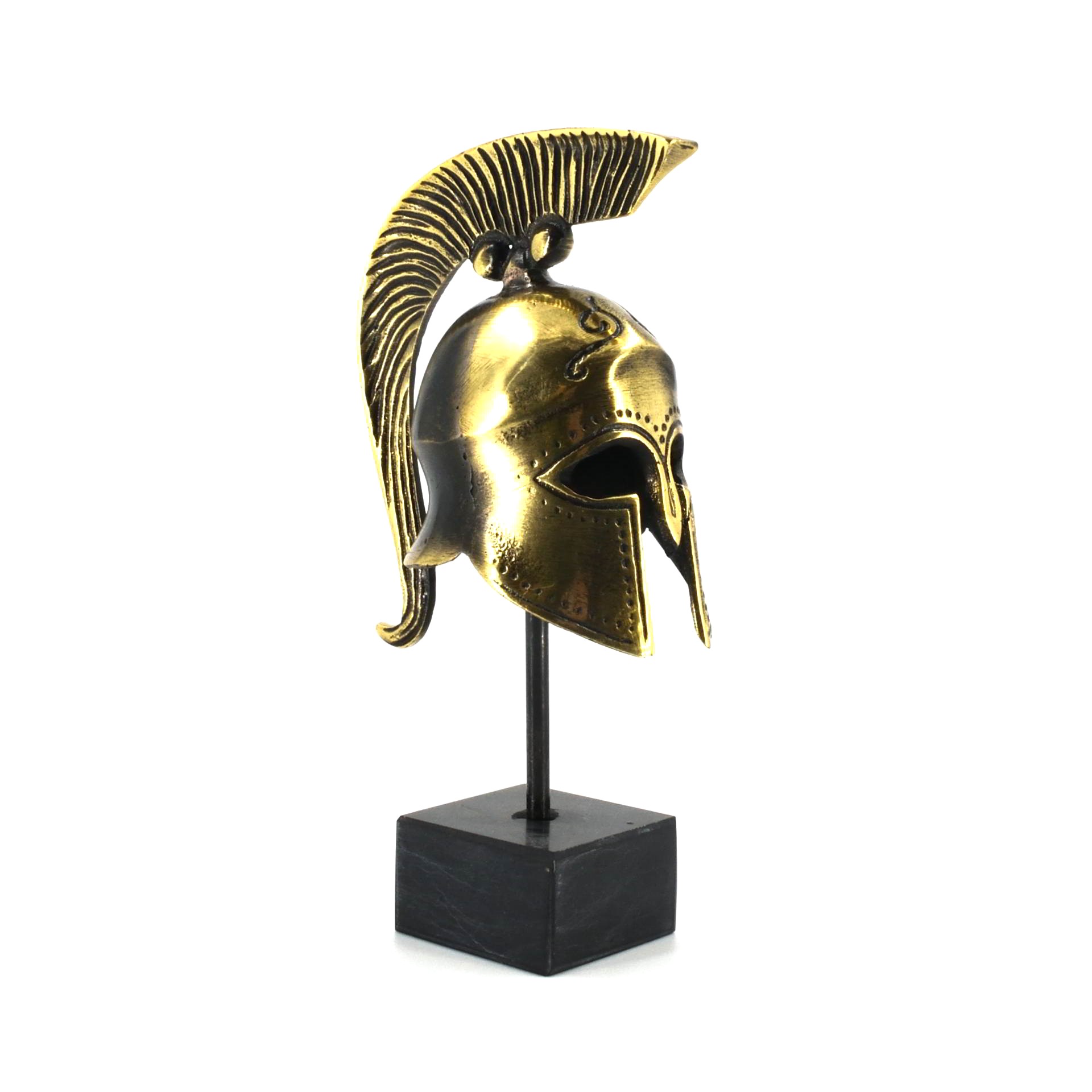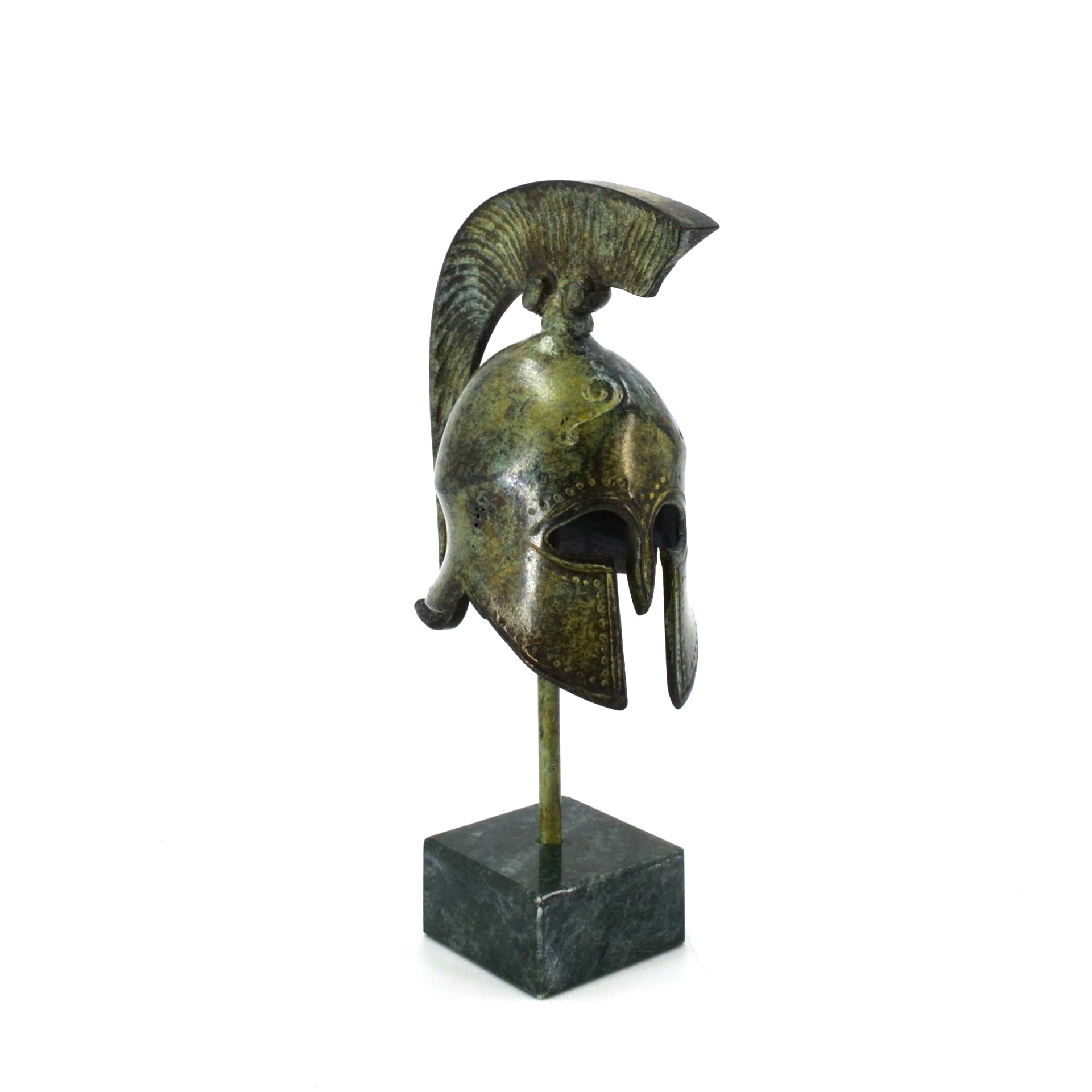


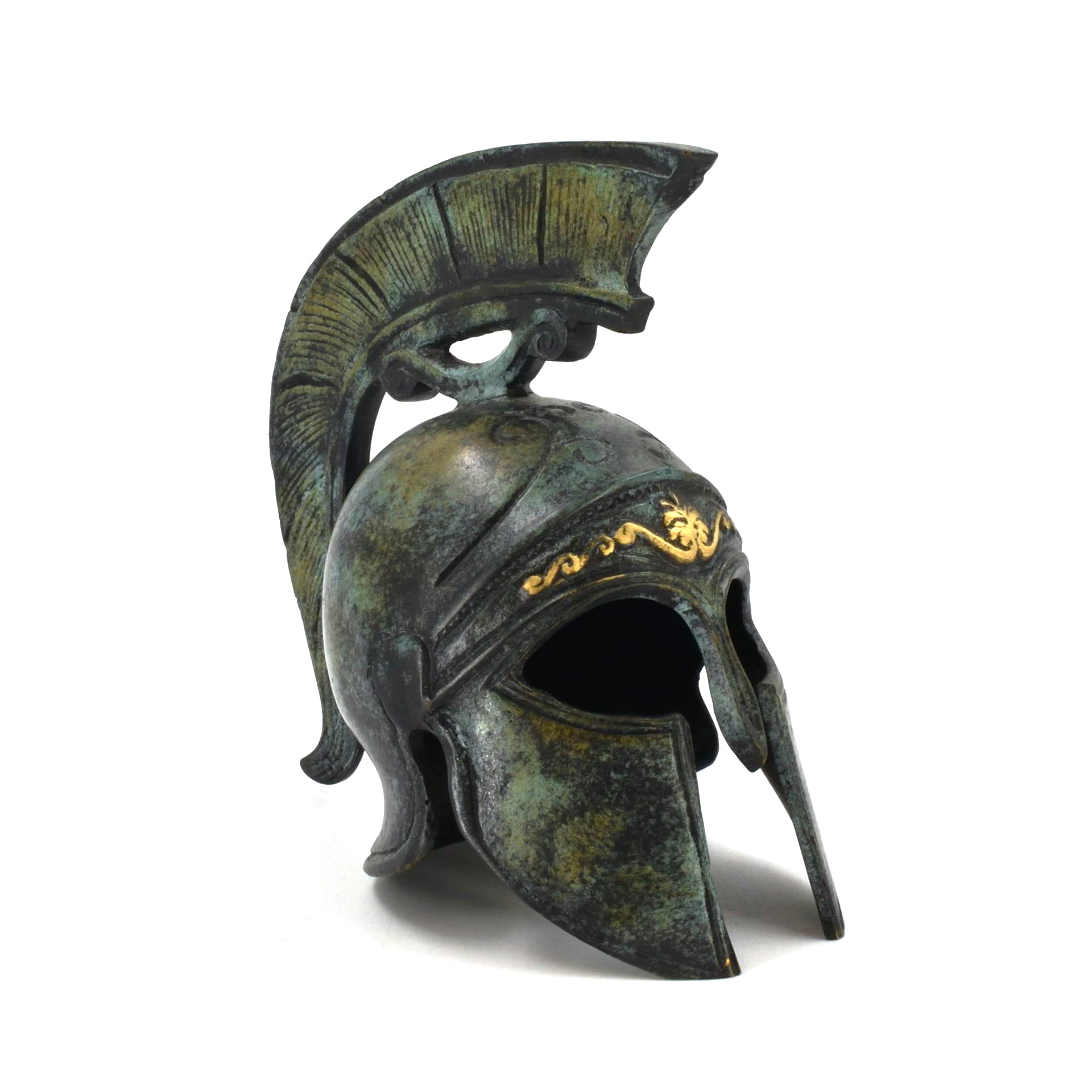
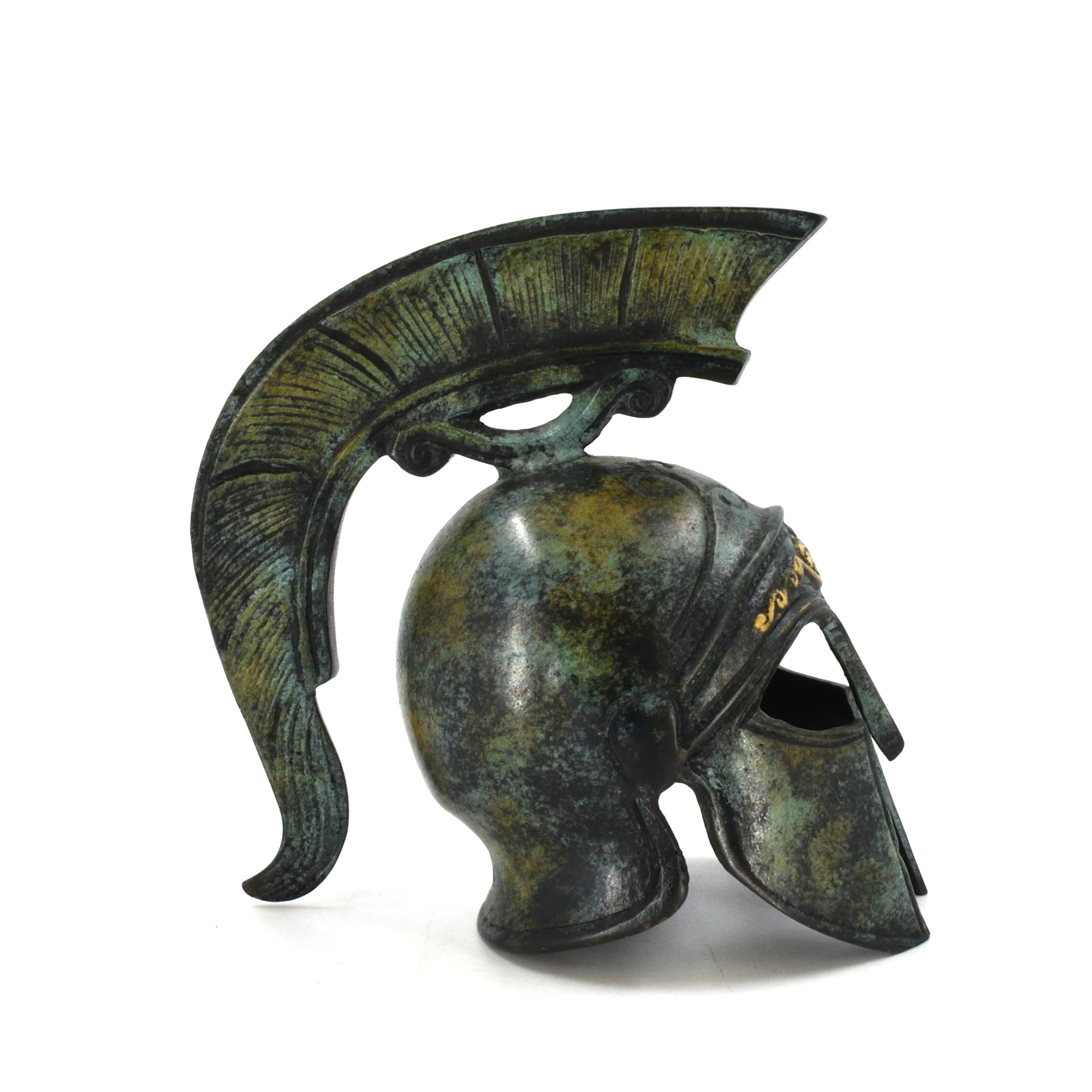
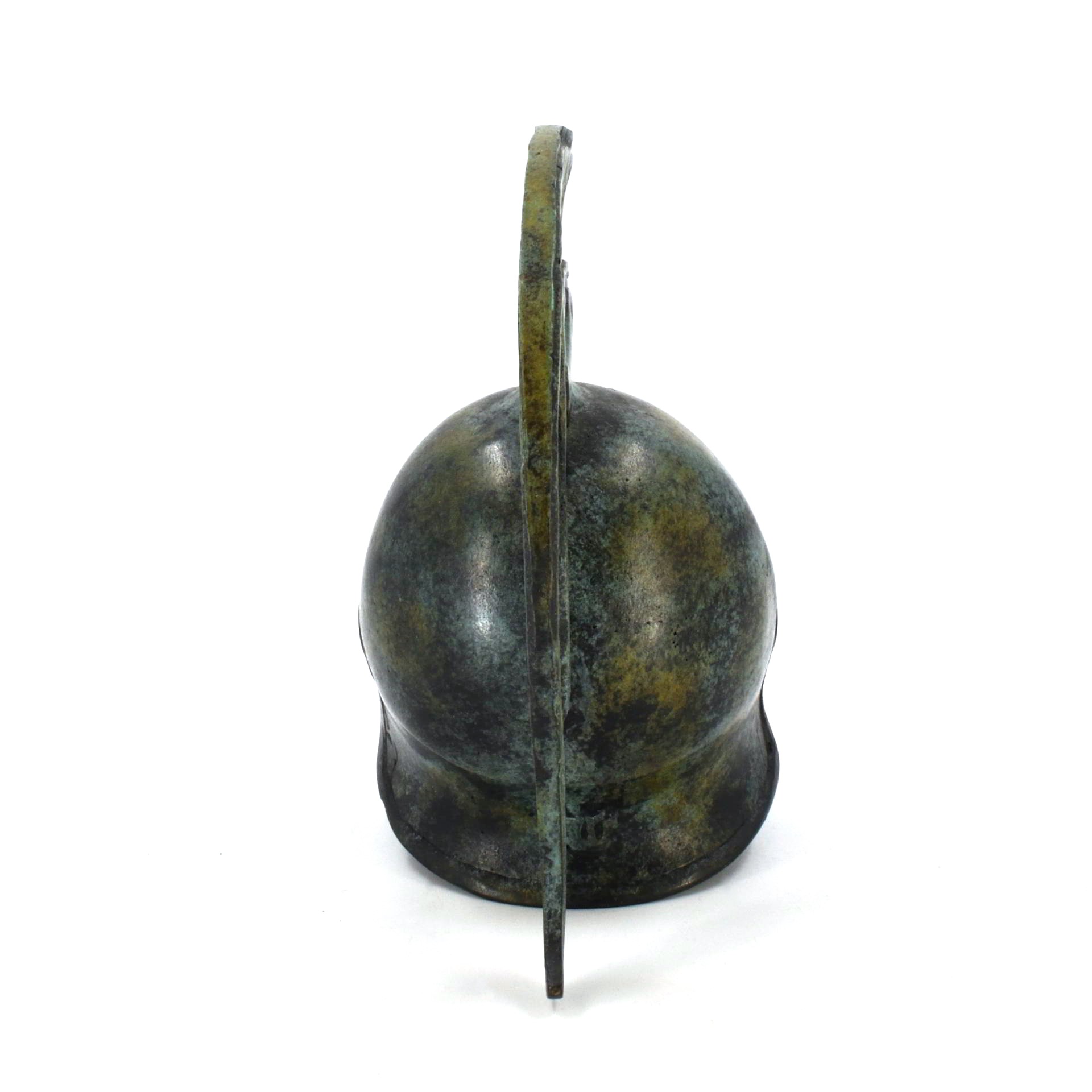
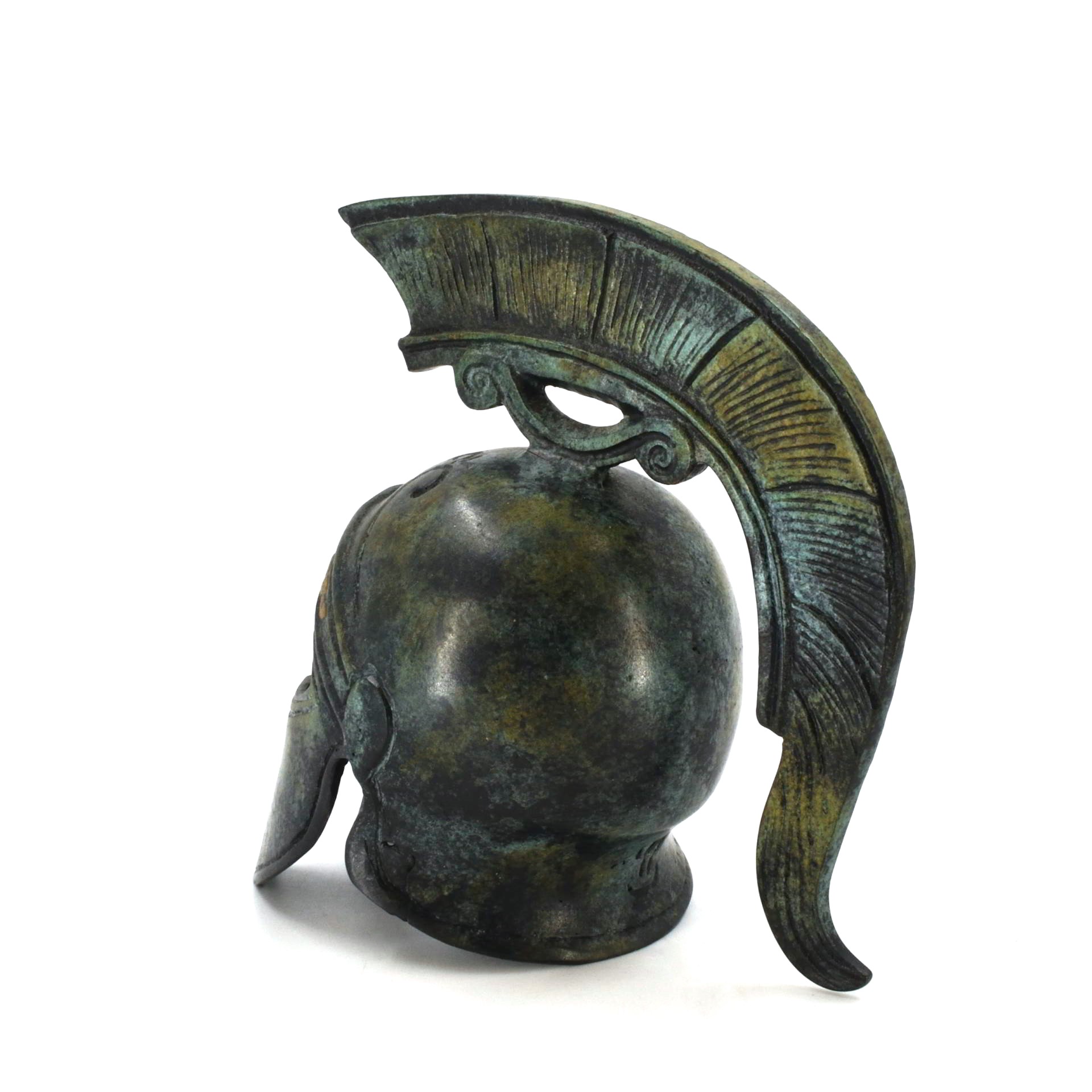
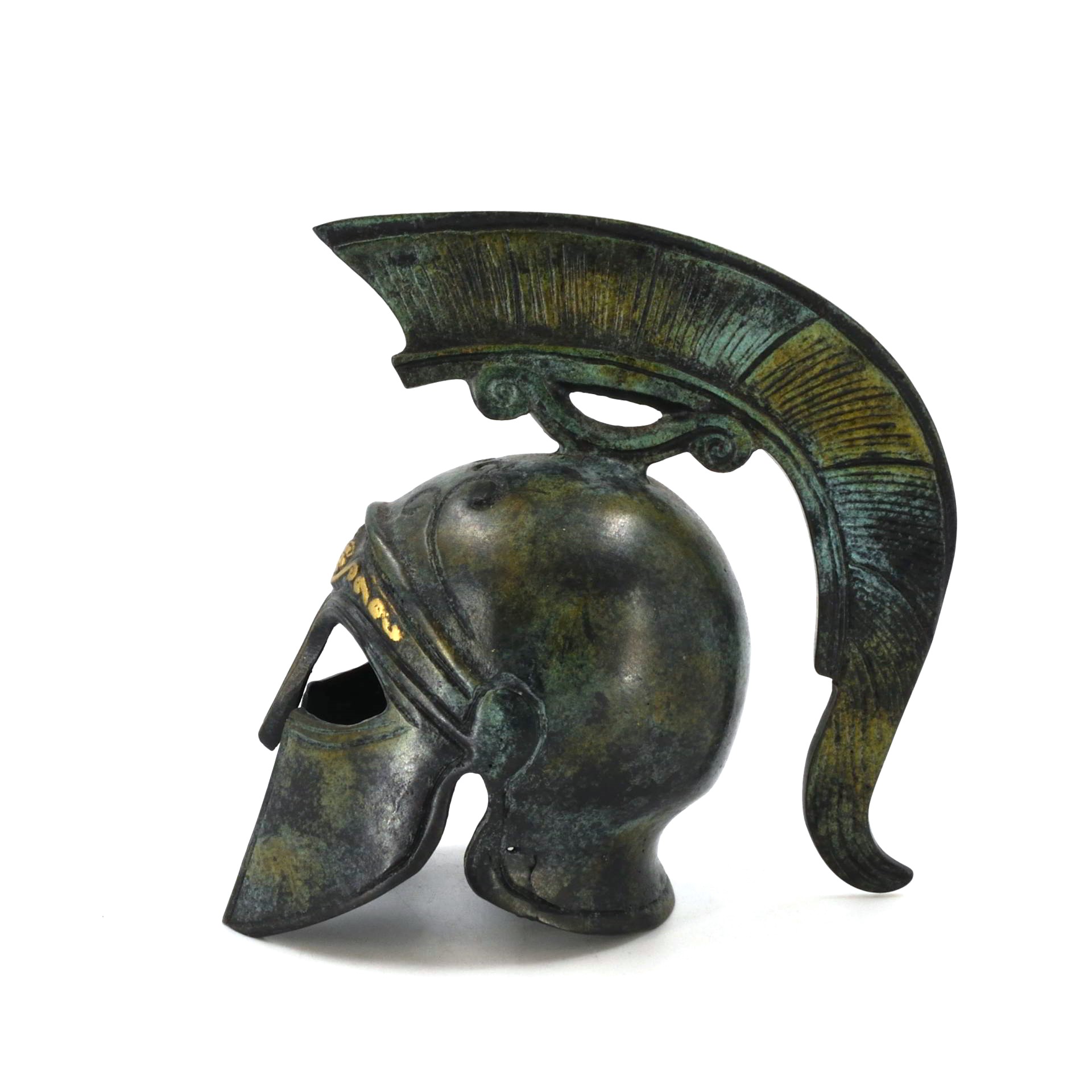
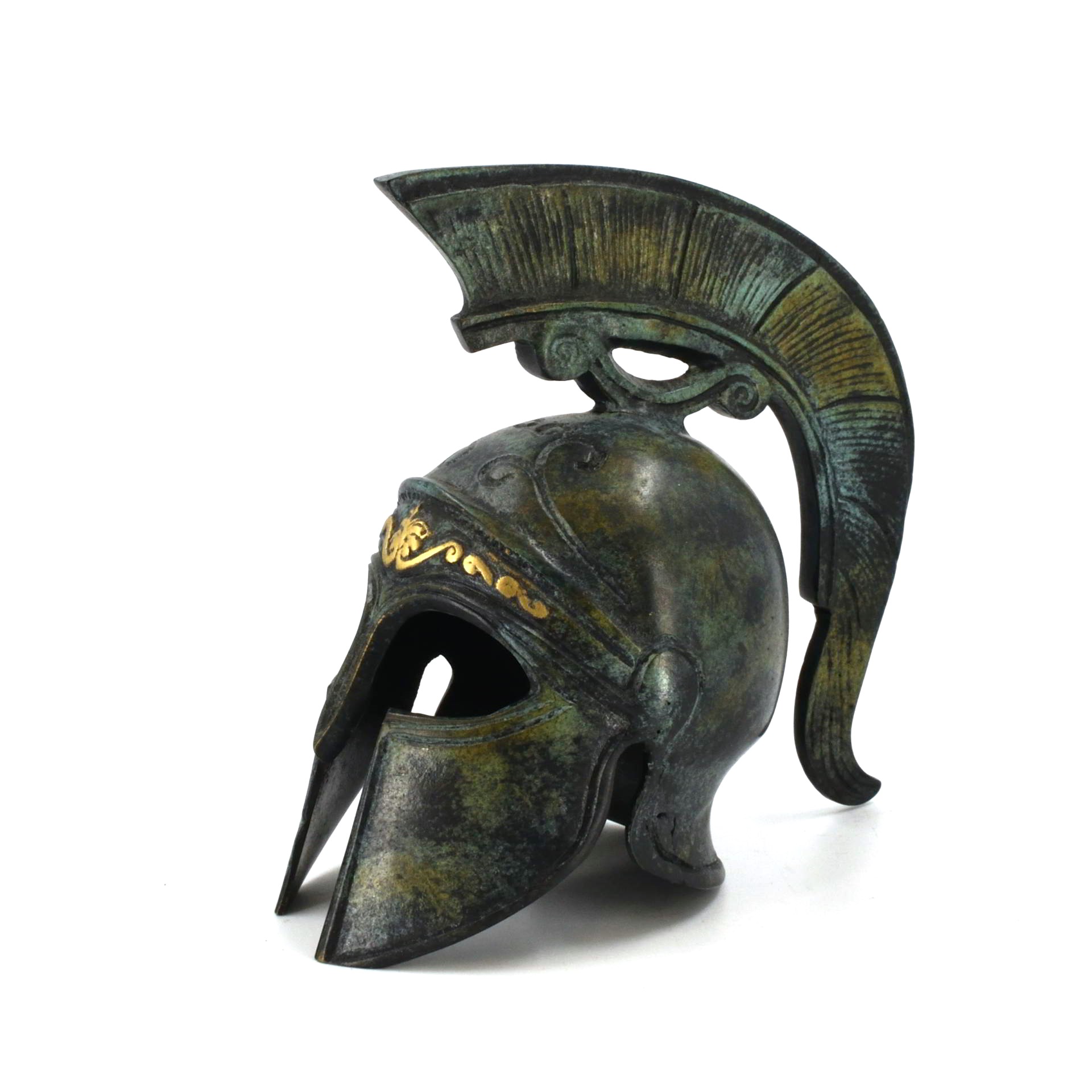
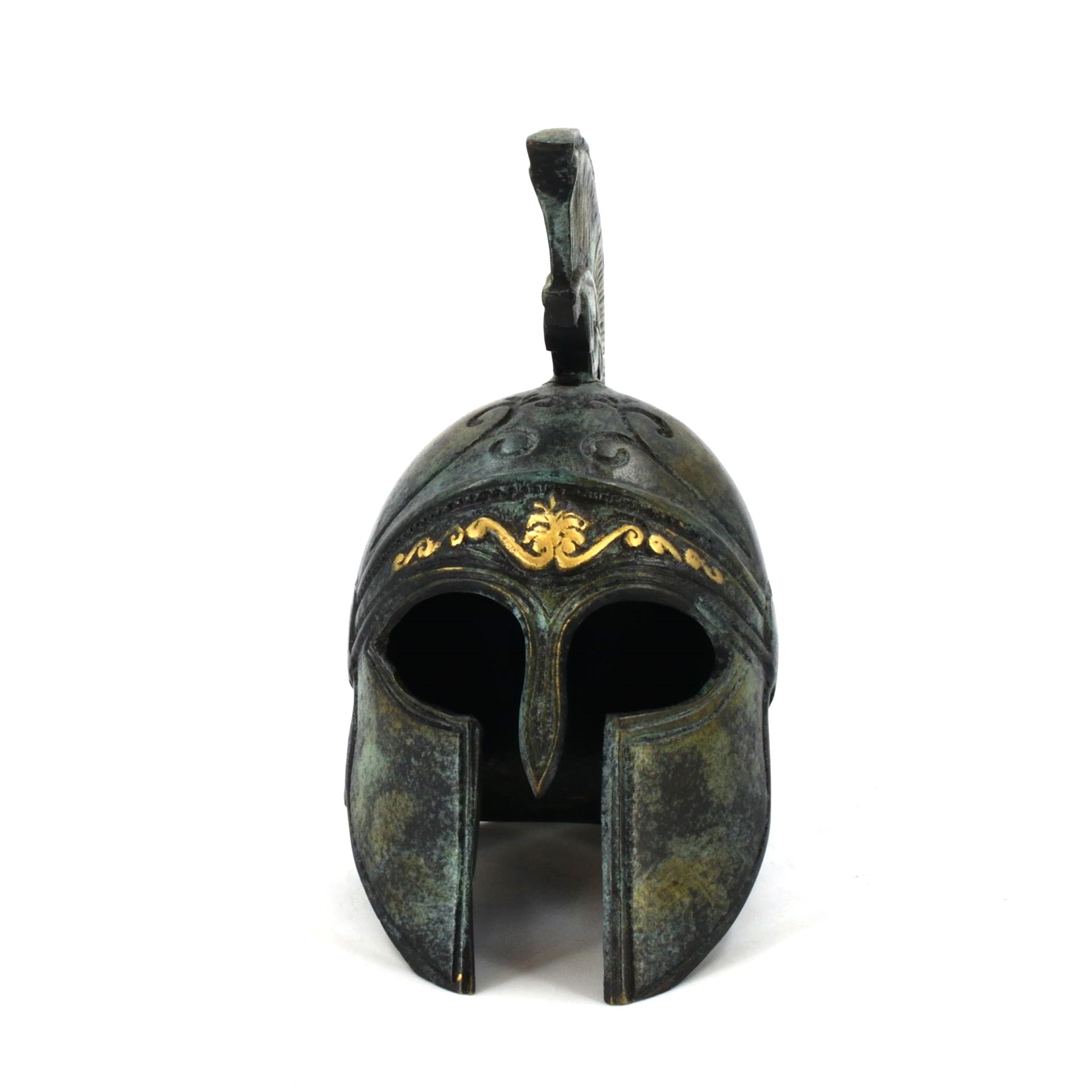
A crested Corinthian helmet featuring gilded brow ornaments and sculpted plume details, reflecting the ceremonial and martial traditions of Archaic Greece.


120,00 €
Rapid, trackable and secure delivery options to your doorstep worldwide.
Secure redirect payment via Worldline® and Eurobank S.A®
Payment options:
• Easy and simple, within 14 days of delivery.
• See conditions and procedure in Rescission & Returns.
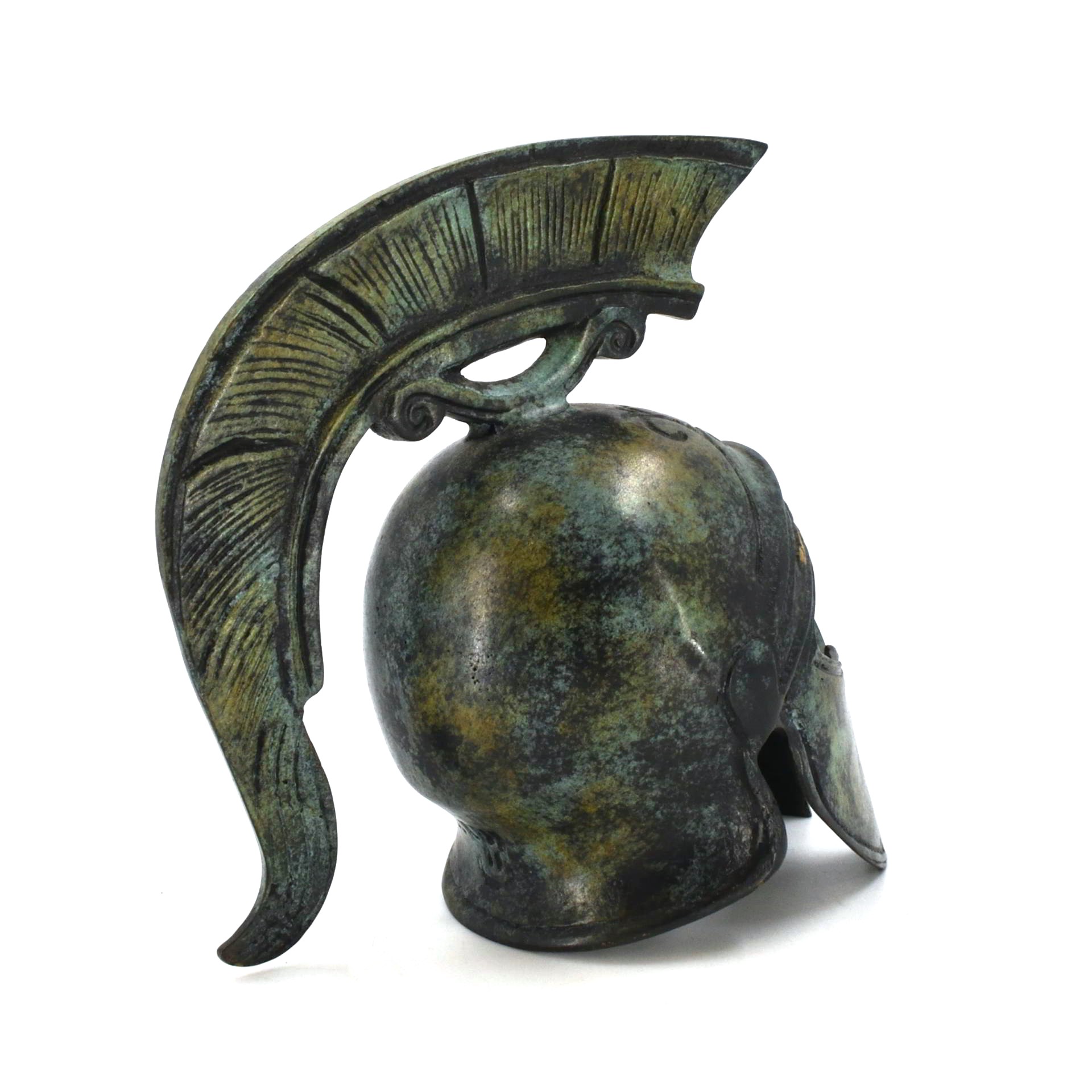
This helmet is distinguished by its commanding crested plume, arched dramatically from crown to nape, a hallmark of elite warrior status in the ancient Mediterranean world. The plume holder is sculpted with rhythmic ridging, echoing stylized feathers and emphasizing verticality and authority. Along the brow, delicate gilded relief ornaments form a flowing vegetal motif, a rare decorative flourish that contrasts with the otherwise austere form and suggests ceremonial or high-ranking use.
The elongated cheek guards and narrow eye openings follow the classic Corinthian silhouette, designed not only for protection but also to project an imposing, almost sculptural presence on the battlefield. Such helmets emerged during the Archaic period of ancient Greece, around the 7th–5th centuries BCE, and were widely used across the Greek mainland, particularly in regions such as Corinth, Sparta, and southern Italy.
Beyond its martial function, this helmet tells a story of identity, honor, and display—where ornamentation signaled lineage, rank, and devotion to the ideals of warfare and heroism that defined the era.
SIZE: 14,5 cm
MATERIAL: bronze
PATINA: antique green
METHOD: sand cast