

200,00 €
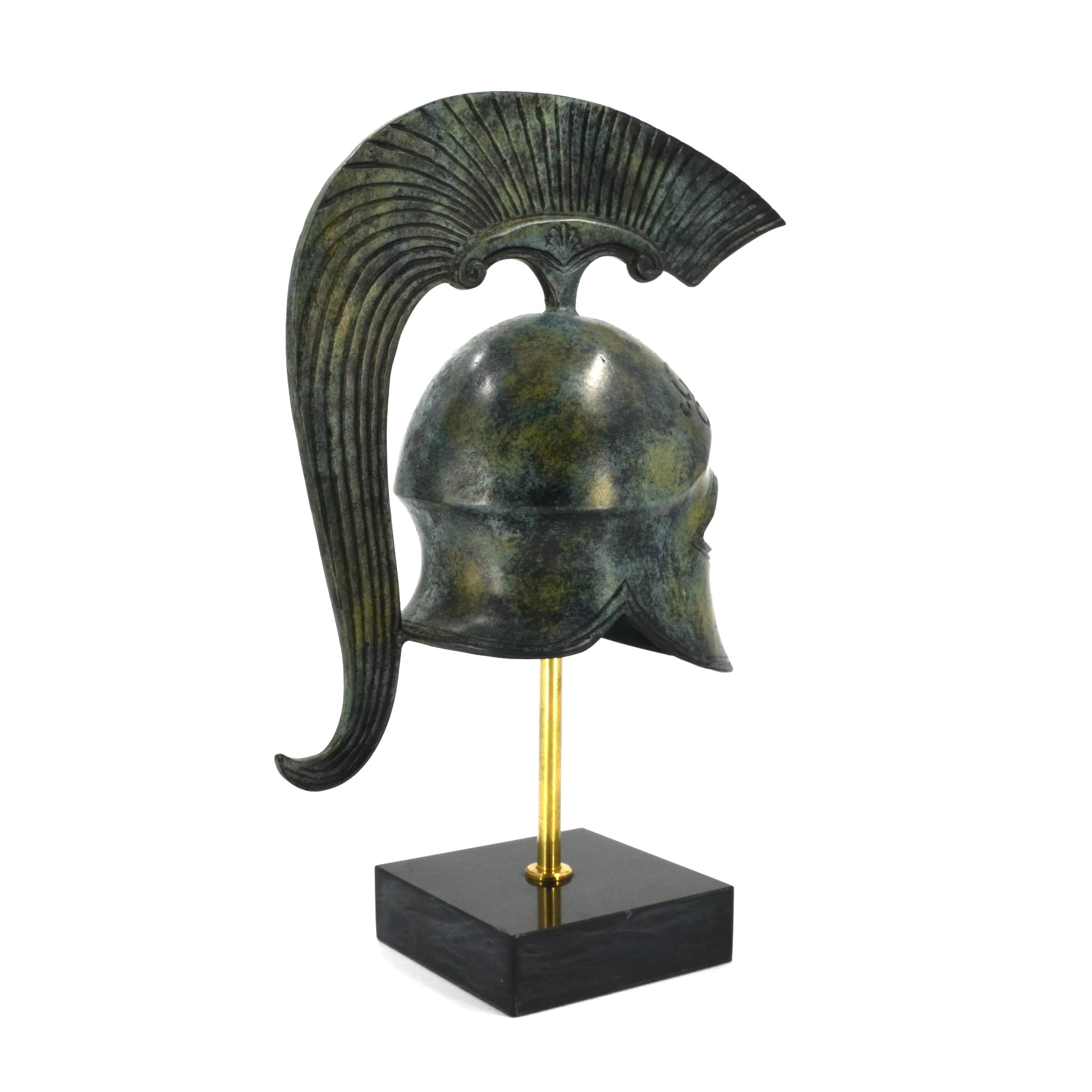
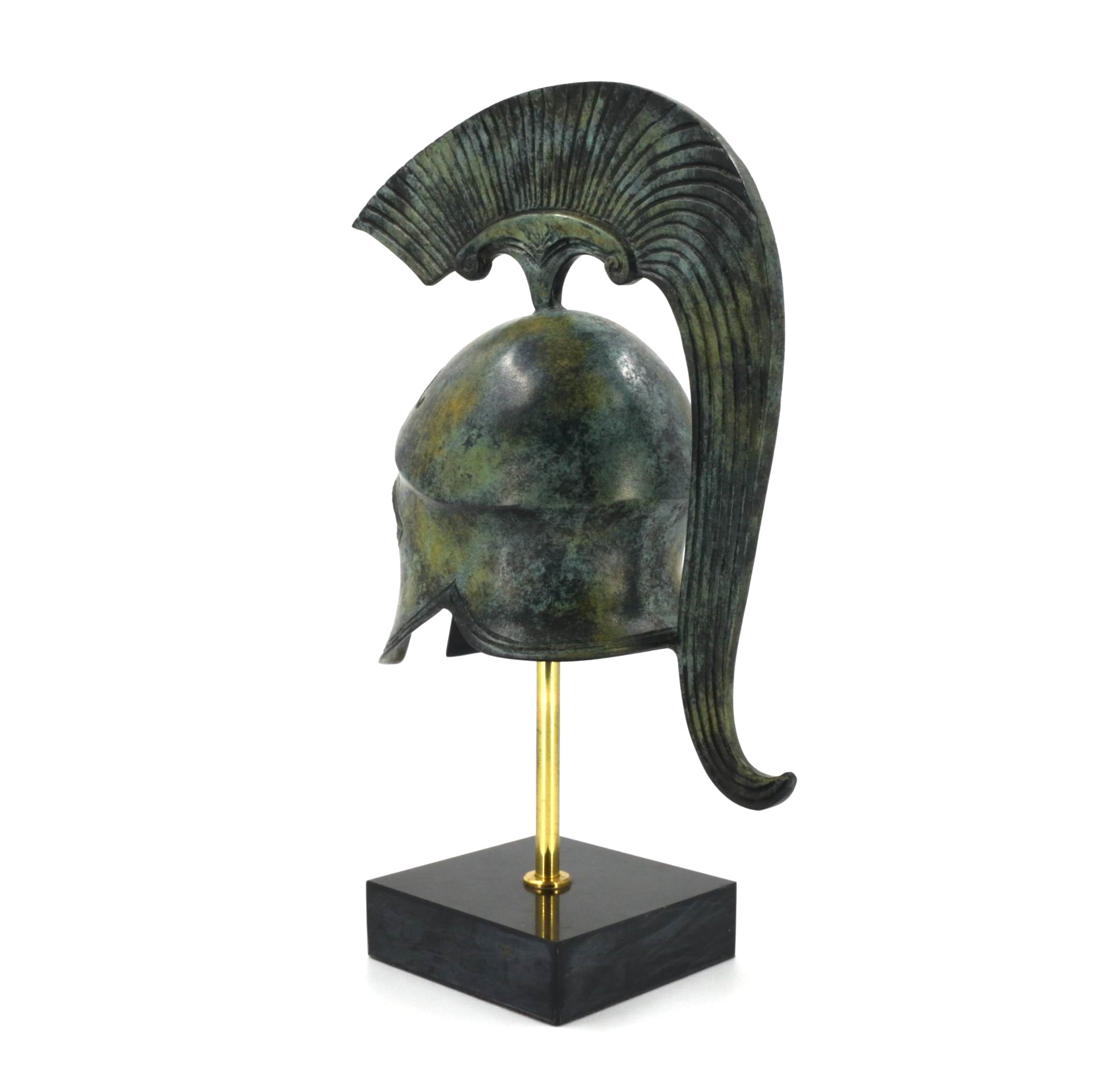
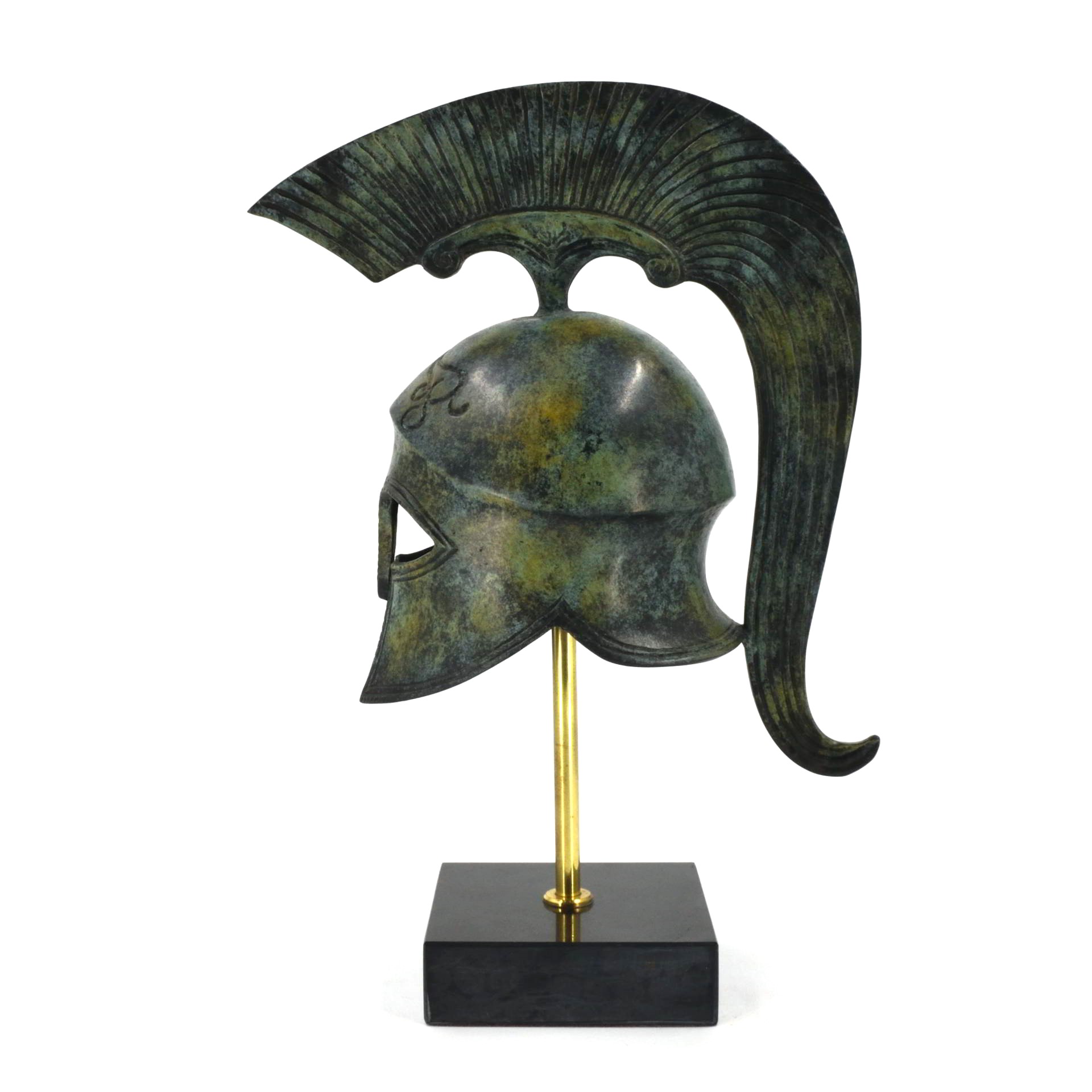
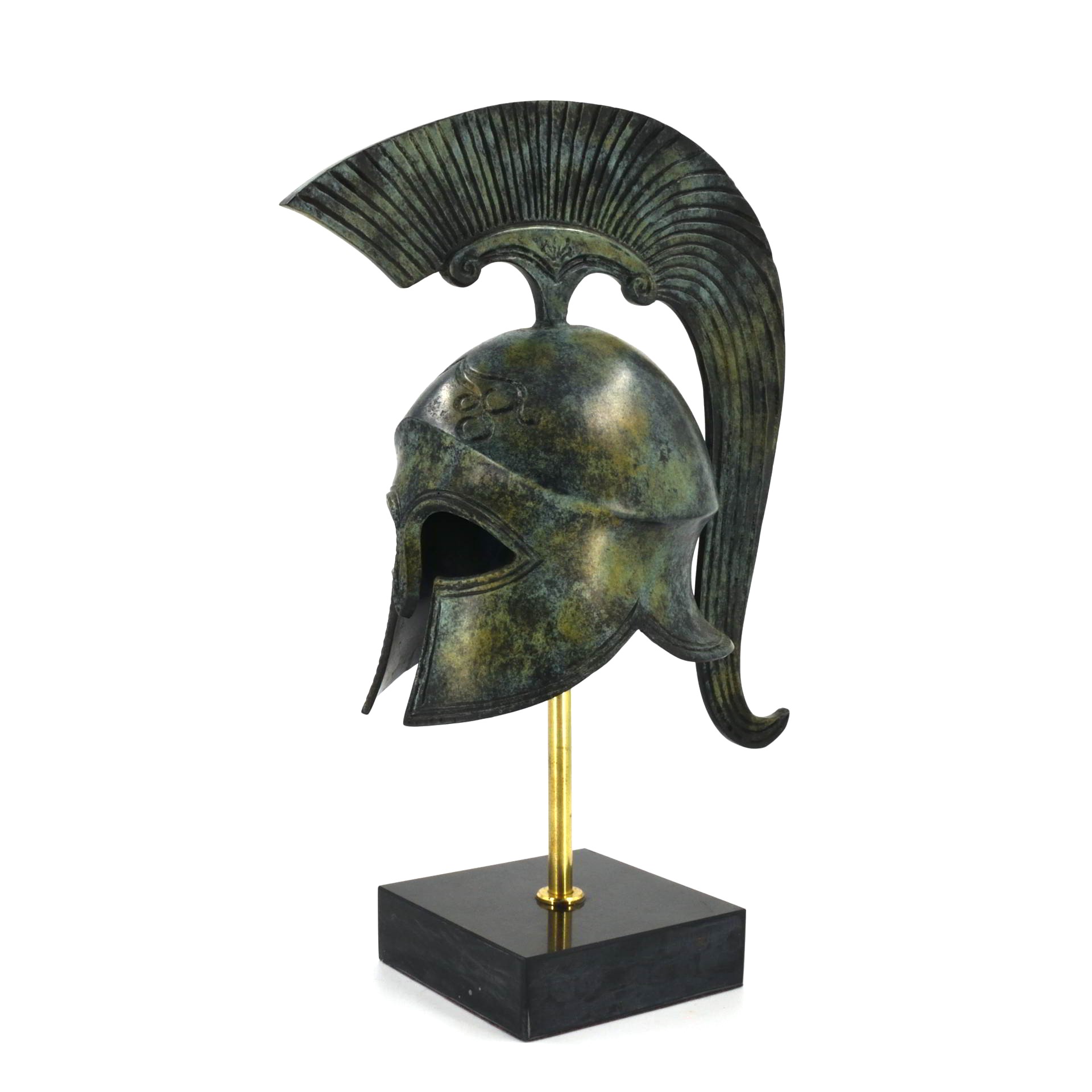
A Corinthian helmet associated with the hoplite warfare traditions of Archaic Greece.
Read moreRapid, trackable and secure delivery options to your doorstep worldwide.
Secure redirect payment via Worldline® and Eurobank S.A®
Payment options:
• Easy and simple, within 14 days of delivery.
• See conditions and procedure in Rescission & Returns.
This helmet belongs to the Corinthian type, one of the most recognizable forms of protective headgear used by Greek hoplites. Its fully enclosing design, with narrow eye openings and an extended nose guard, reflects an emphasis on frontal protection during close-order combat. Rising from the crown is a high crest support, originally intended to carry a plume that increased the wearer’s height and visibility on the battlefield.
The surface bears carefully worked details that break the smooth curvature of the dome, lending both strength and visual distinction. Such elements were not merely decorative but reinforced the helmet’s symbolic role, projecting discipline, unity, and martial identity within the phalanx formation.
Corinthian helmets emerged in mainland Greece during the late 7th century BCE and remained widely used throughout the Archaic and early Classical periods. They were worn by citizen-soldiers across regions such as Corinth, Sparta, and Athens, and later spread through Greek colonies in southern Italy and the wider Mediterranean. By the 5th century BCE, evolving tactics led to more open helmet forms, yet the Corinthian helmet endured as an enduring emblem of Greek warfare.
SIZE: 33 cm
MATERIAL: bronze
PATINA: rust green oxidatiom
METHOD: sand cast