

80,00 €
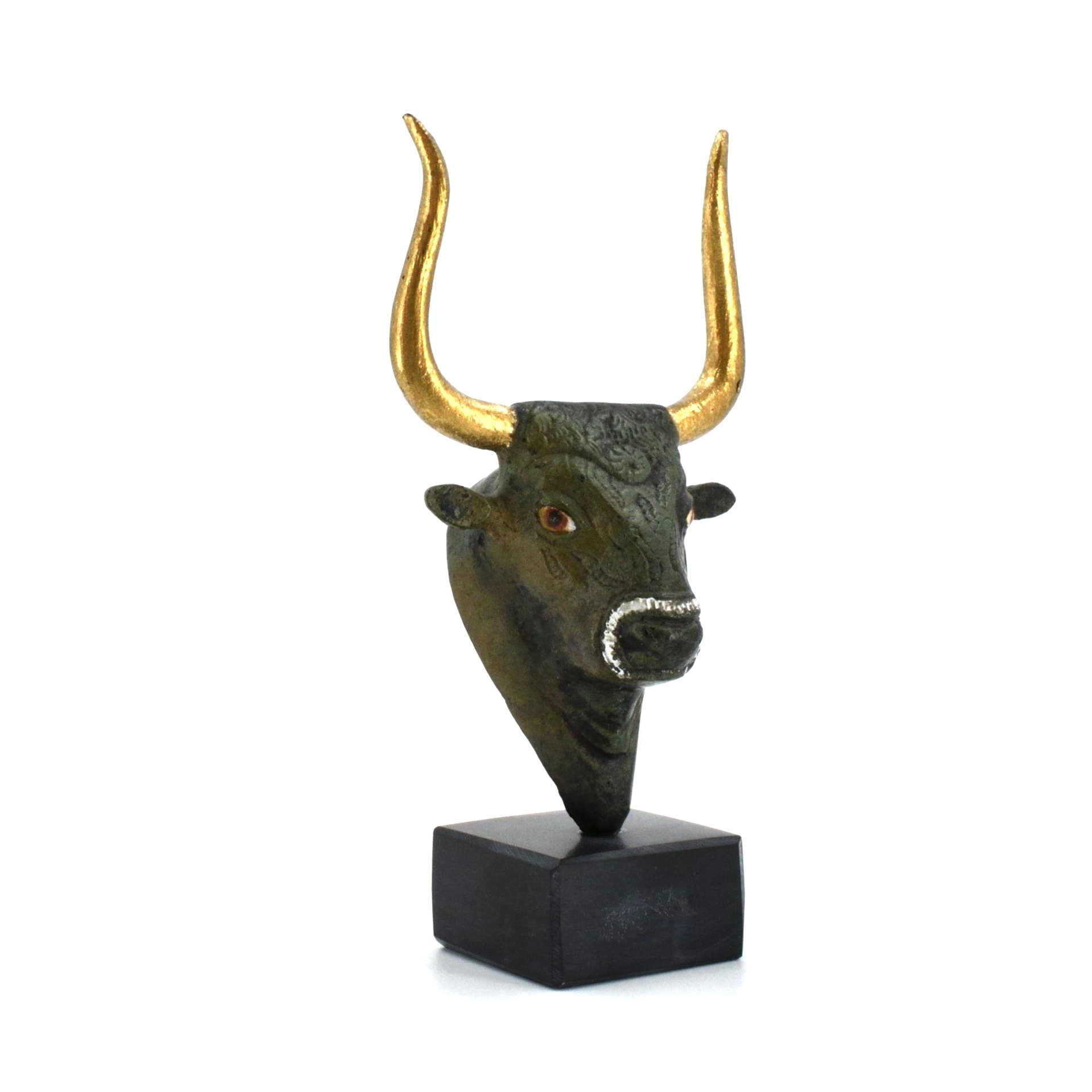
Replica inspired by the Minoan bull imagery of Knossos (ca. 1600–1450 BCE). The original bull’s-head rhyton, crafted by Minoan artisans and discovered at the Palace of Knossos, is now exhibited in the Heraklion Archaeological Museum in Crete and reflects the bull’s sacred role in Minoan ritual and mythology.
Read moreRapid, trackable and secure delivery options to your doorstep worldwide.
Secure redirect payment via Worldline® and Eurobank S.A®
Payment options:
• Easy and simple, within 14 days of delivery.
• See conditions and procedure in Rescission & Returns.
This sculpture is inspired by the famous bull imagery associated with the Palace of Knossos on Crete, a central symbol of Minoan civilization during the Bronze Age (ca. 1600–1450 BCE). The imagery closely relates to the celebrated bull’s-head rhyton discovered at Knossos, now displayed in the Heraklion Archaeological Museum in Crete.
The original artifact was a ceremonial libation vessel carved from black steatite with inlaid details of rock crystal, jasper, and shell, used in ritual offerings to the gods. The bull held deep religious significance in Minoan culture and appears frequently in art and palace decoration, reflecting rituals and myths associated with power, fertility, and sacred ceremony.
These traditions later influenced the Greek myth of the Minotaur, the legendary creature said to dwell in the labyrinth of King Minos at Knossos. The original rhyton was created by unknown Minoan artisans working within the palace workshops during the height of the Minoan palatial period.
This replica captures the striking form and symbolic power of the sacred bull, one of the most iconic images of ancient Cre
SIZE: 11 cm
MATERIAL: bronze
PATINA: rust green oxidation
METHOD: sand cast