

75,00 €
Rapid, trackable and secure delivery options to your doorstep worldwide.
Secure redirect payment via Worldline® and Eurobank S.A®
Payment options:
• Easy and simple, within 14 days of delivery.
• See conditions and procedure in Rescission & Returns.
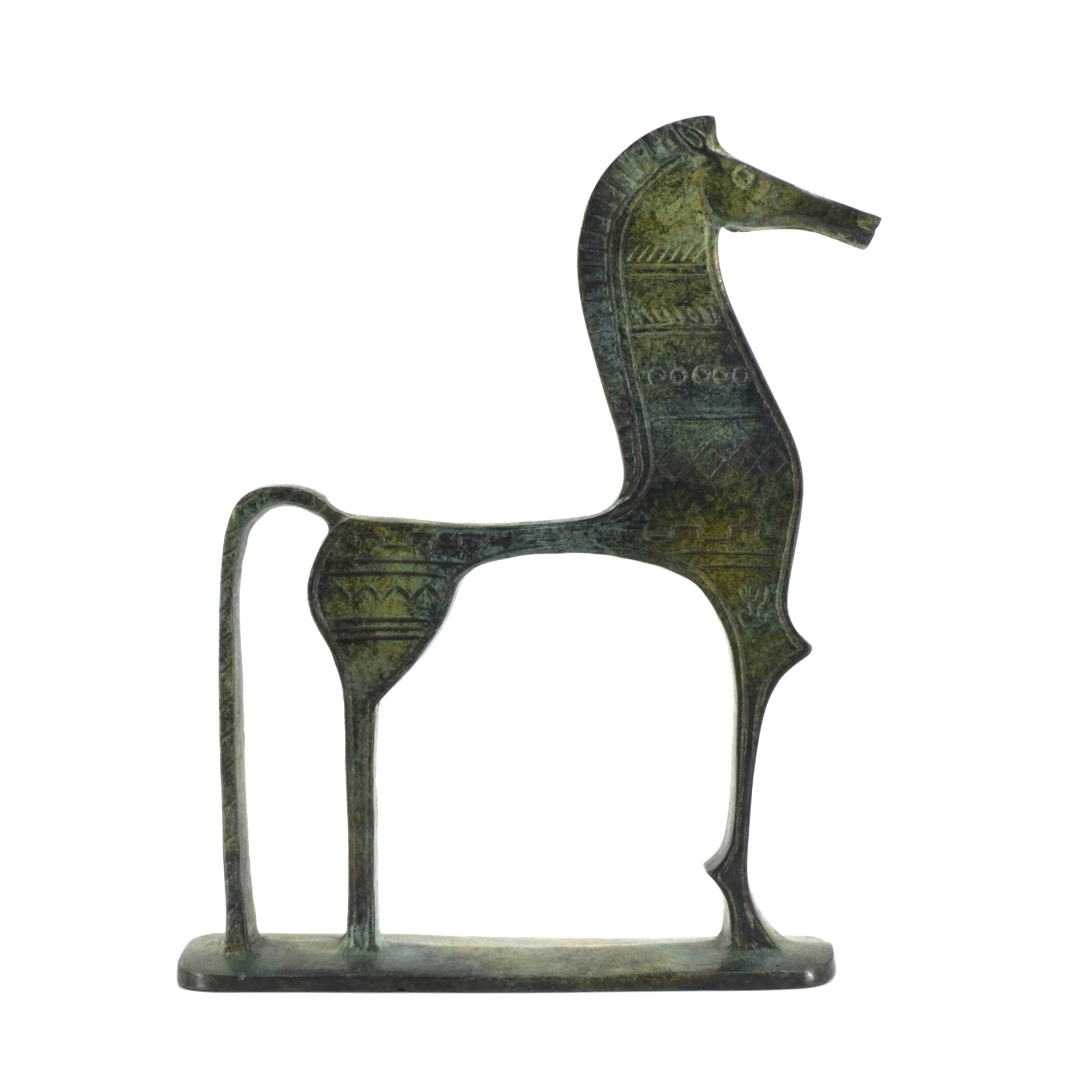
This solid geometric horse figure reflects the stylized artistic tradition of the early Iron Age, particularly associated with the 9th–8th century BCE Geometric period in ancient Greece. Defined by its elongated neck, angular stance, and flat, architectural body, the sculpture embodies the abstract aesthetic that marked the revival of artistic production following the Greek Dark Ages.
The surface is enriched with incised decorative bands, zigzag patterns, cross-hatched panels, and rows of circular motifs. These ornaments were not merely decorative; they echoed the linear language seen on Geometric pottery and symbolized order, status, and ritual significance. The carefully structured patterns emphasize the horse’s form while reinforcing the era’s preference for symmetry and rhythm.
Figures of this type were commonly dedicated in sanctuaries across regions such as Attica, Boeotia, and the Peloponnese. They served as votive offerings to deities, representing wealth, power, and aristocratic identity, as the horse was closely associated with nobility and warfare. This piece captures the disciplined geometry and symbolic refinement characteristic of early Mediterranean craftsmanship.
SIZE: 21 cm
MATERIAL: bronze
PATINA: rust green oxidatiom
METHOD: sand cast