200,00 €
Rapid, trackable and secure delivery options to your doorstep worldwide.
Secure redirect payment via Worldline® and Eurobank S.A®
Payment options:
• Easy and simple, within 14 days of delivery.
• See conditions and procedure in Rescission & Returns.
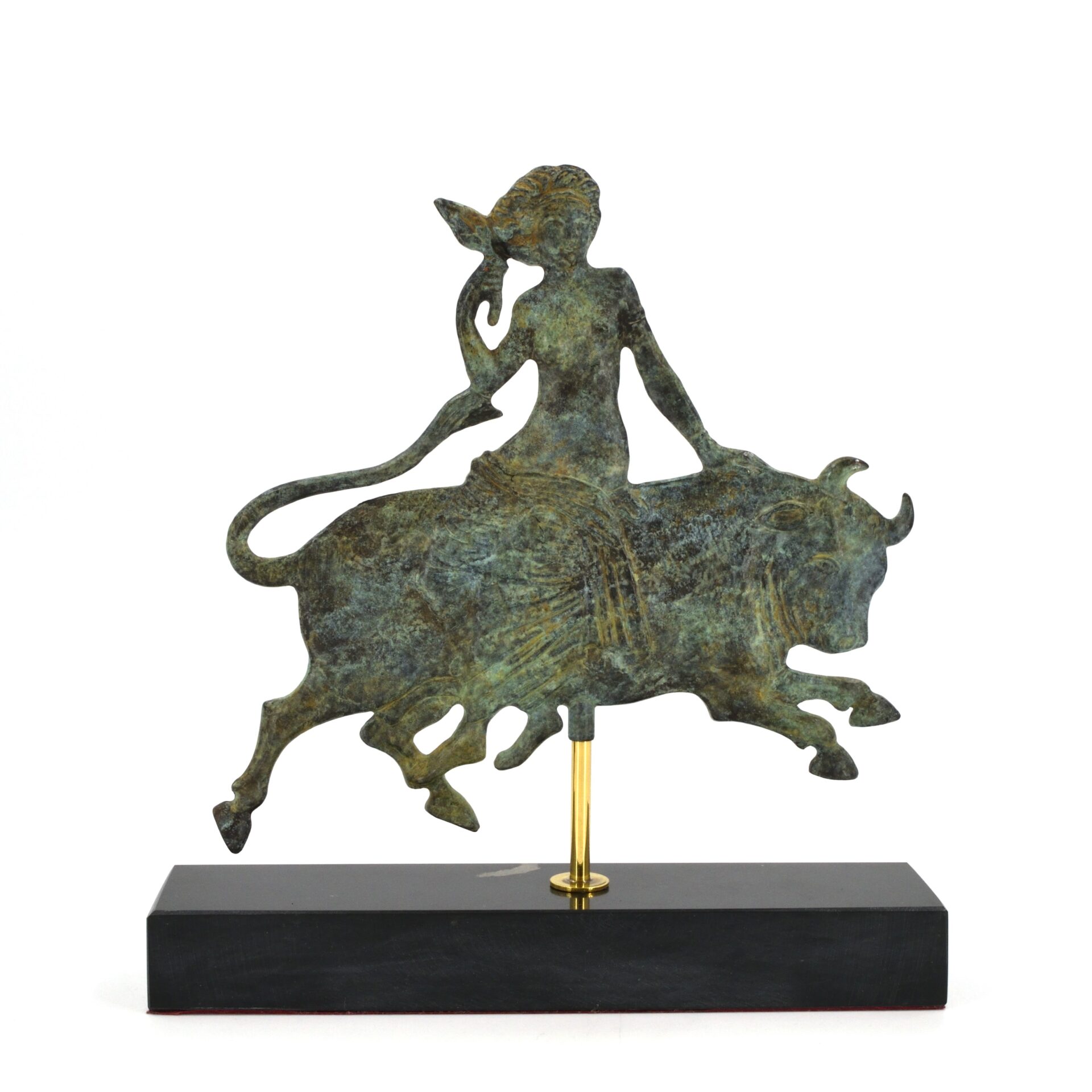
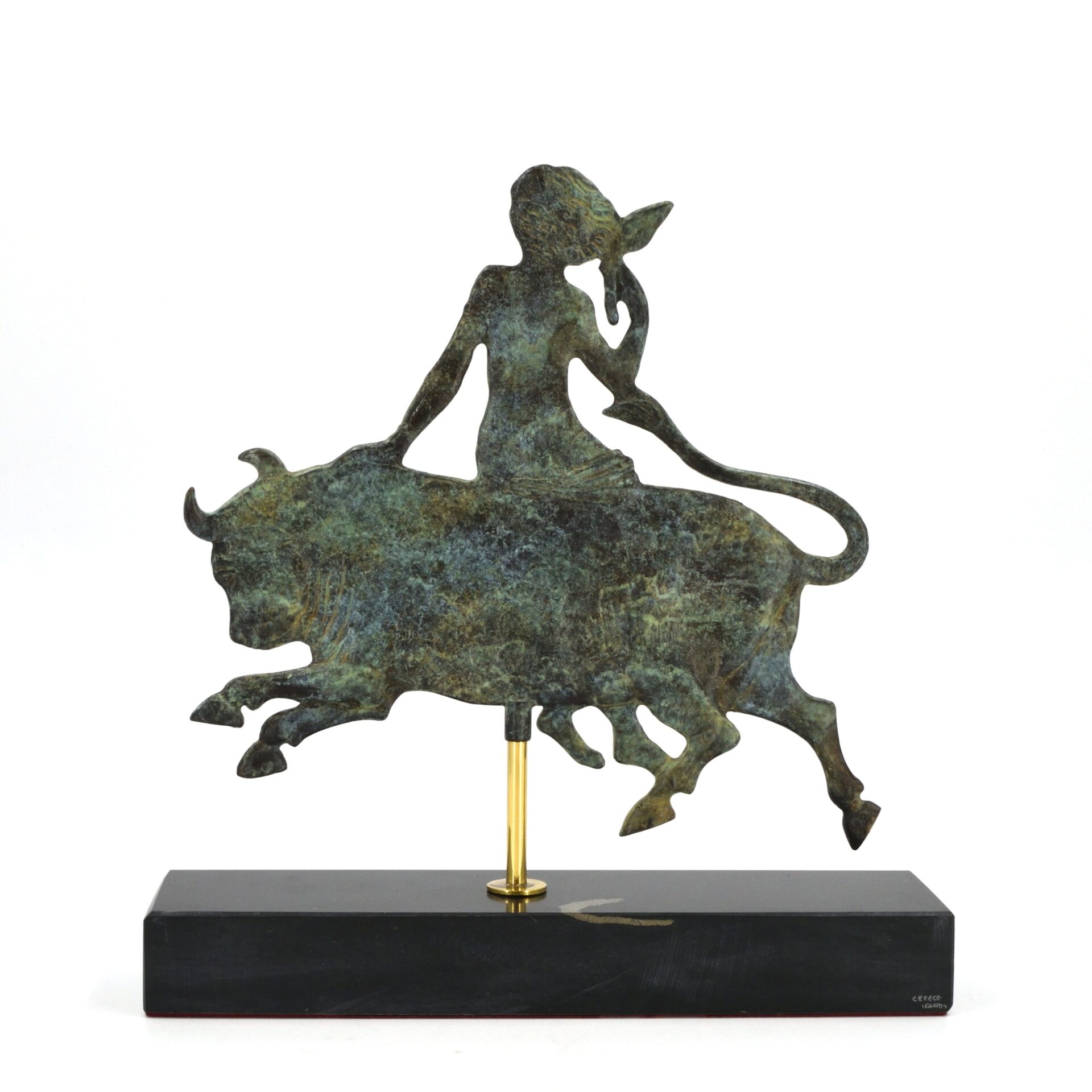
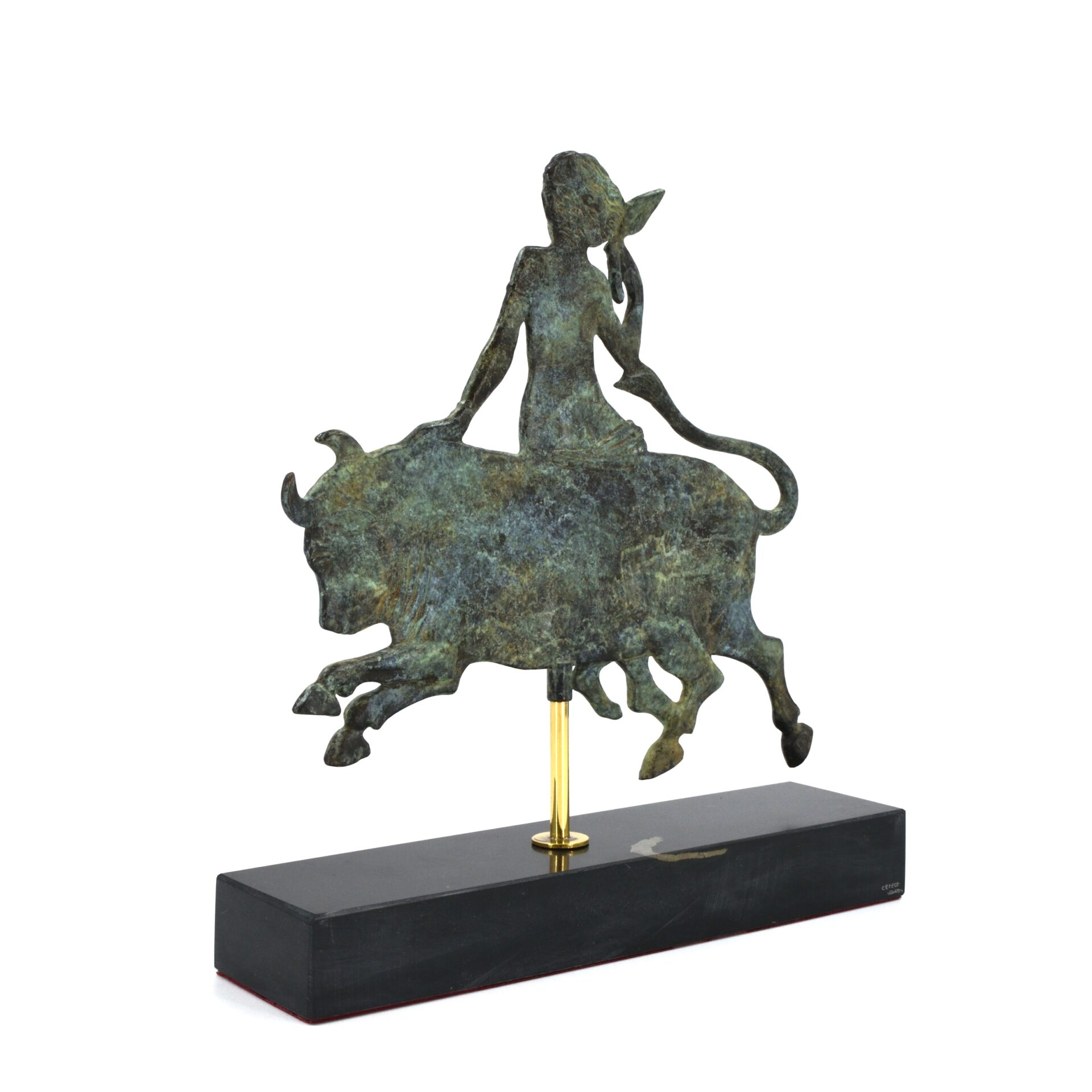
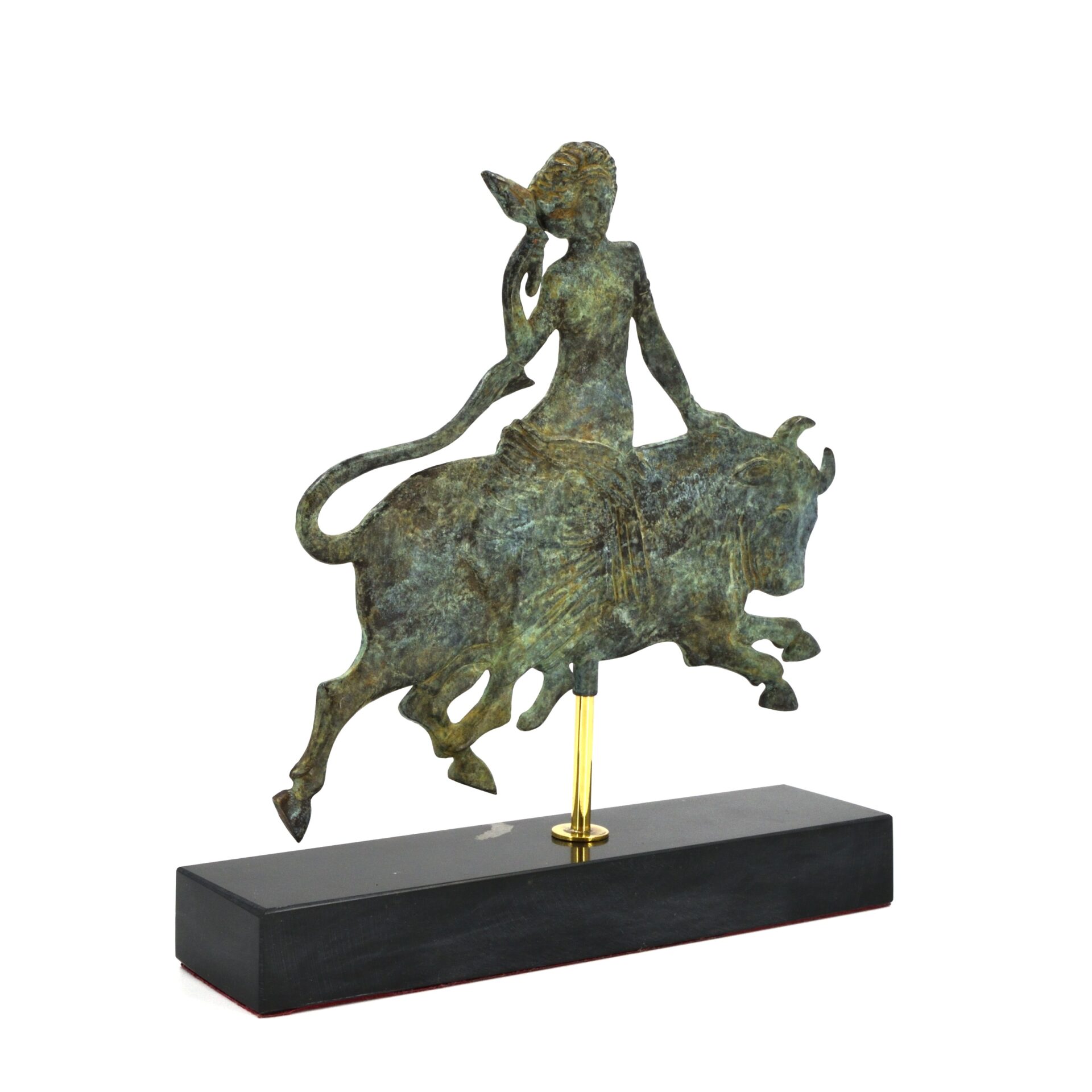
This sculpture reproduces one of the most evocative images of ancient Greek mythology: Europa carried across the sea by Zeus in the form of a bull. The original work is known from an Archaic Greek bronze statuette dated to the late 7th–early 6th century BCE, discovered at Olympia, the sacred sanctuary of Zeus in the Peloponnese.
In the myth, Zeus transforms himself into a powerful yet gentle bull to abduct Europa, a Phoenician princess, an event that symbolized divine power, transformation, and the spread of culture from the eastern Mediterranean to Greece. Such figures were closely associated with sanctuaries and were likely dedicated as votive offerings to the gods, particularly Zeus, whose cult dominated Olympia.
Created during the Archaic period, this type of sculpture reflects early Greek mastery of form, movement, and narrative storytelling. Objects like this were produced in mainland Greece and used in religious contexts, bridging myth, ritual, and early artistic innovation that would shape Classical art for centuries to come.
SIZE: 24,5 x 23 cm
MATERIAL: bronze
PATINA: rust green oxidatiom
METHOD: sand cast