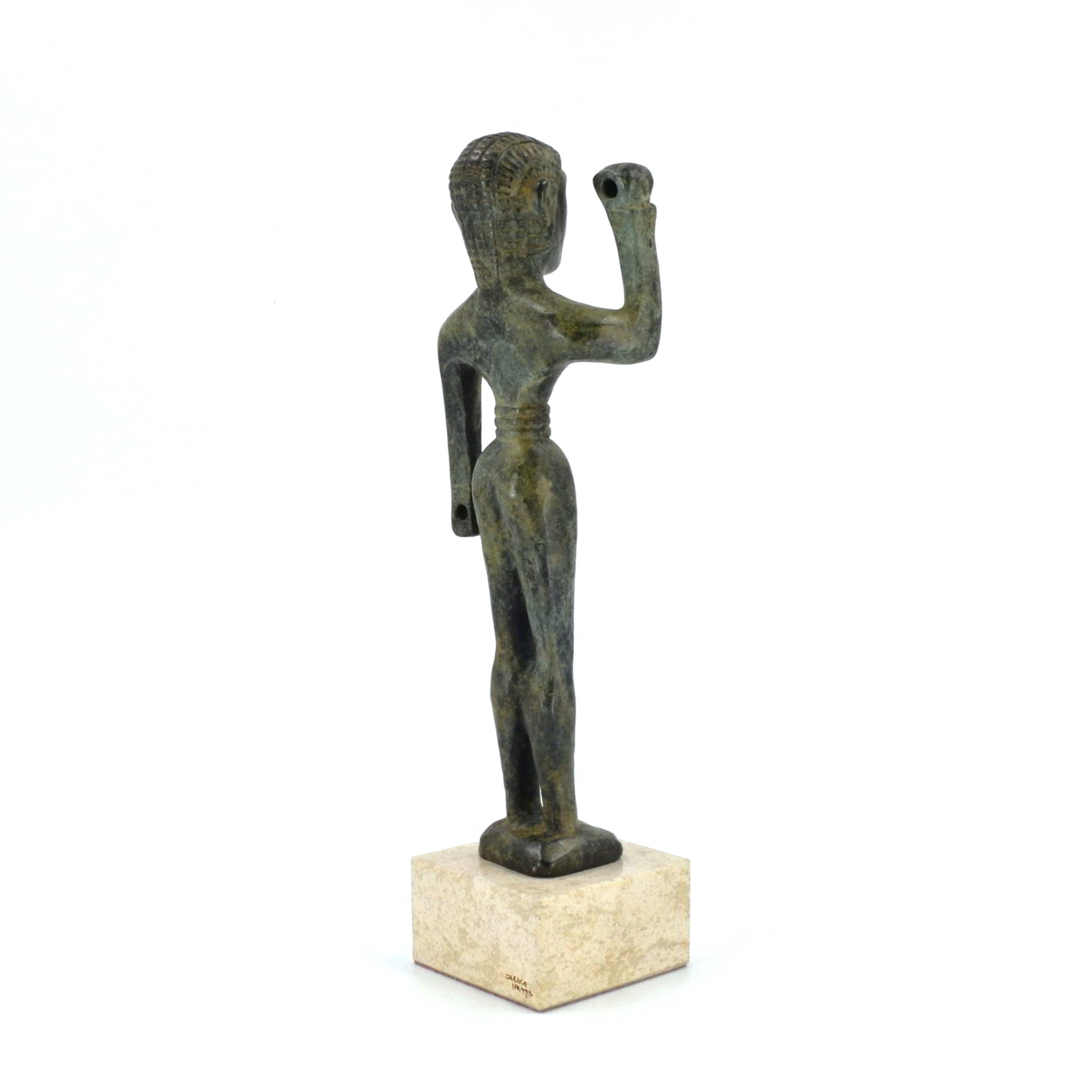
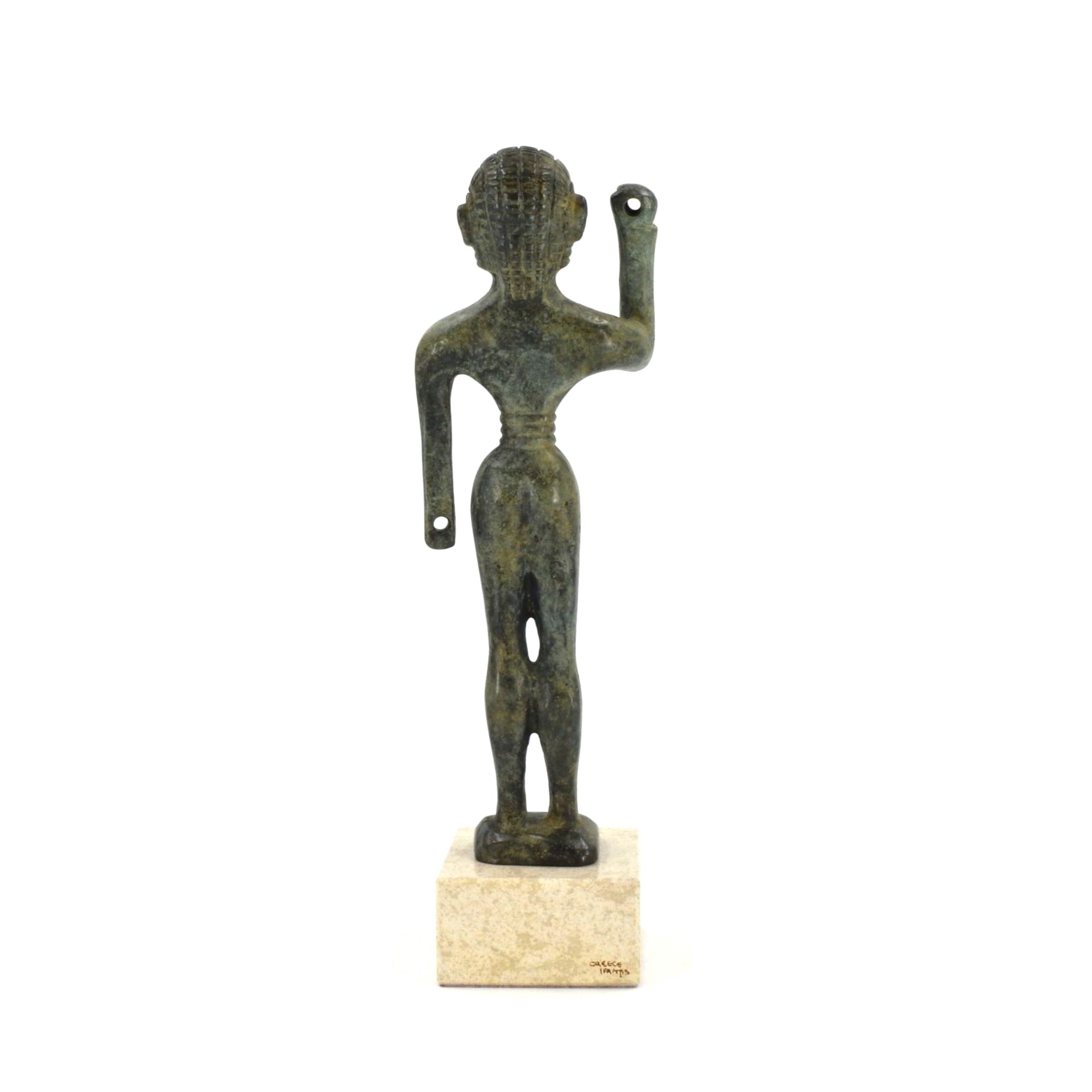
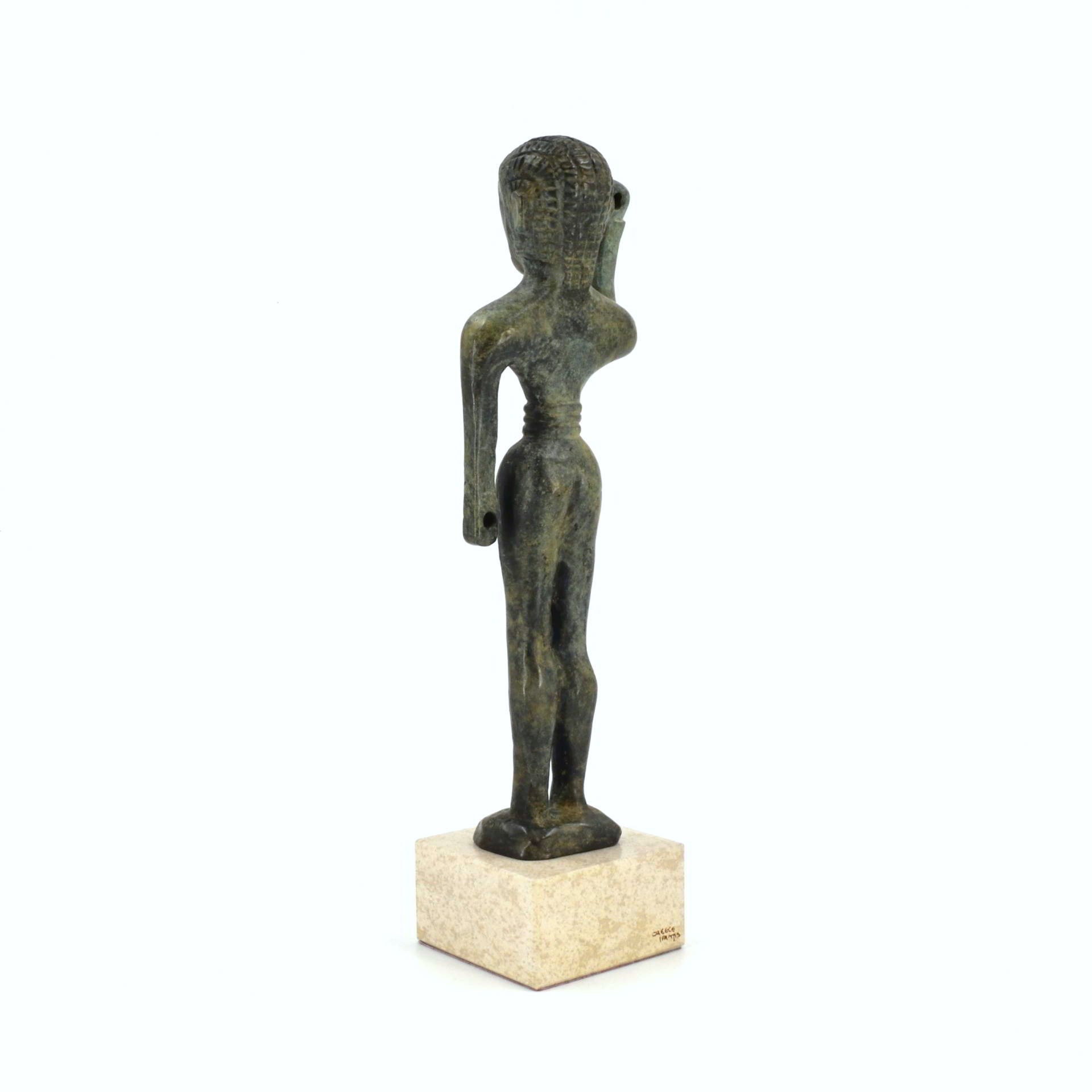
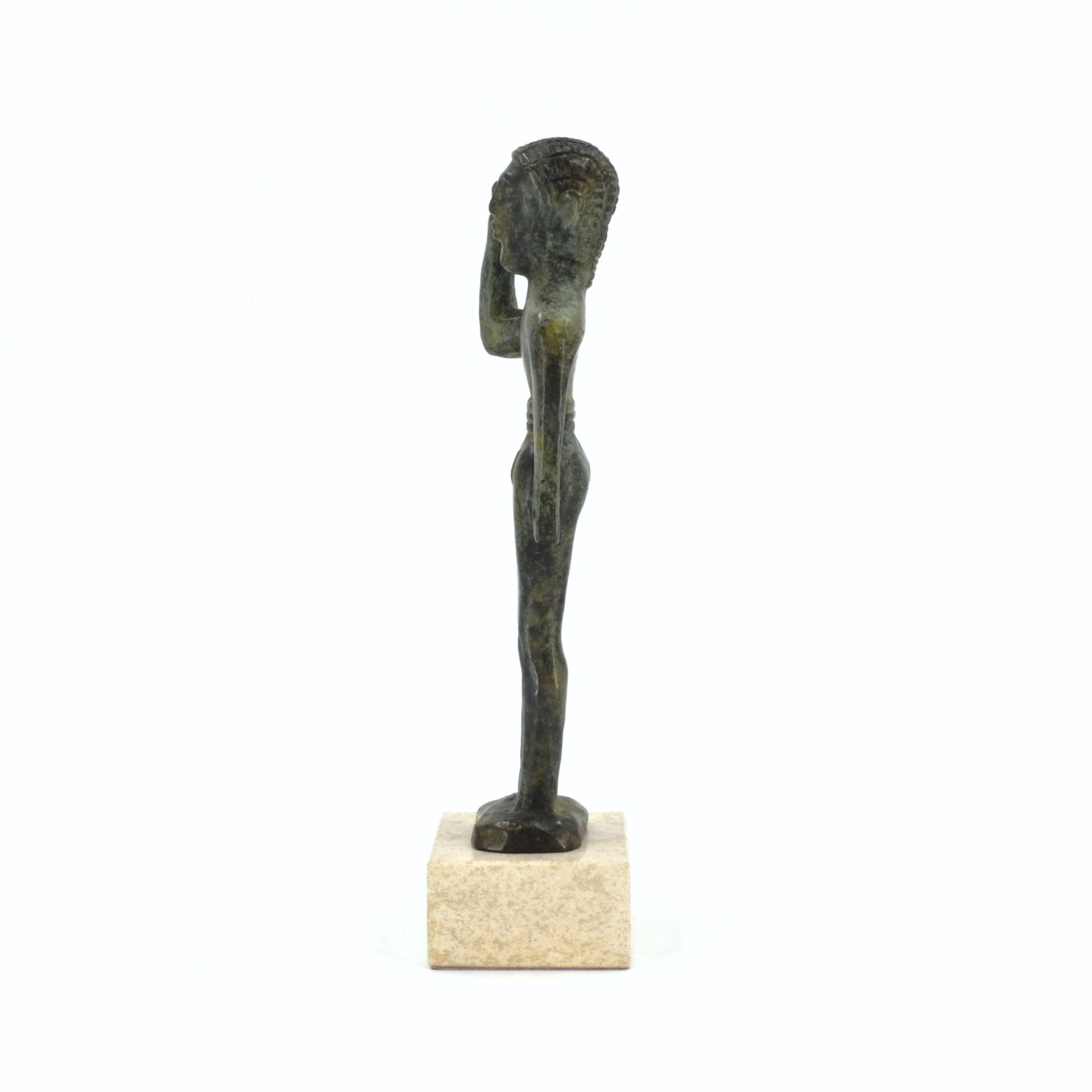
100,00 €
Rapid, trackable and secure delivery options to your doorstep worldwide.
Secure redirect payment via Worldline® and Eurobank S.A®
Payment options:
• Easy and simple, within 14 days of delivery.
• See conditions and procedure in Rescission & Returns.
The Doryphoros, meaning “Spear Bearer,” is one of the most celebrated masterpieces of the Classical Greek world. Created around 440 BCE by the renowned sculptor Polykleitos of Argos, it embodied his revolutionary theory of ideal human proportions, known as the Canon. The original statue, now lost, was likely erected in Argos or possibly displayed in a major sanctuary or gymnasium, reflecting the Greek admiration for athletic perfection and harmonious balance.
This work exemplifies the High Classical period’s pursuit of naturalism and mathematical symmetry. The figure stands in contrapposto, a groundbreaking stance in which weight shifts onto one leg, creating dynamic balance and lifelike movement. The Doryphoros was not a portrait but an idealized representation of the perfect male athlete—strong, disciplined, and rational.
Roman marble copies, including the famous example in the National Archaeological Museum of Naples, preserve the form of this influential statue. It remains a timeless symbol of balance, proportion, and Classical Greek artistic achievement.
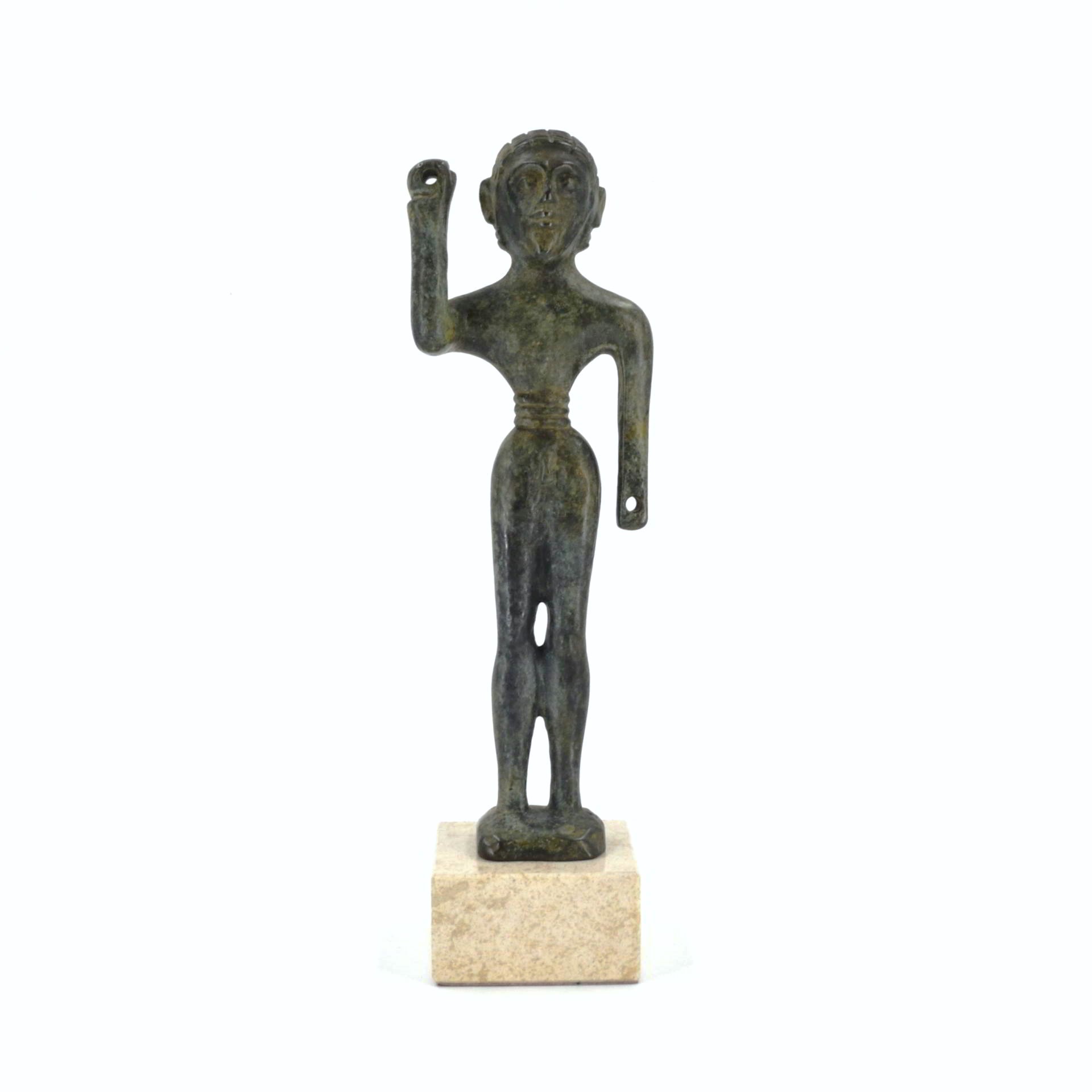
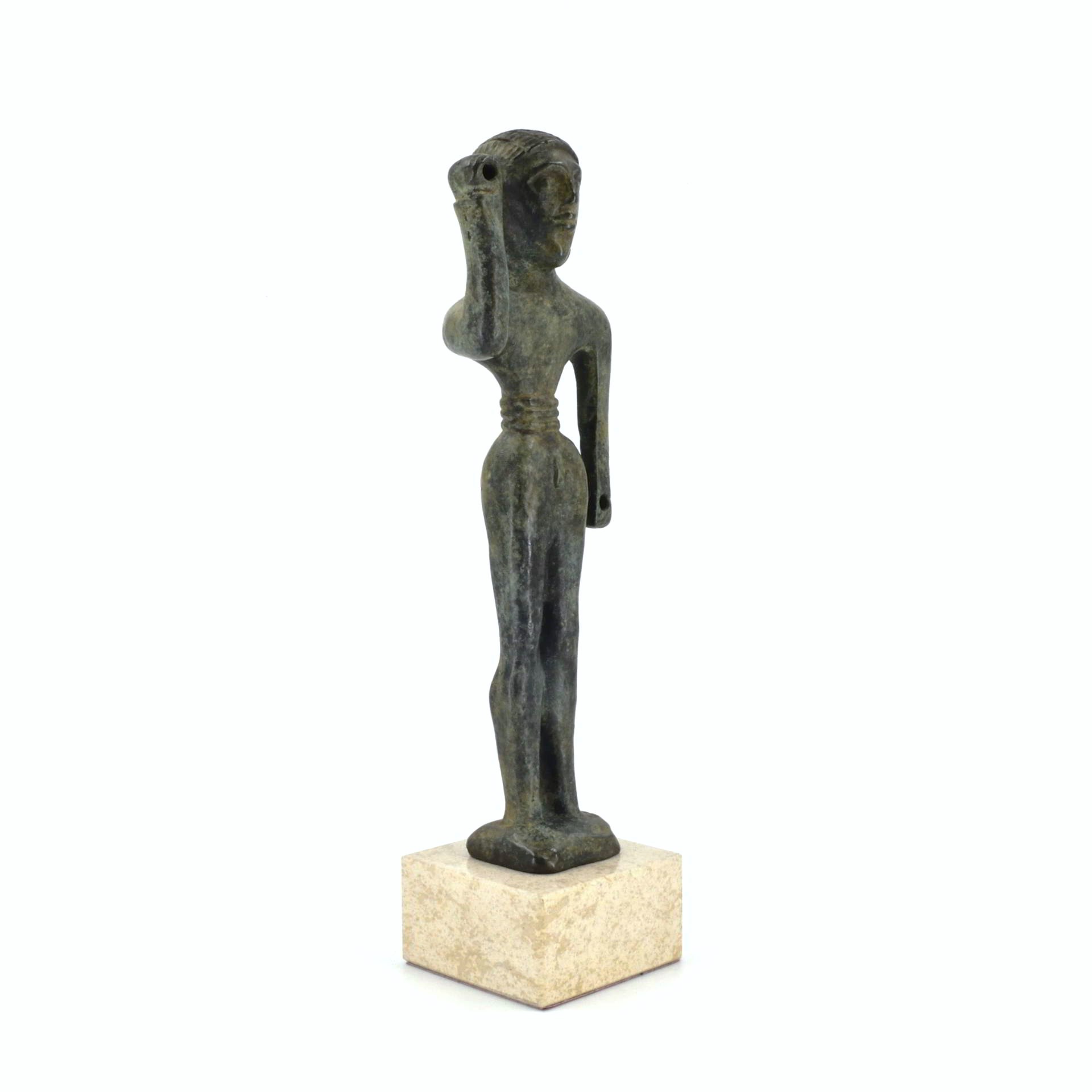
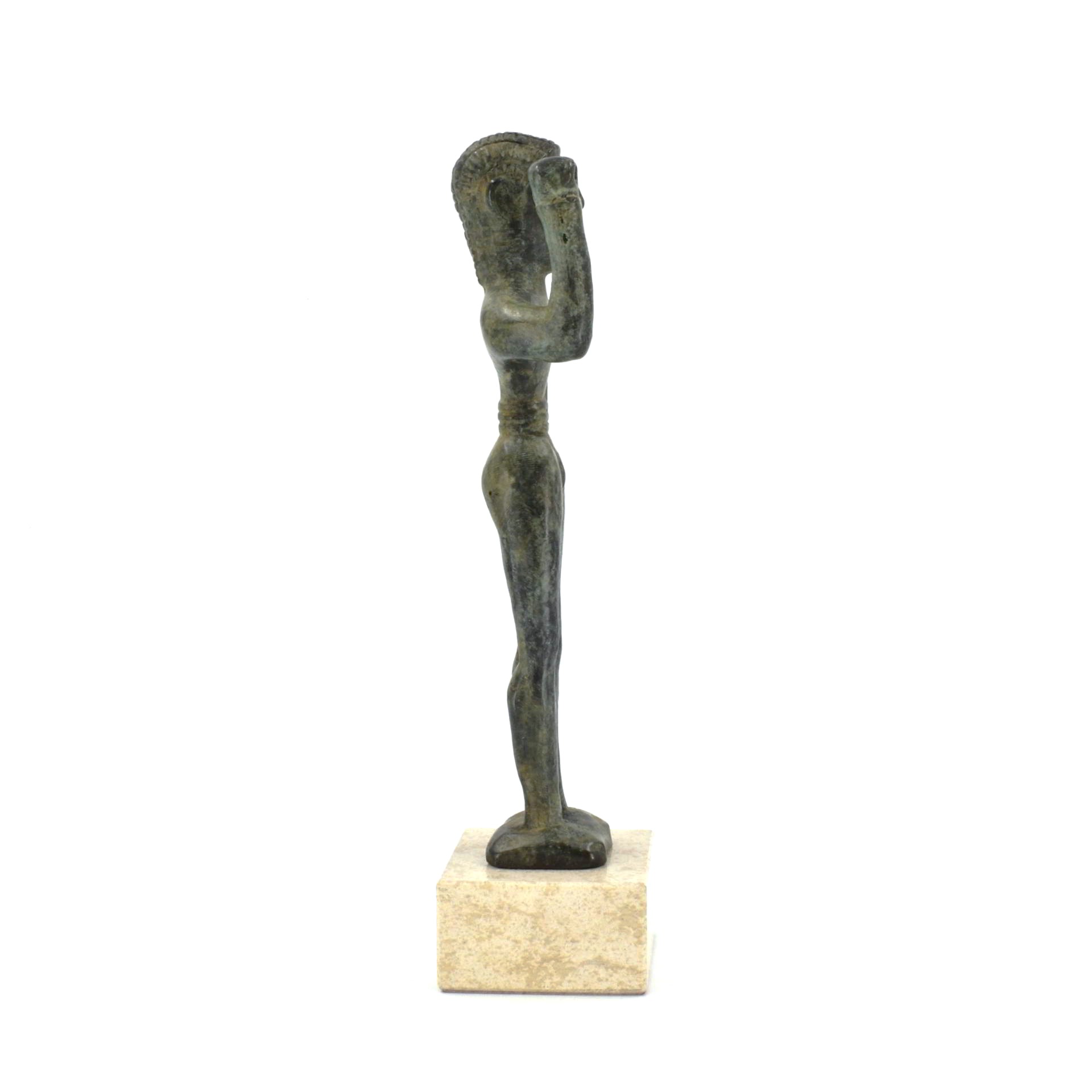
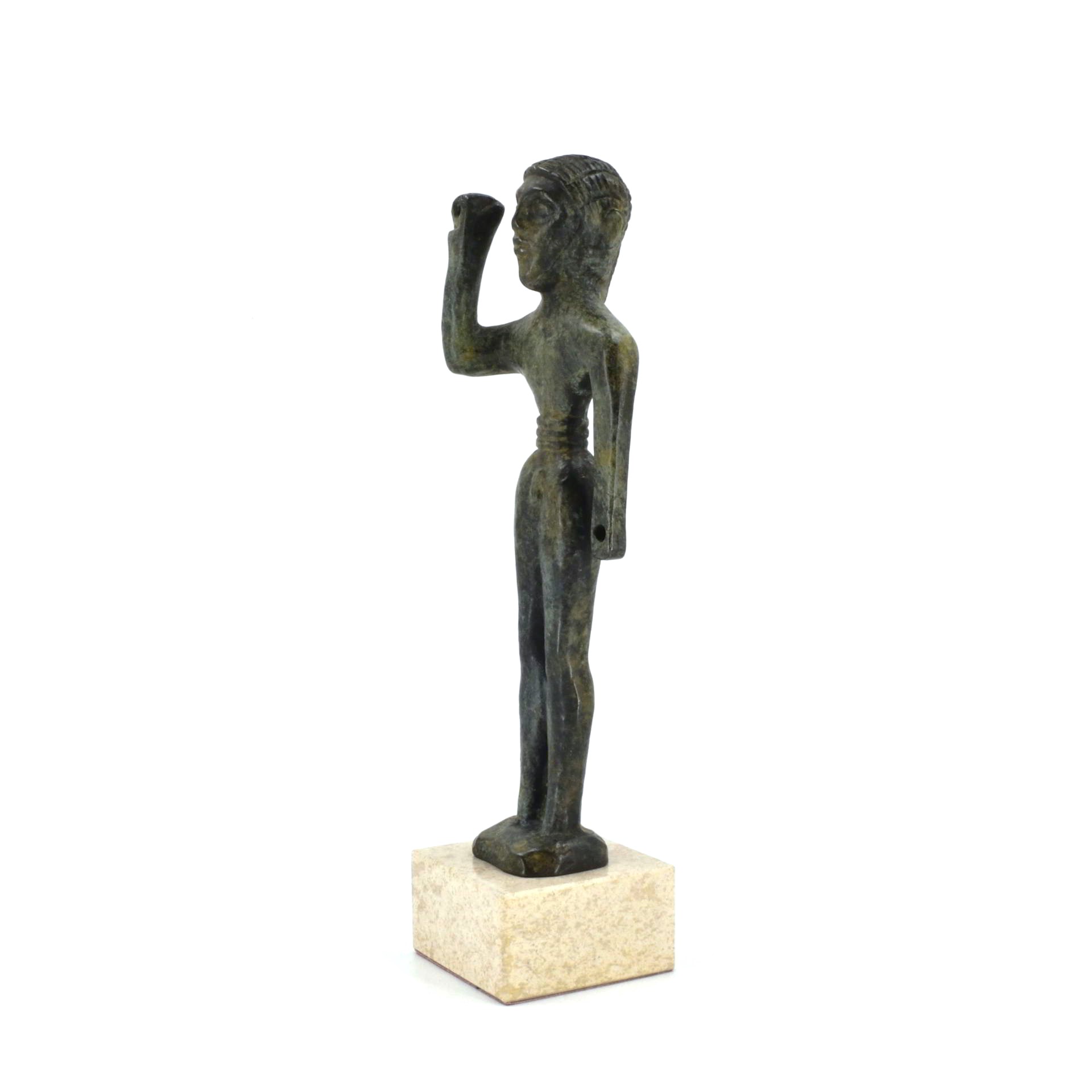
SIZE: 22 cm
MATERIAL: bronze
PATINA: rust green oxidation
METHOD: sand cast