

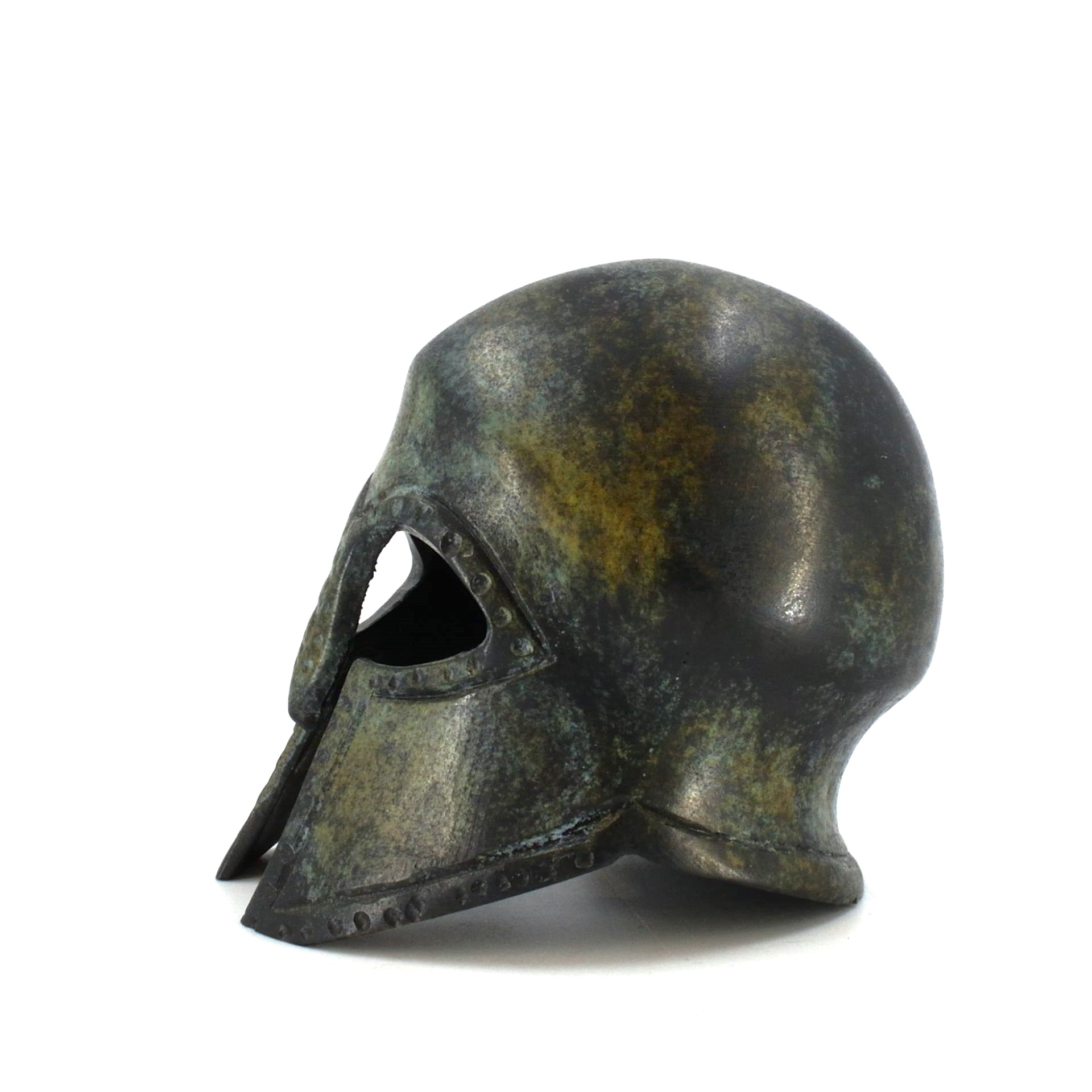
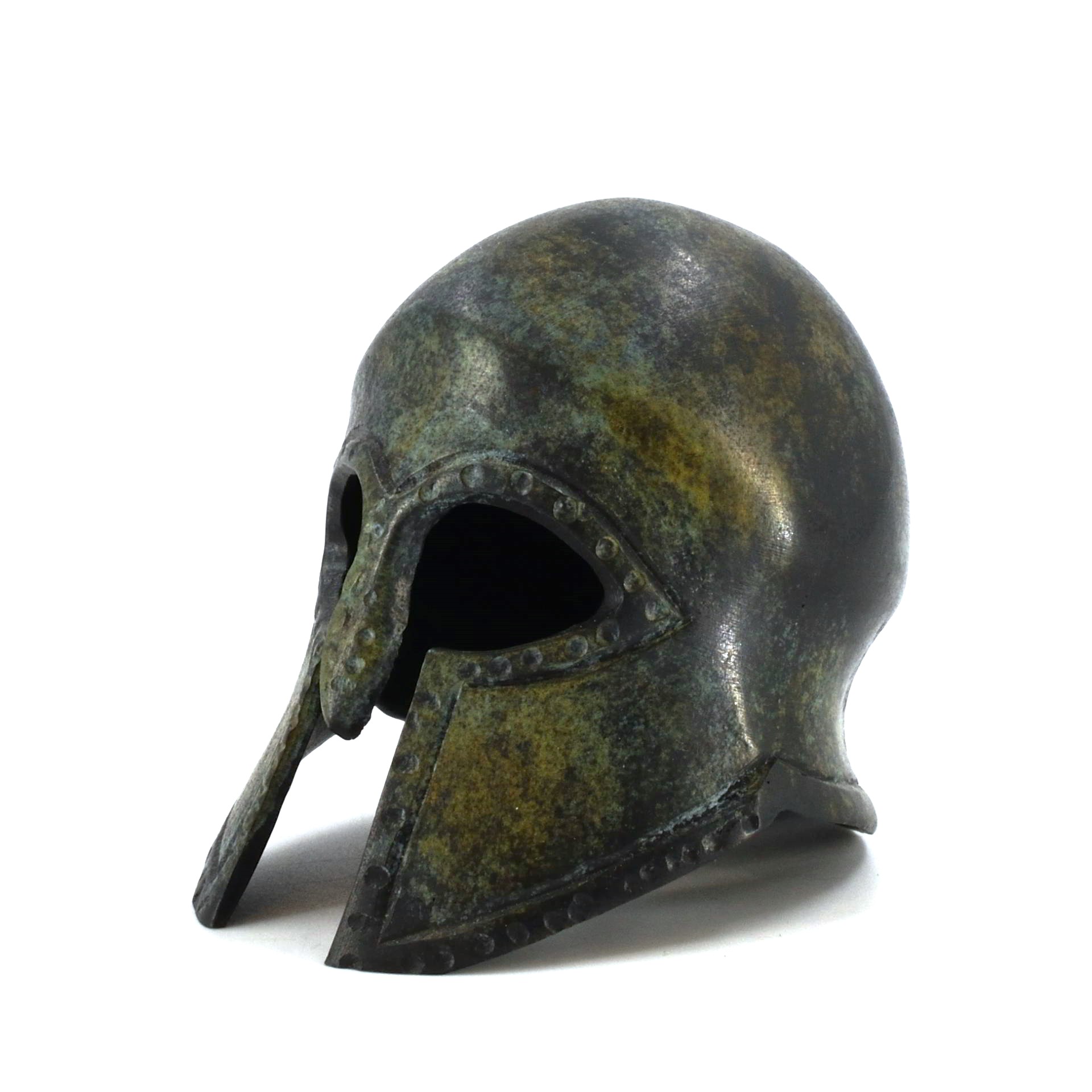
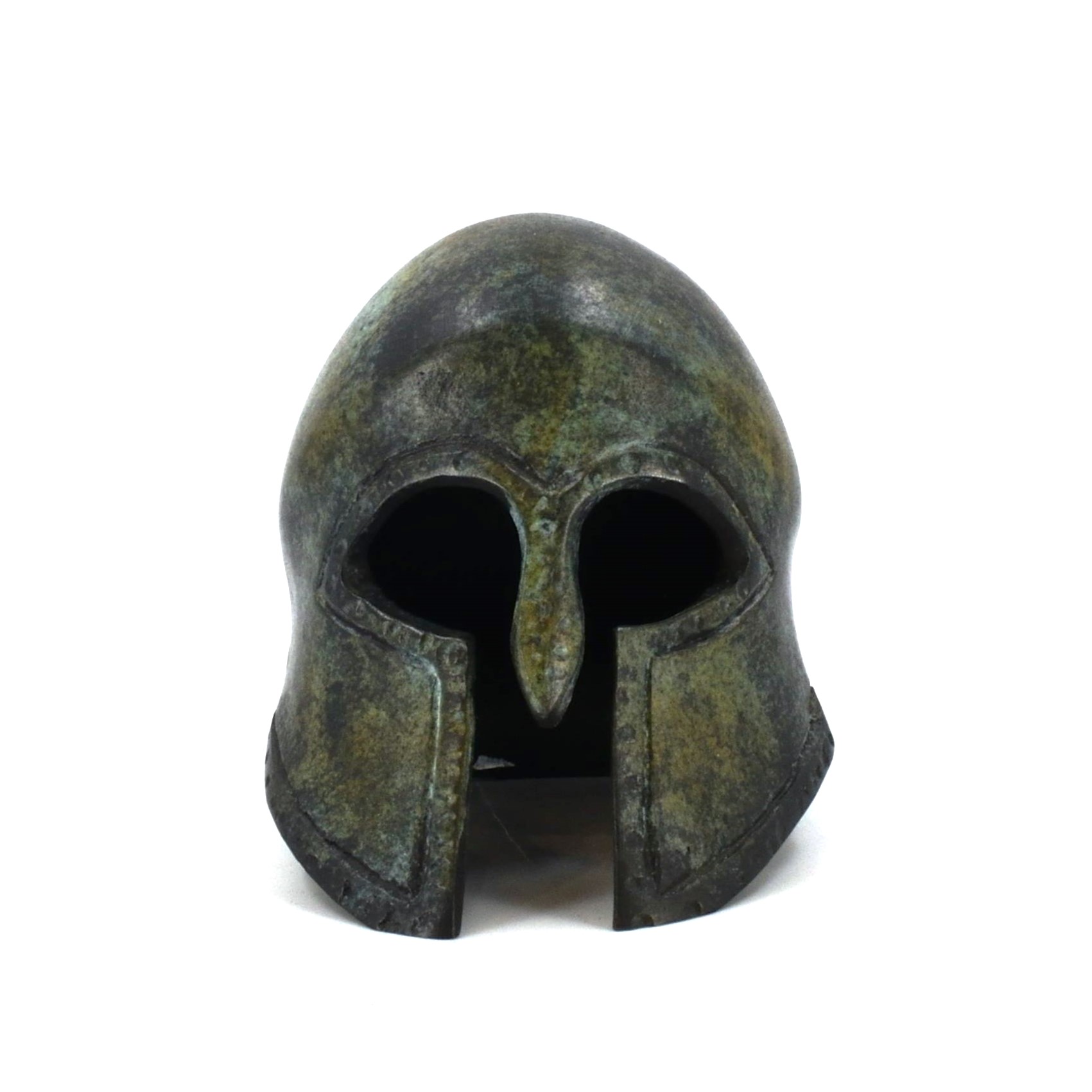
An early Corinthian helmet featuring riveted decorative borders and a streamlined profile, representing the disciplined martial traditions of Archaic Greece.



40,00 €
Rapid, trackable and secure delivery options to your doorstep worldwide.
Secure redirect payment via Worldline® and Eurobank S.A®
Payment options:
• Easy and simple, within 14 days of delivery.
• See conditions and procedure in Rescission & Returns.
This helmet exemplifies the restrained elegance of early Corinthian design, where ornamentation served both structural and symbolic purposes. Subtle riveted borders frame the eye openings and lower edge, creating a rhythmic decorative line while reinforcing areas of stress. These evenly spaced rivets add texture and visual discipline to the surface, emphasizing craftsmanship over excess embellishment.
The helmet’s smooth domed crown flows seamlessly into elongated cheek guards and a sharply tapered nose protector, forming a unified silhouette that conveys anonymity and martial discipline. Unlike later, more elaborate examples, this form reflects a period when visual identity was secondary to cohesion within the phalanx.
Such helmets were produced during the Archaic period of ancient Greece, approximately the 7th to early 6th centuries BCE. They were widely used across the Greek mainland, particularly in Corinth, the Peloponnese, and regions influenced by Greek colonization, including southern Italy. This helmet tells the story of the citizen-soldier—where uniformity, endurance, and collective strength defined warfare, and ornamentation quietly reinforced order and purpose rather than individual display.
SIZE: 8 cm
MATERIAL: bronze
PATINA: antique green
METHOD: sand cast